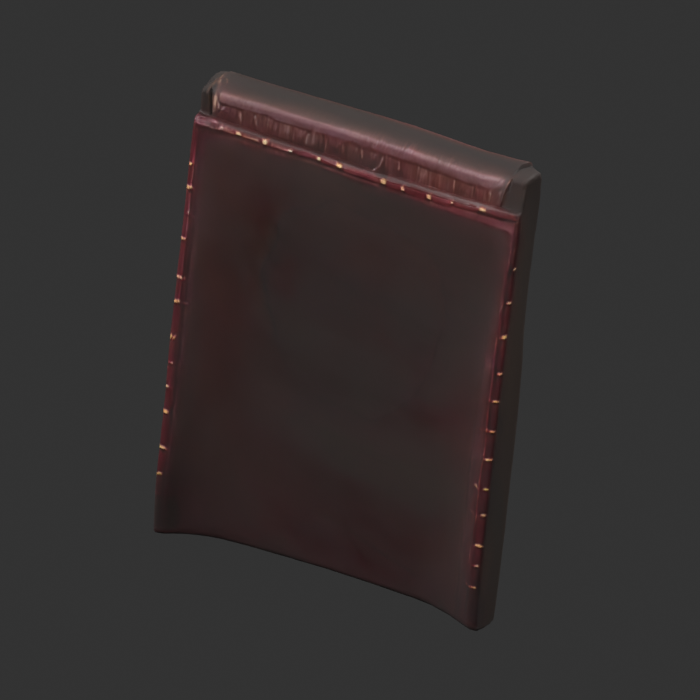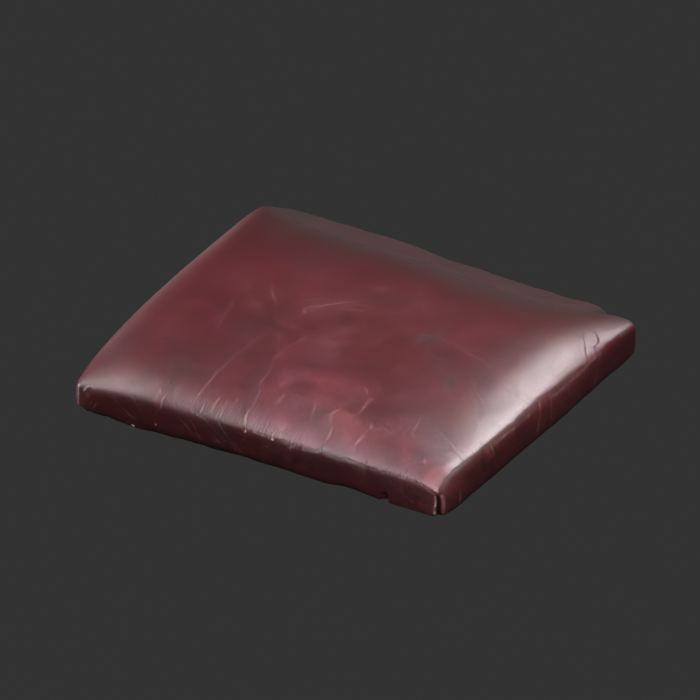




Tianyu He · BigBunnyBall
0%

Spotlight — the greatest work

The Process FORMA

A Reading Room After Reading — and the method that made it

One room. AI-generated assets under a declared design contract, reviewed into existence with fixed cameras, published numbers and honest stamps — until the room was mine rather than the model's.

Unity 6 URP stylised PBR 36 s film 2026

designed & led by Tianyu · built by AI agents

7AI-generated assets, each measured & reviewed
3published clauses: intent, editability, engine closure
61,188room triangles, down from 130,000
5review states, including refusal and insufficient information
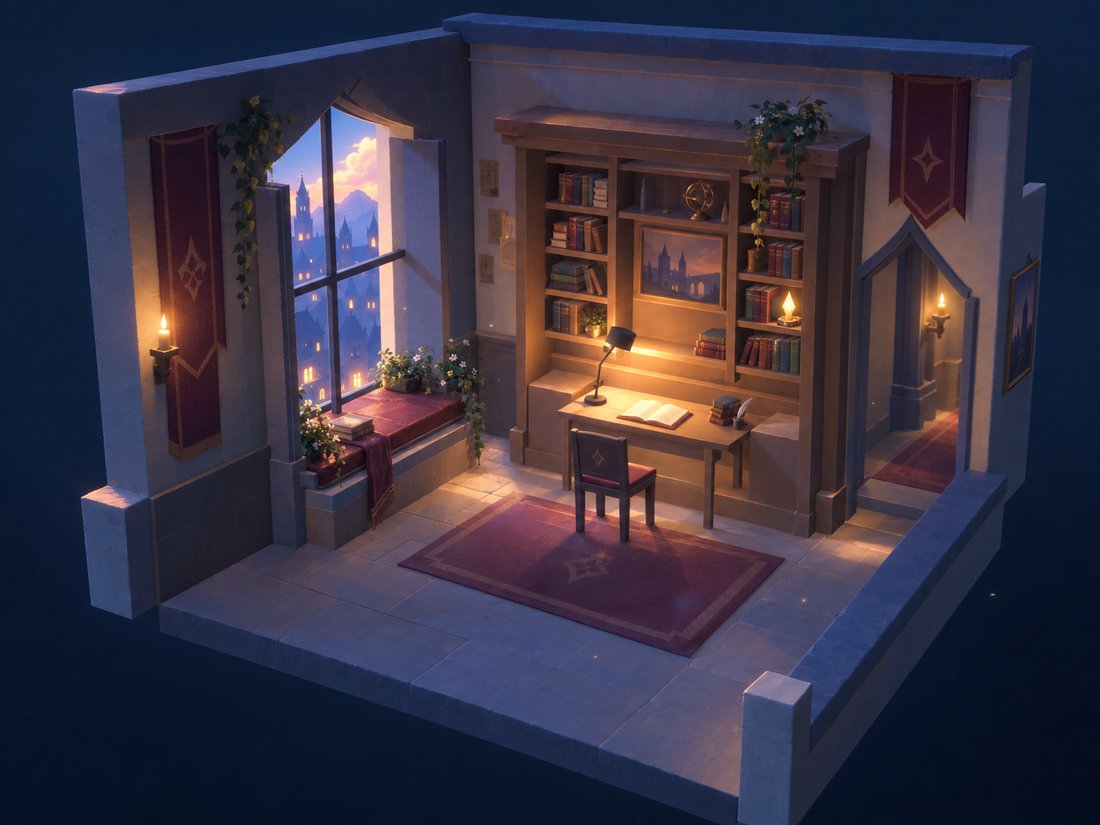
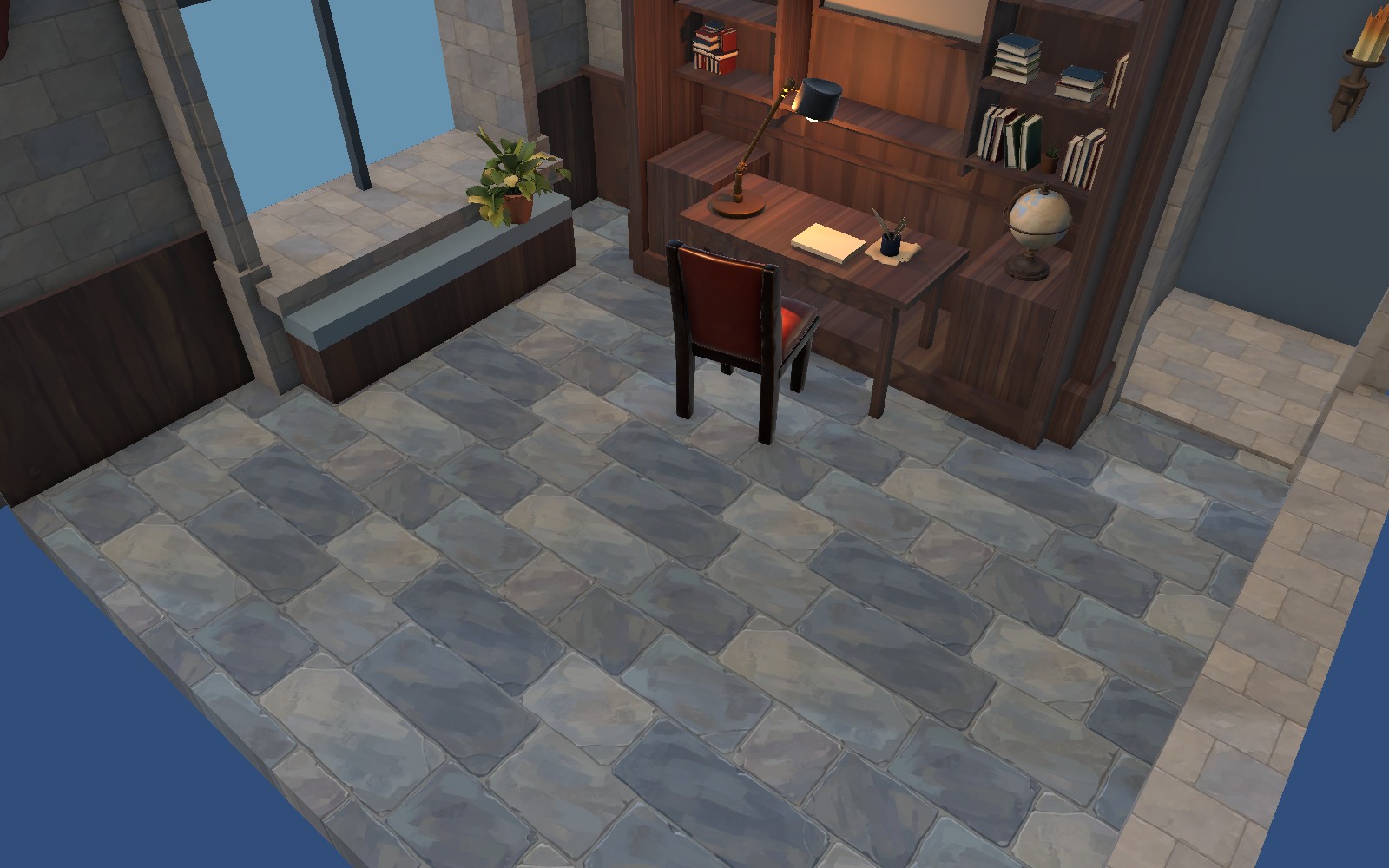
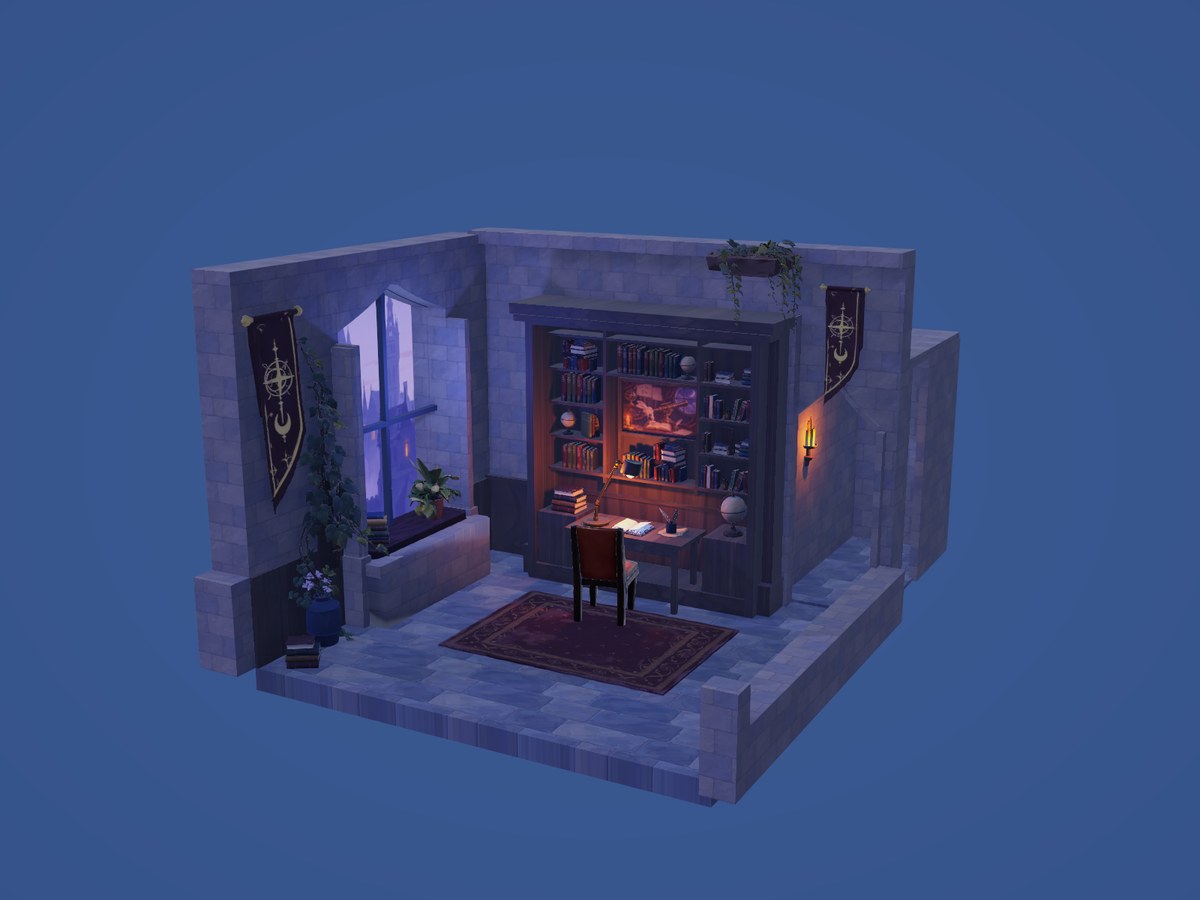
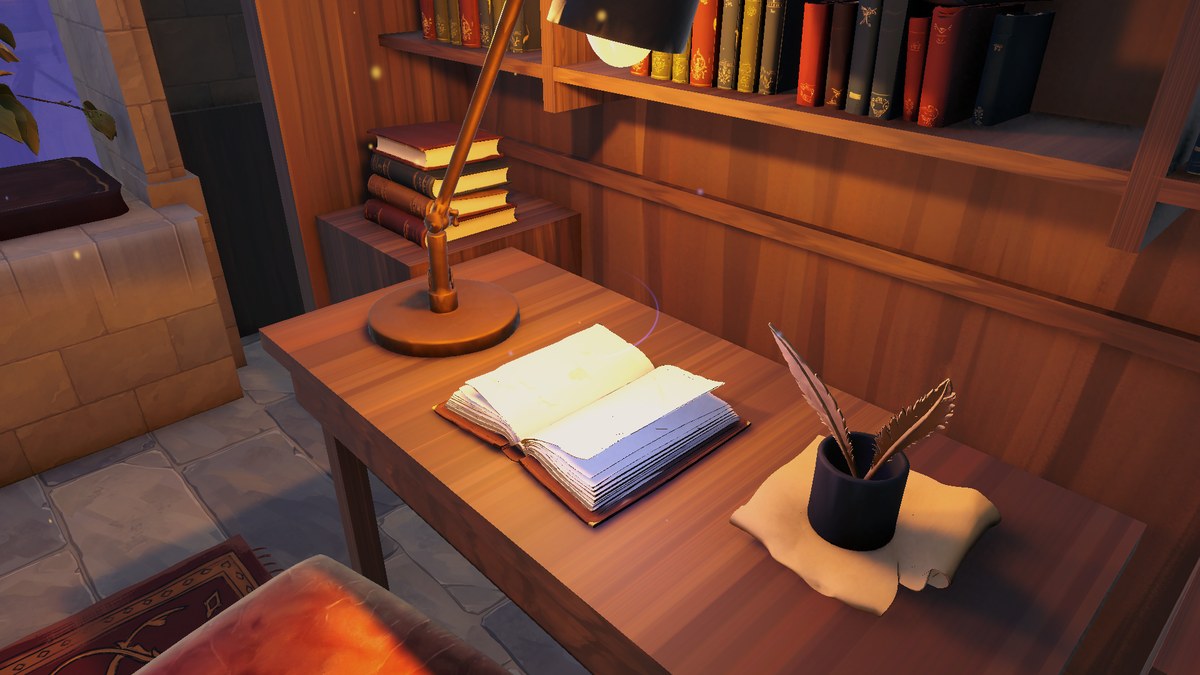
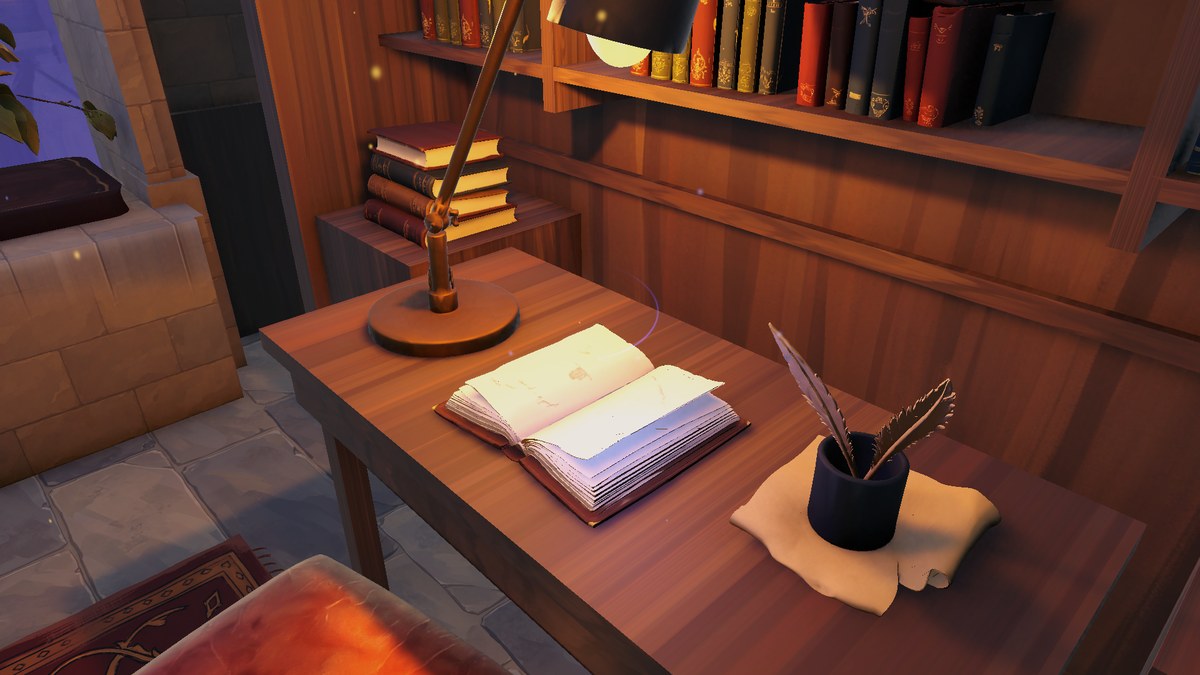
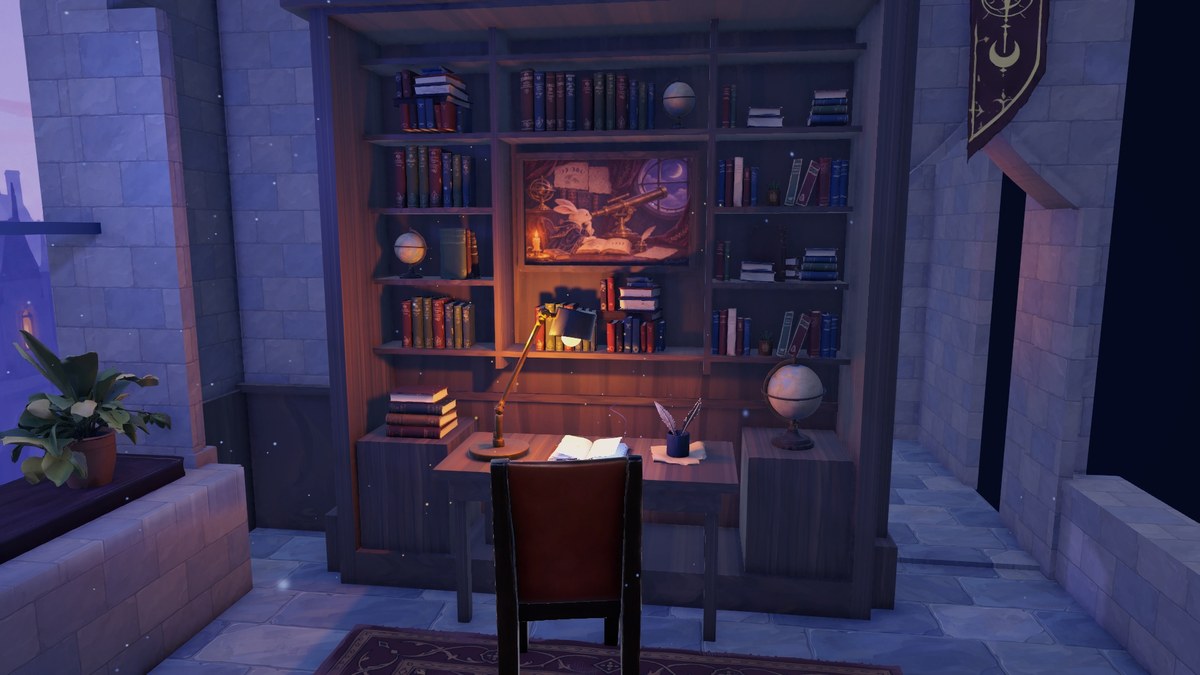
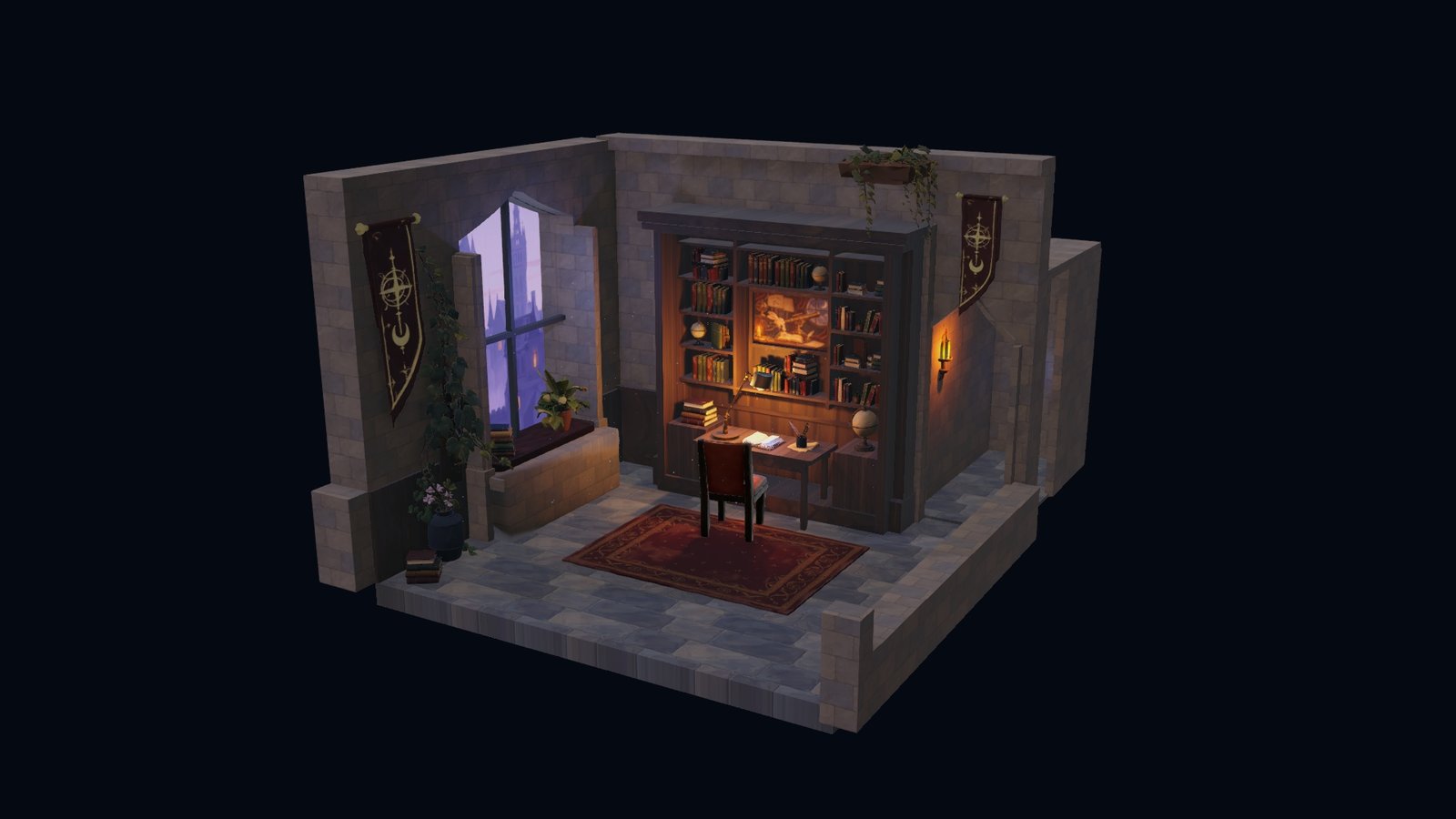
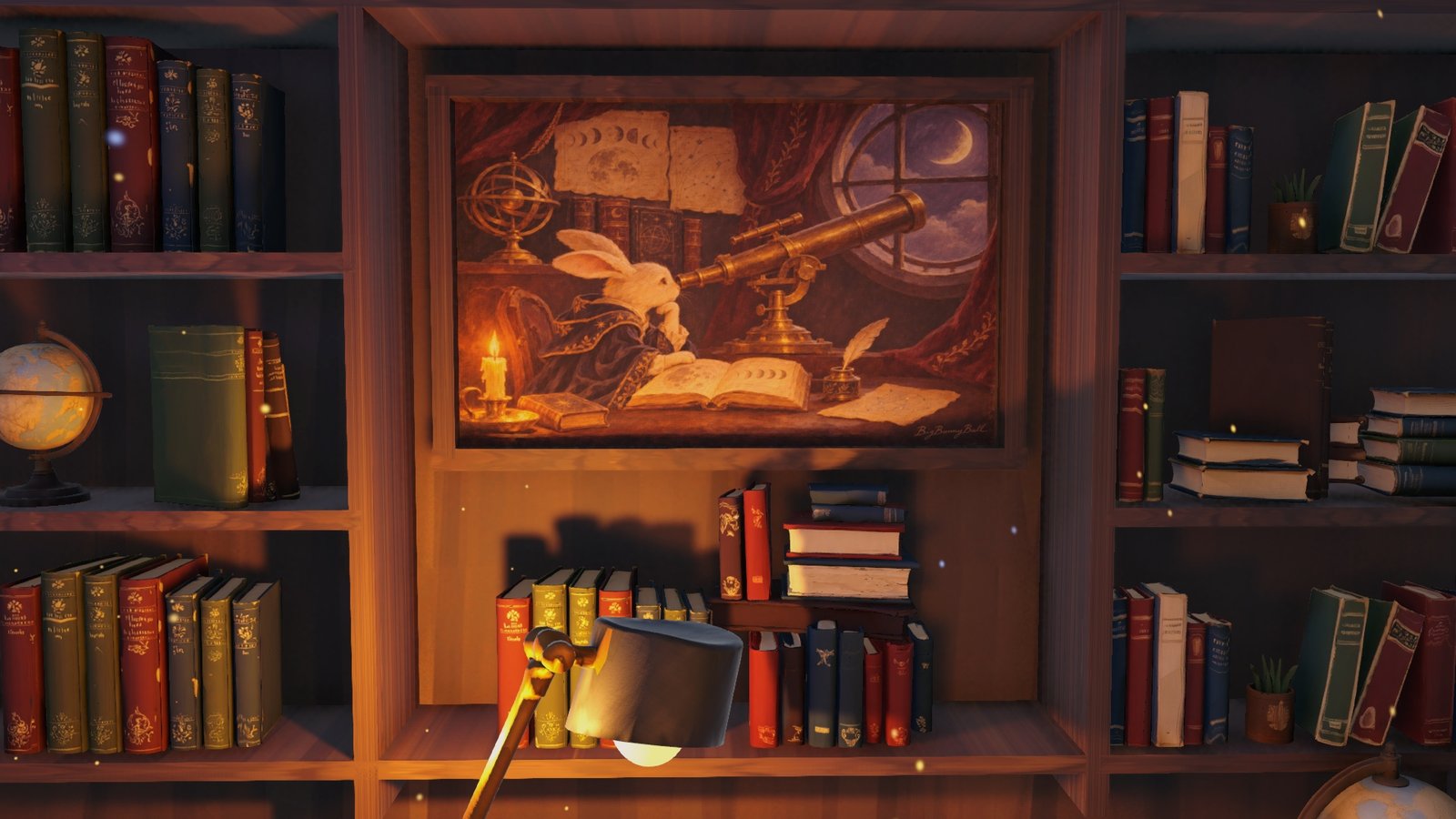
Awakening: the warm lamp relights over the reading desk
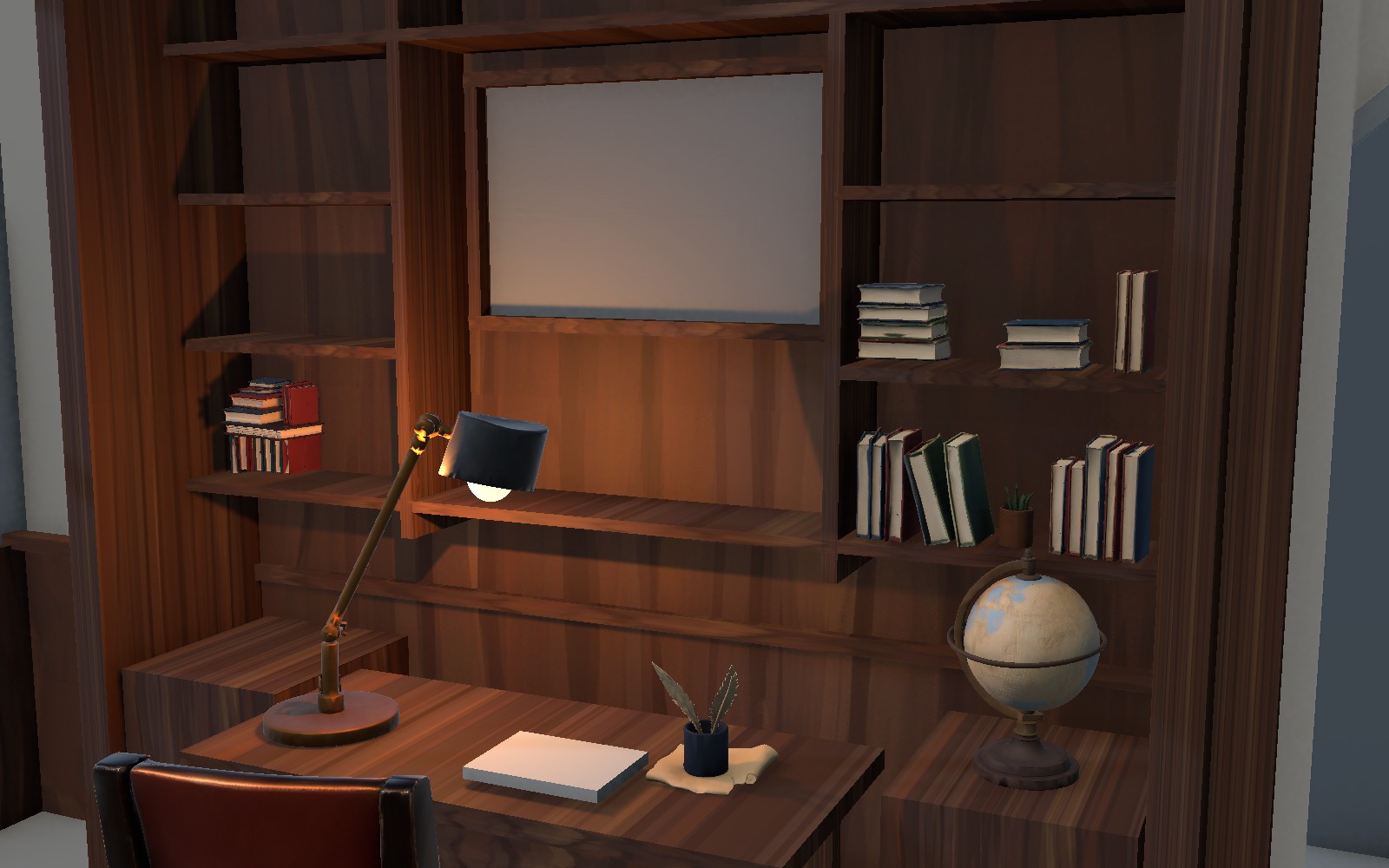
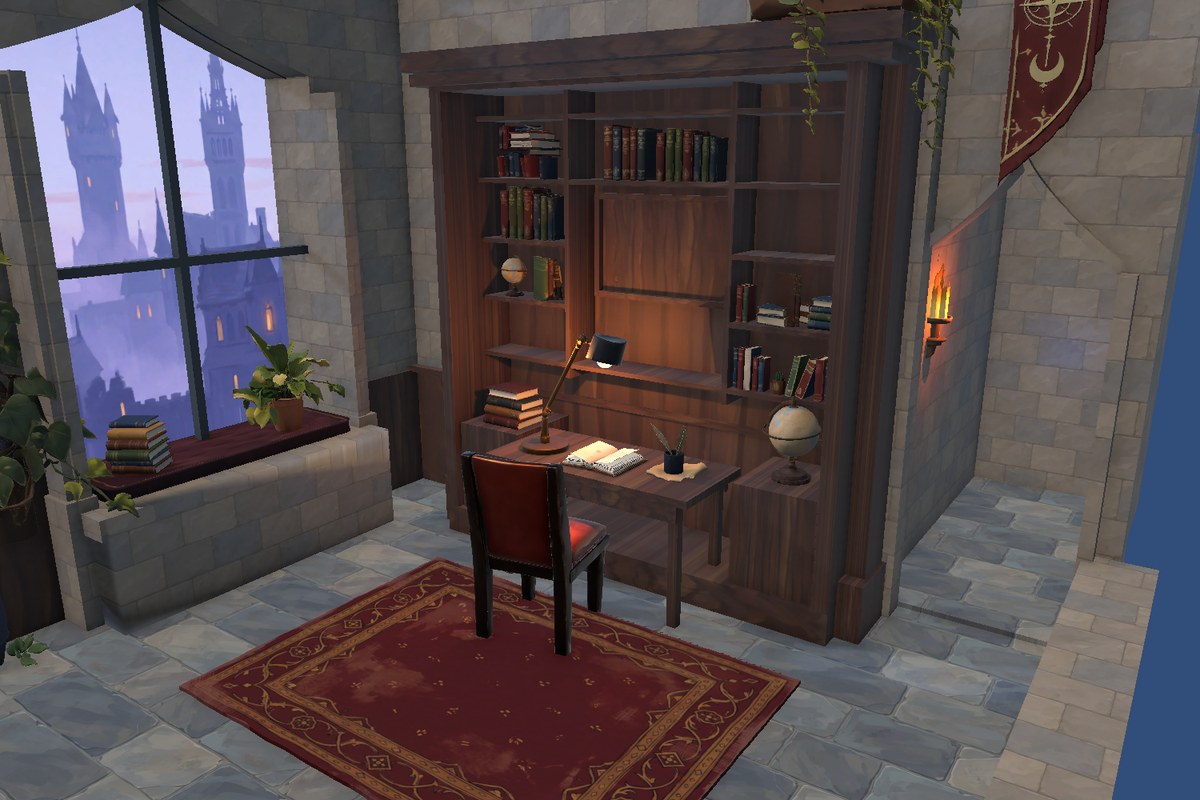
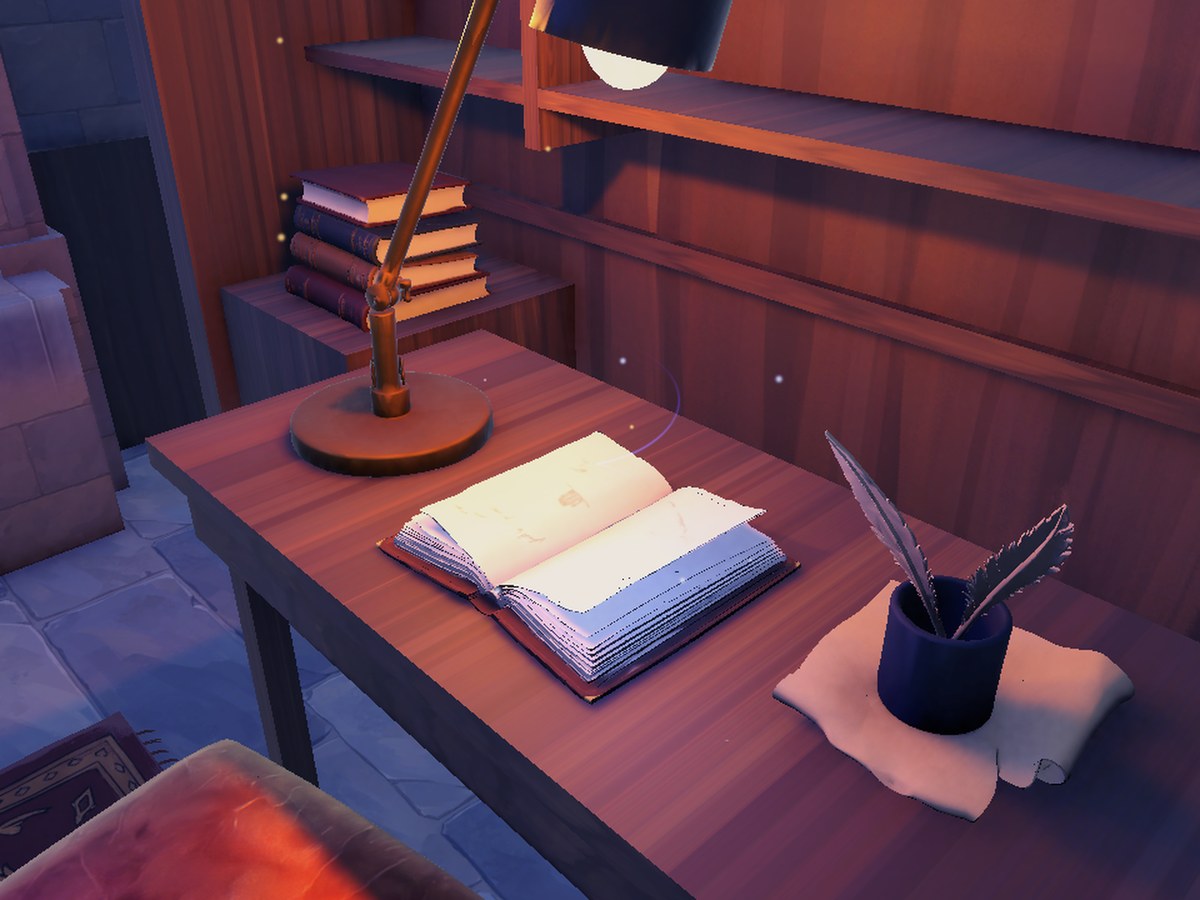
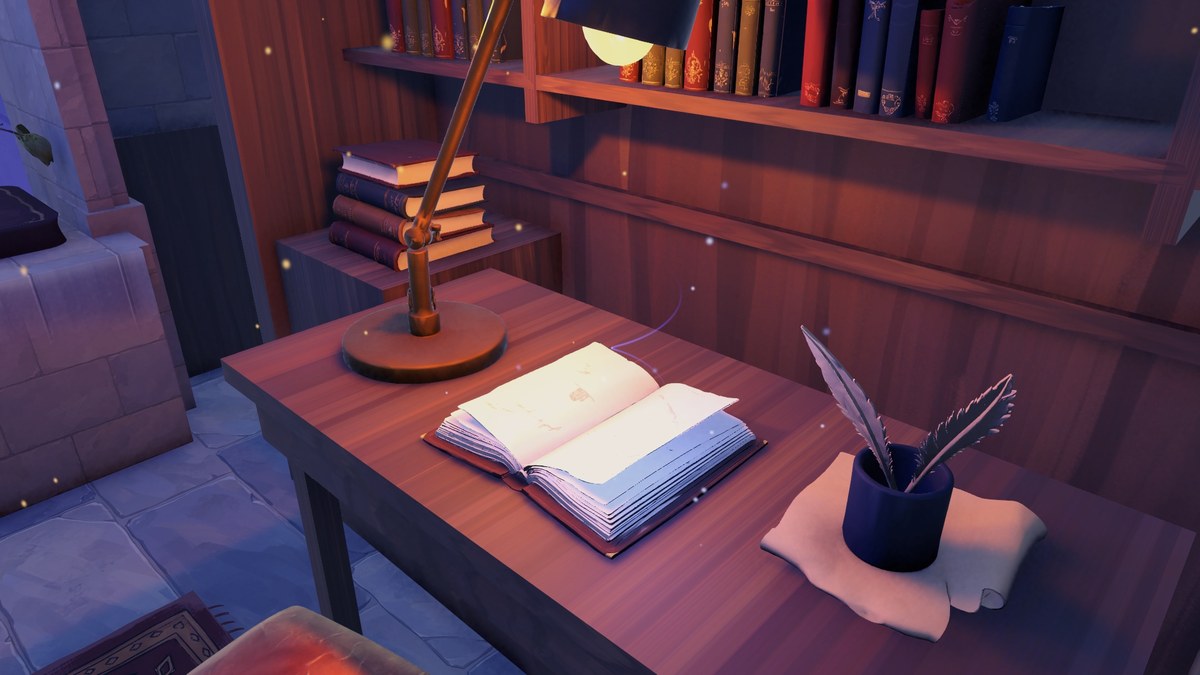
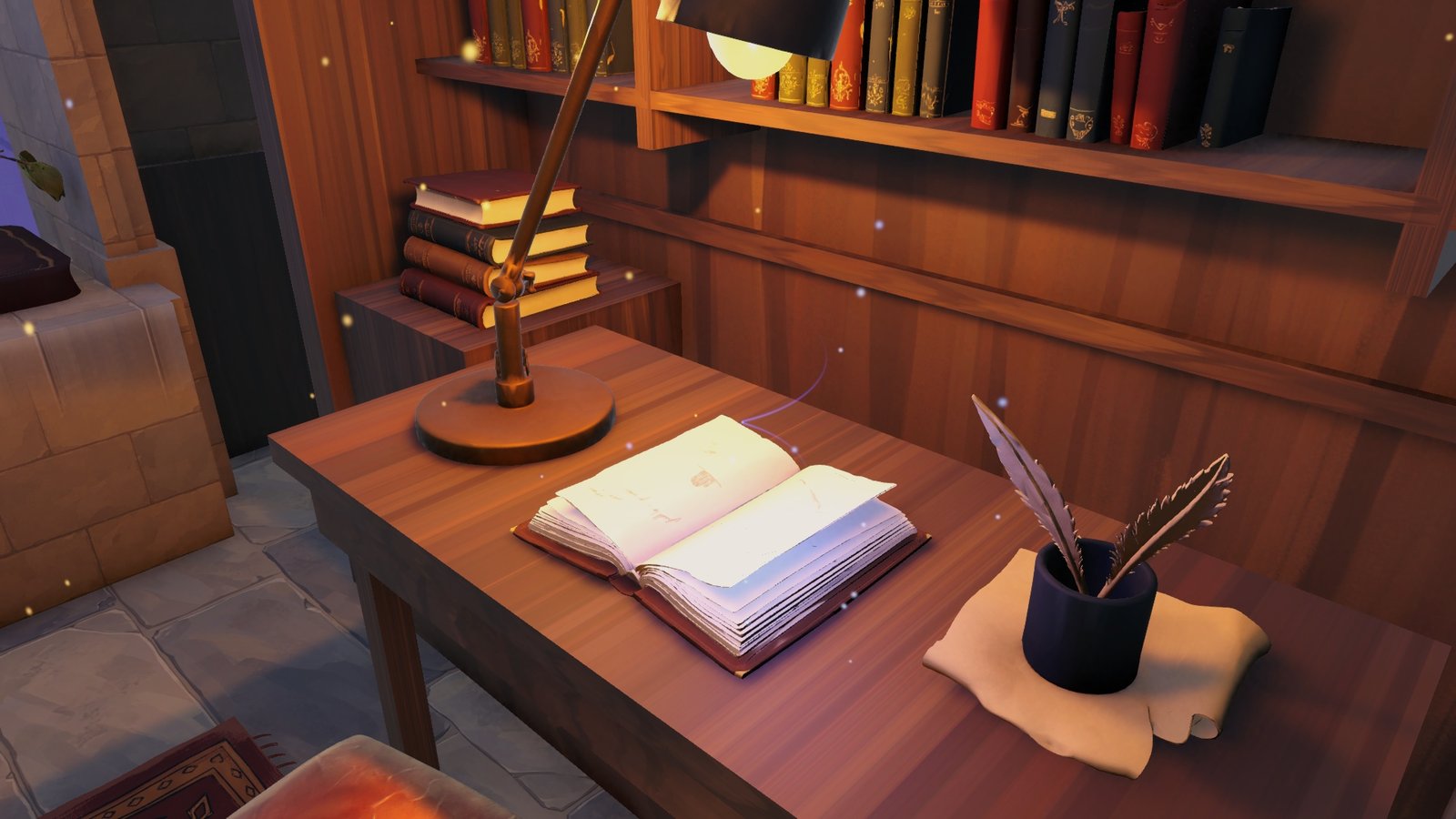
Desk close-up with the open book and the memory filament
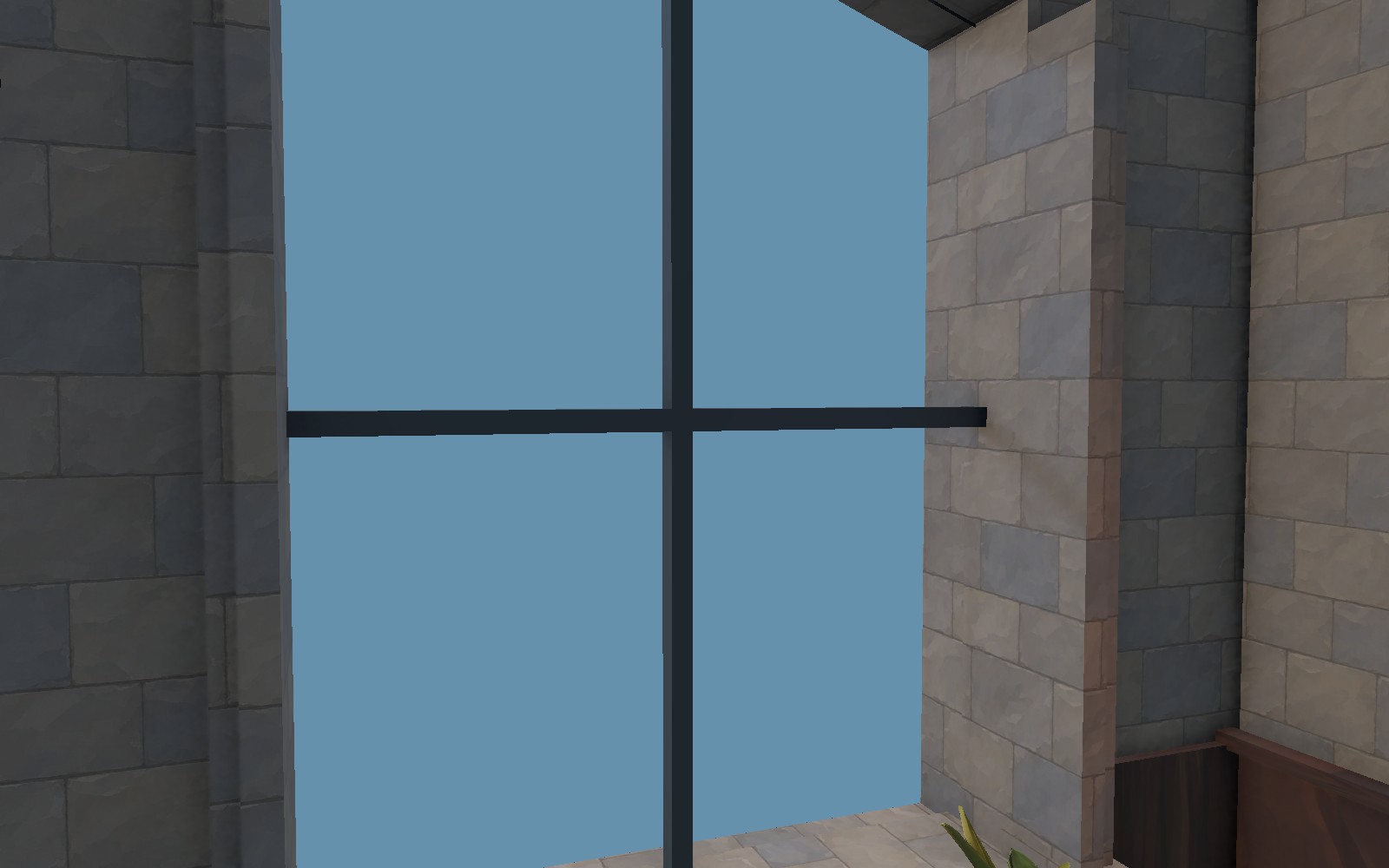
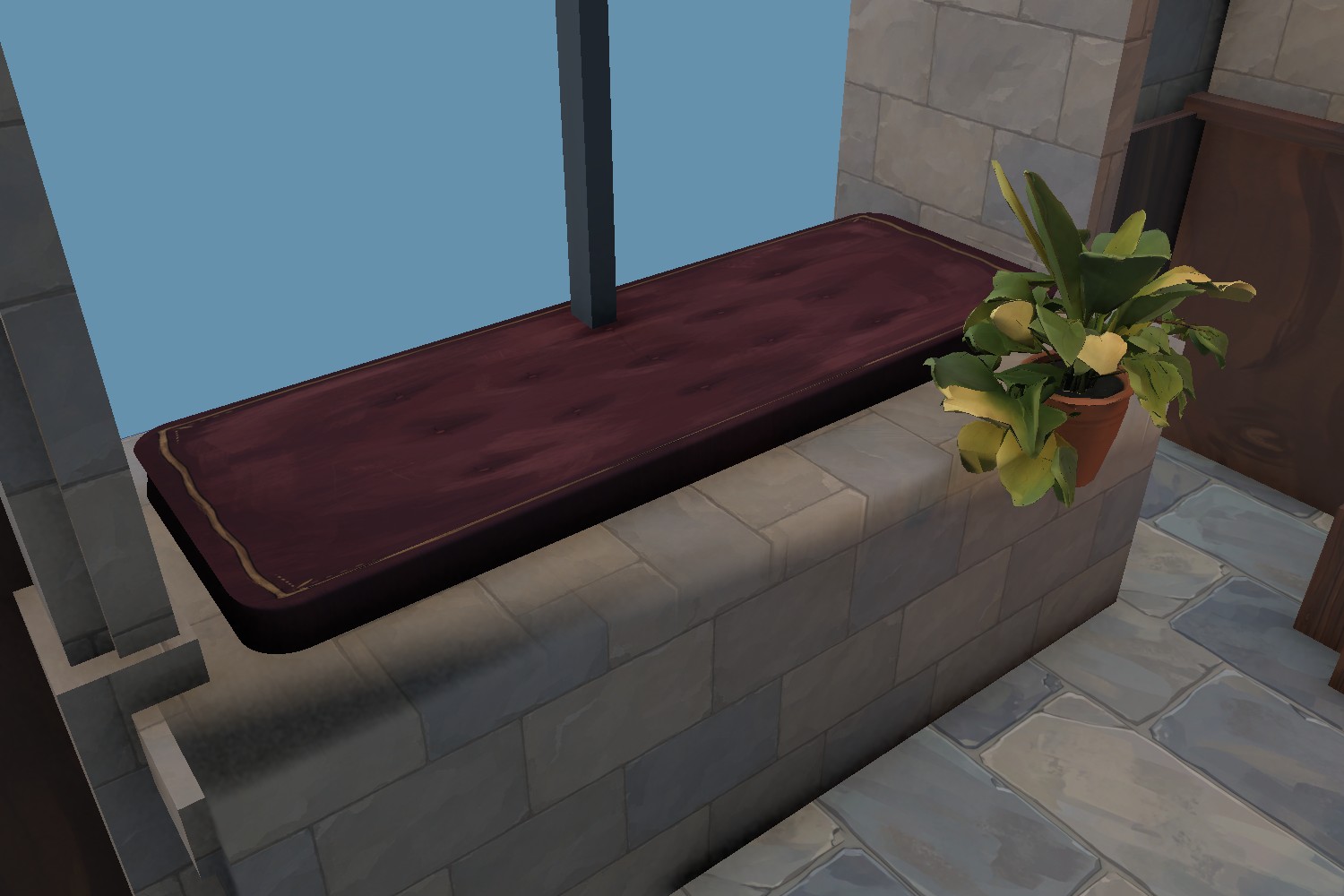
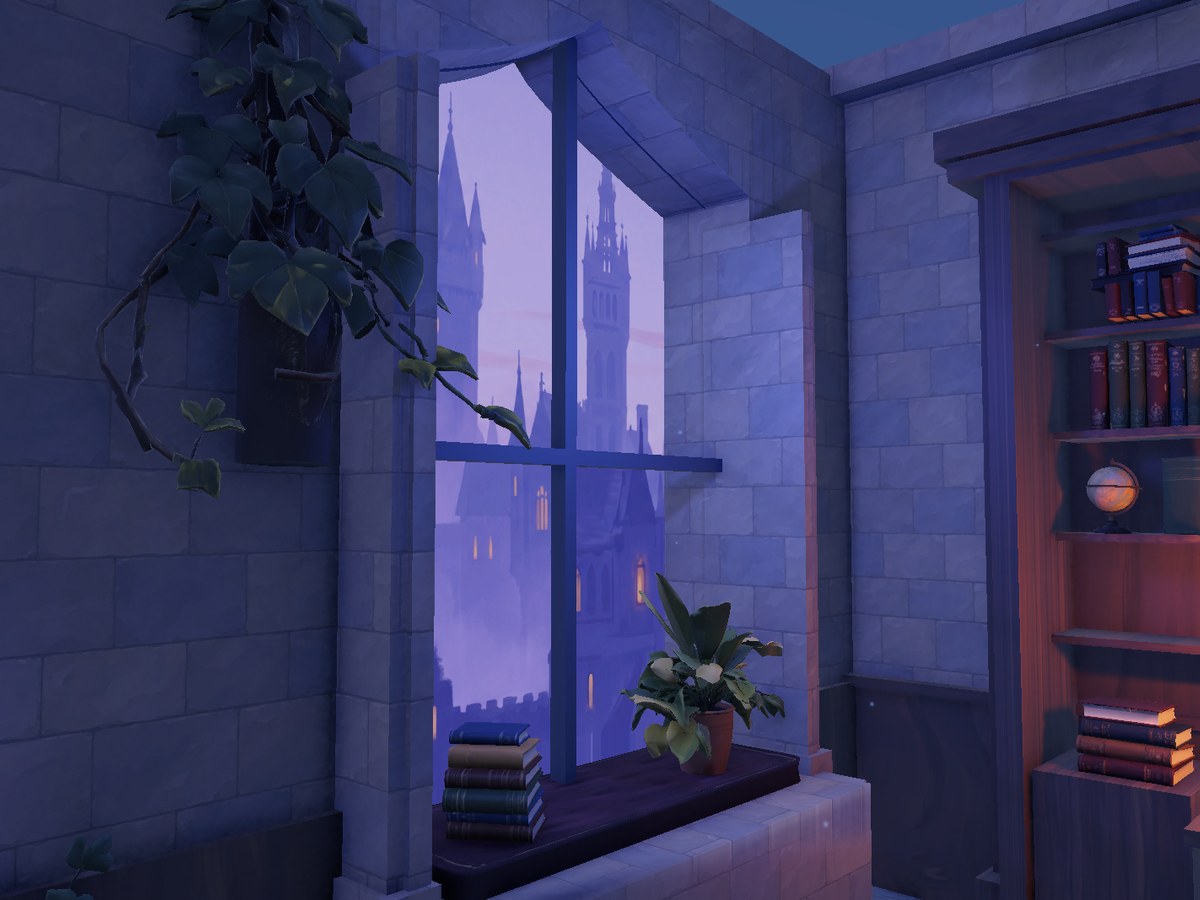
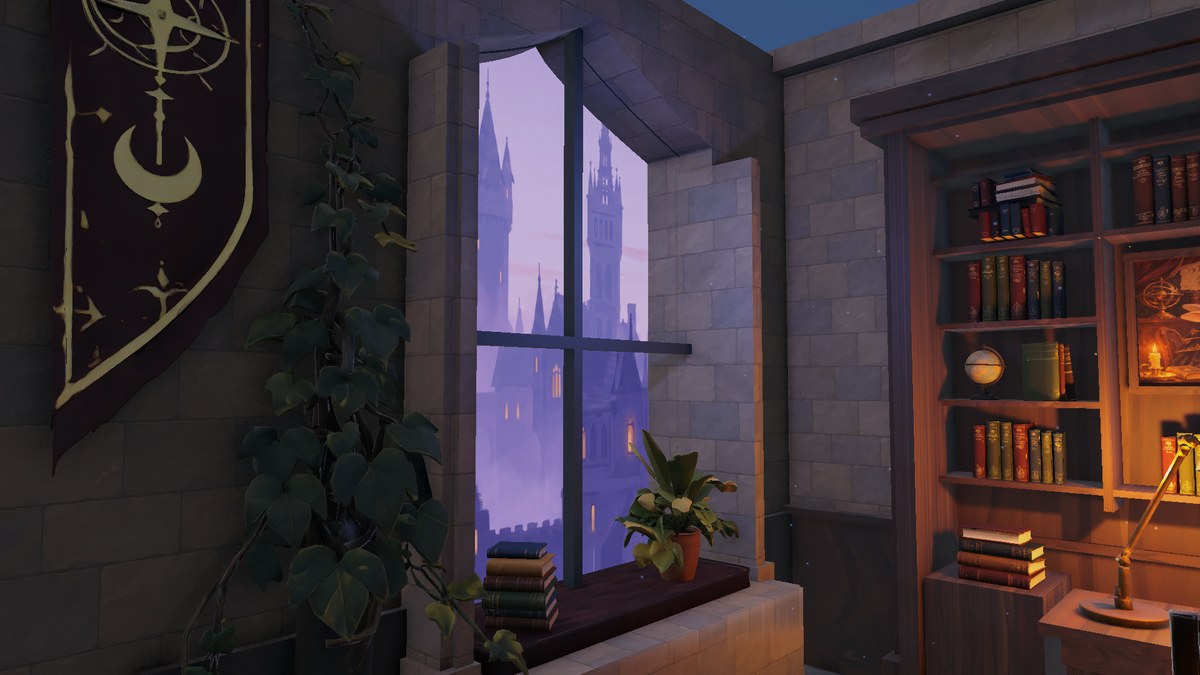
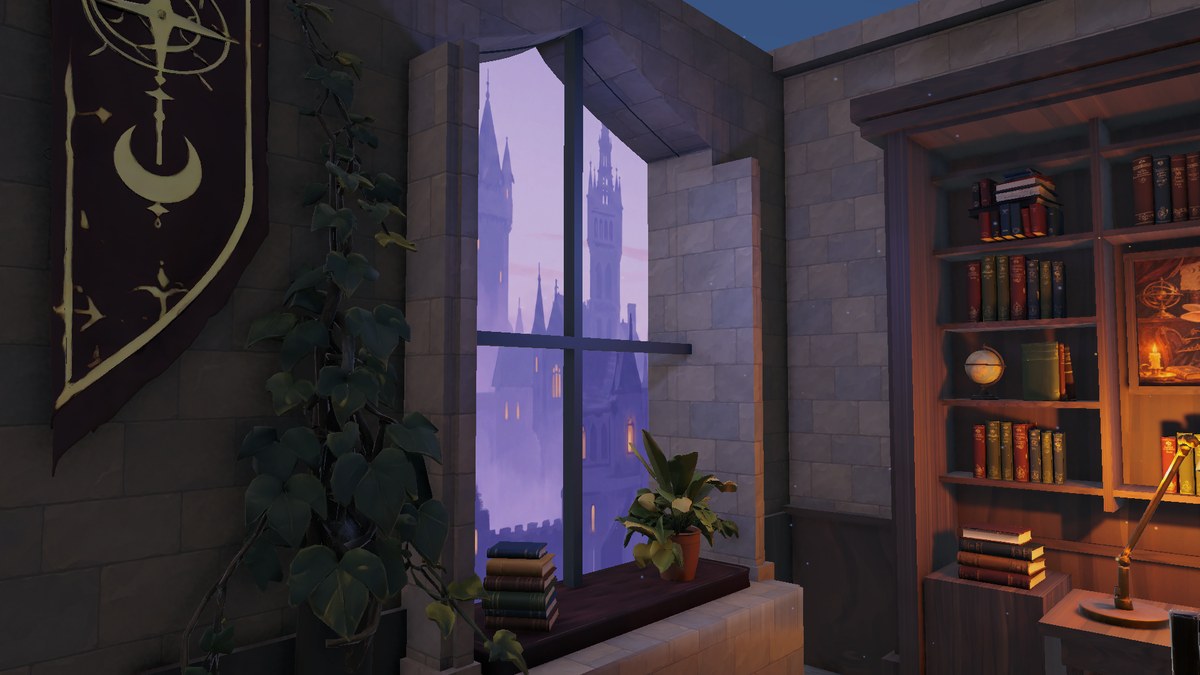
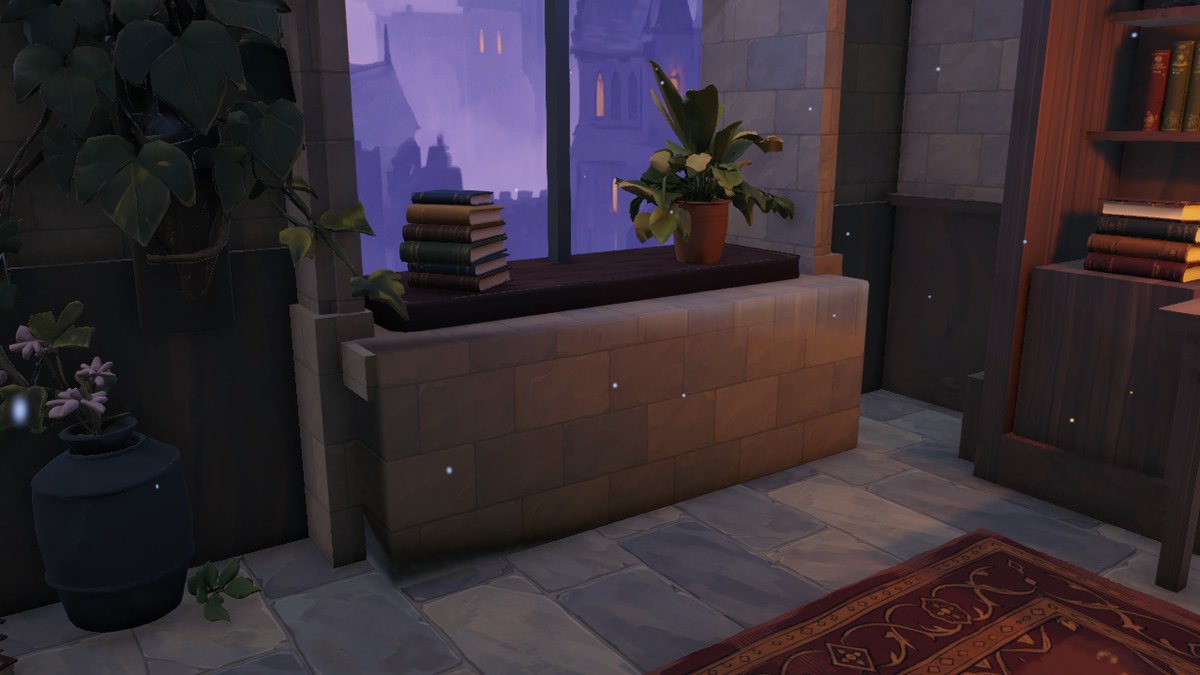
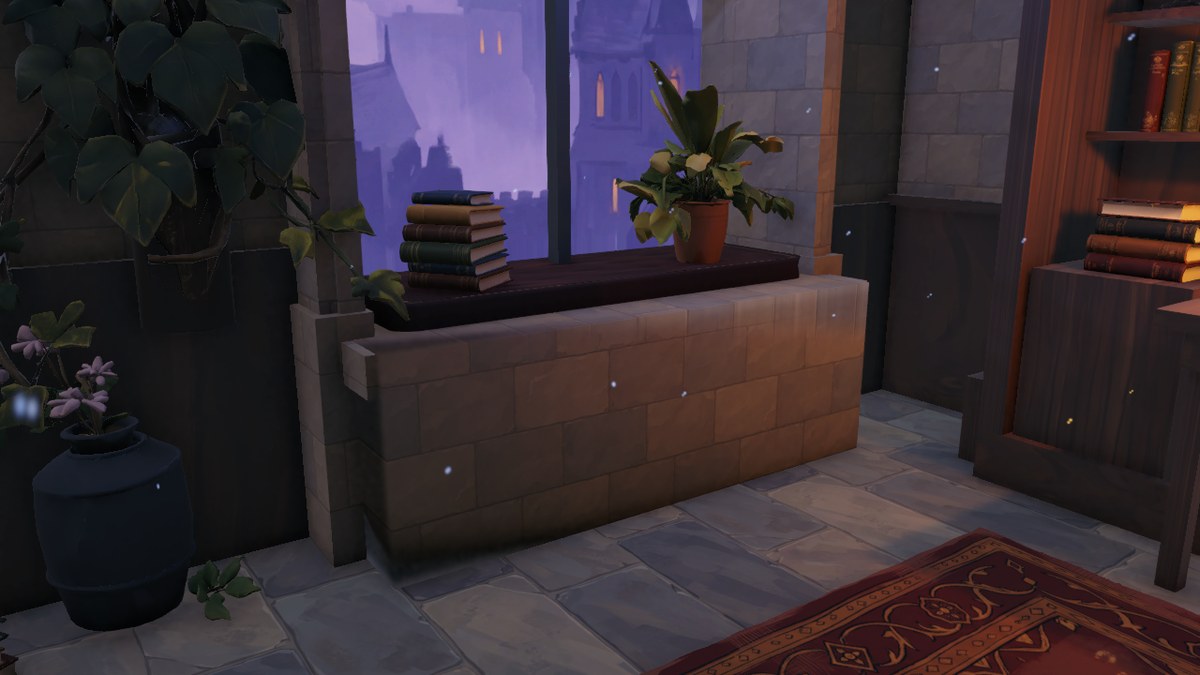
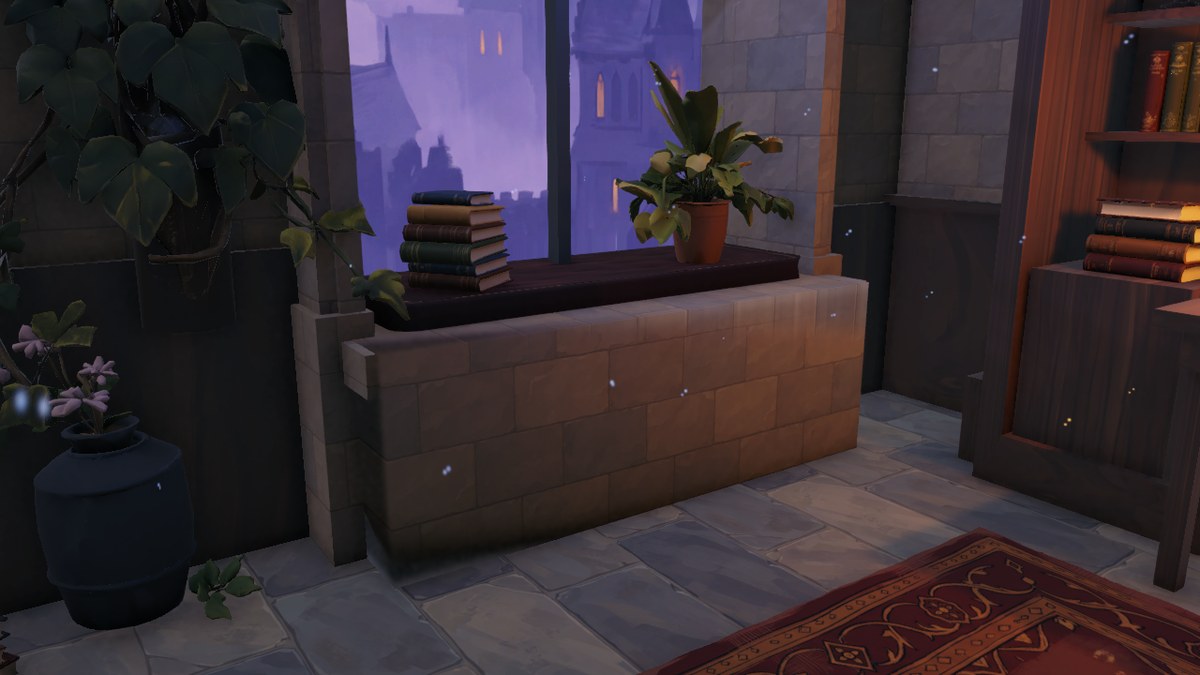
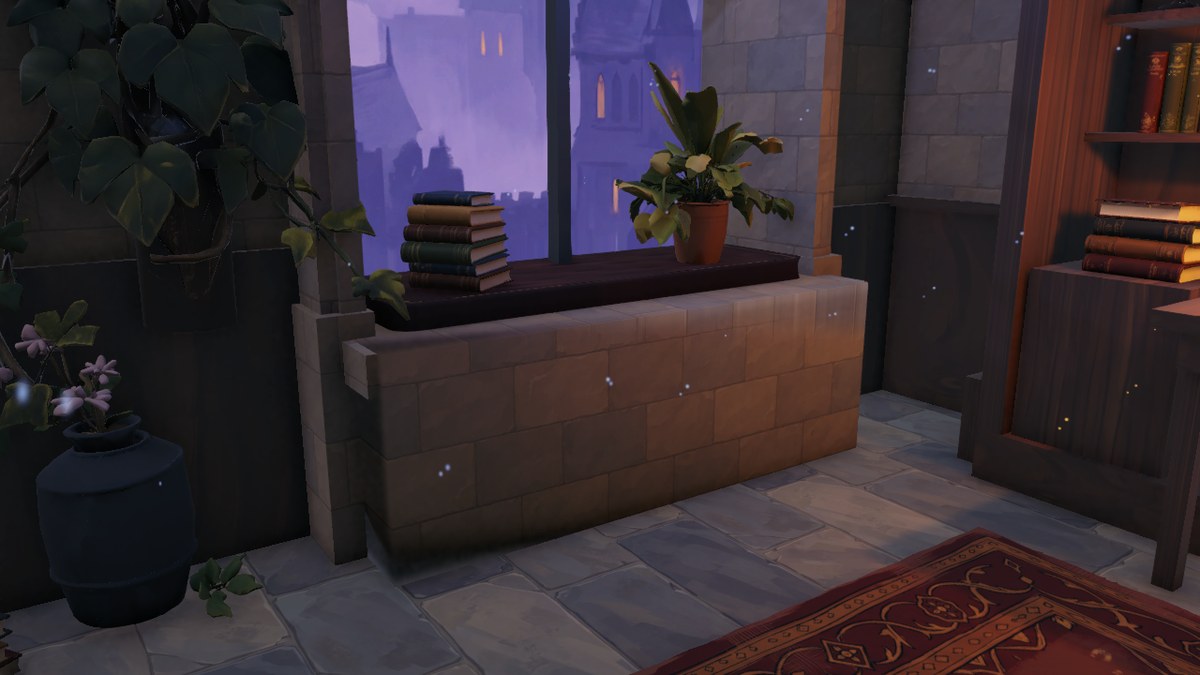
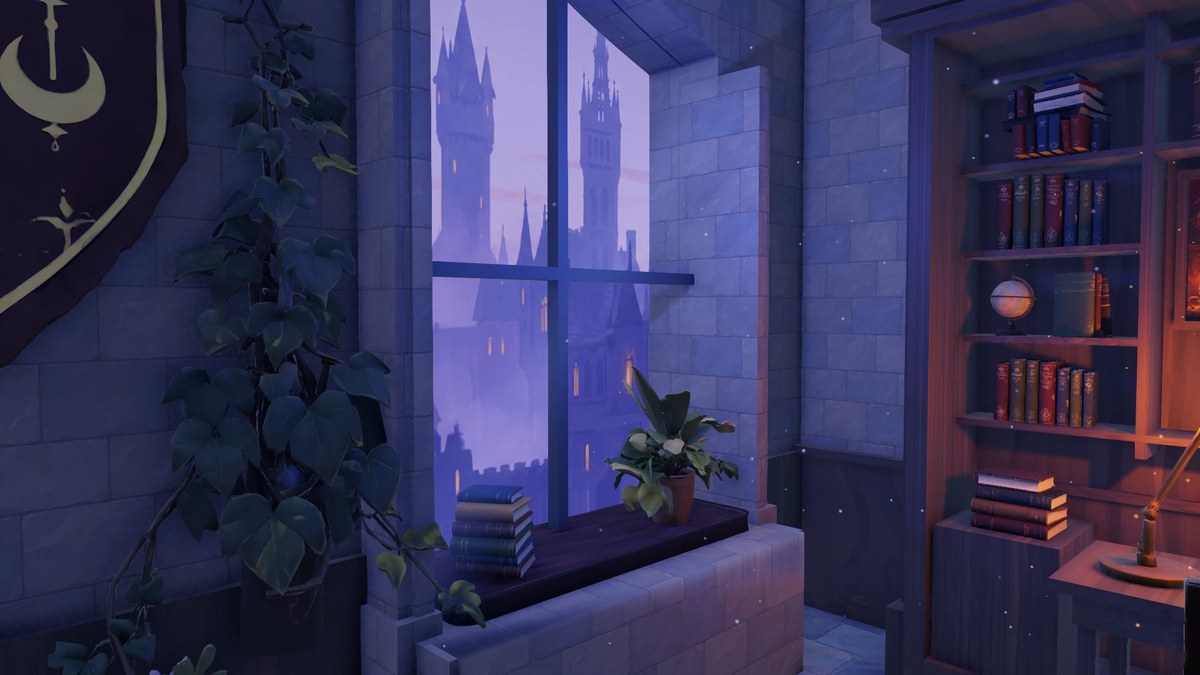
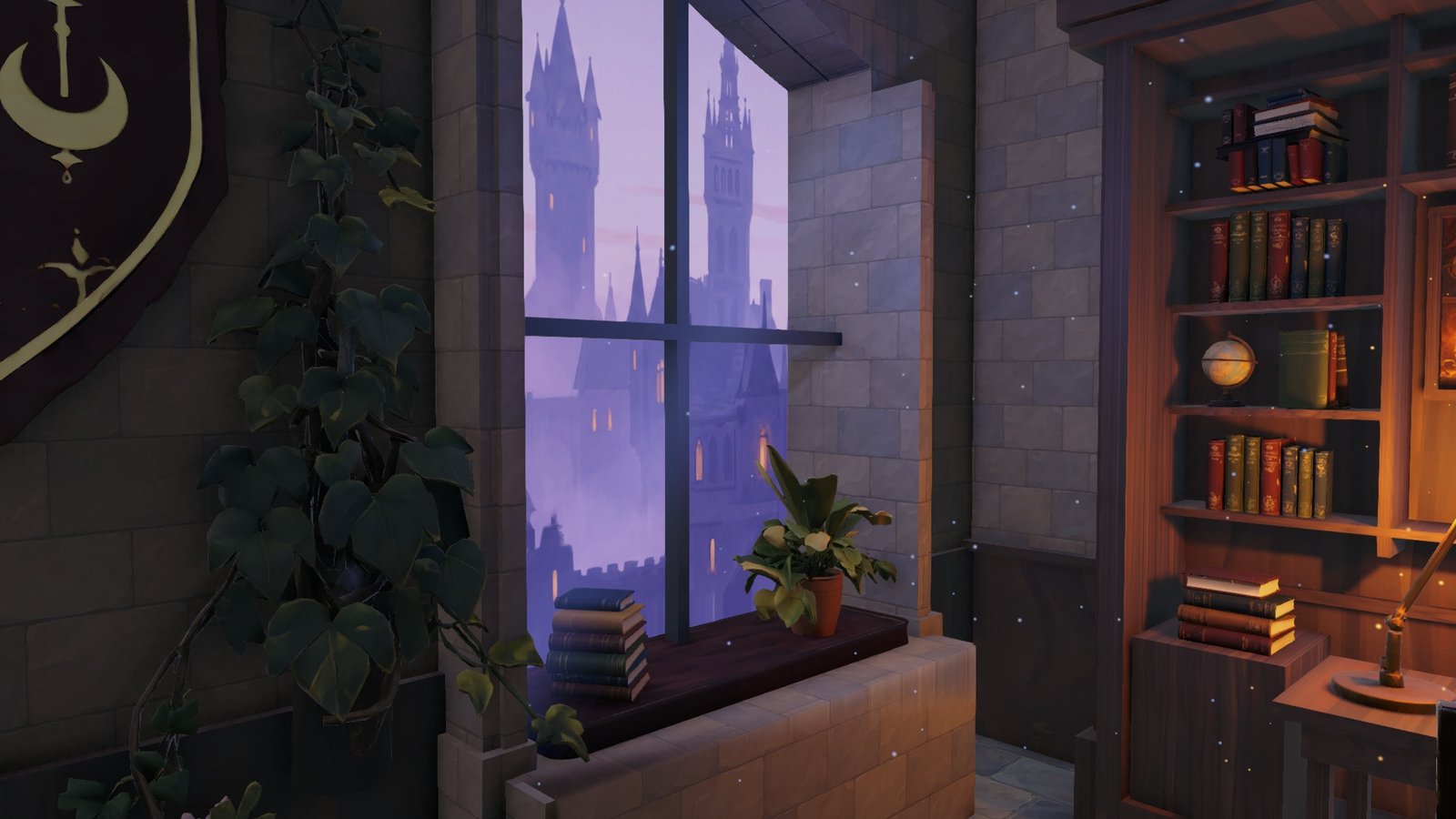
The window seat with the lavender city spires beyond
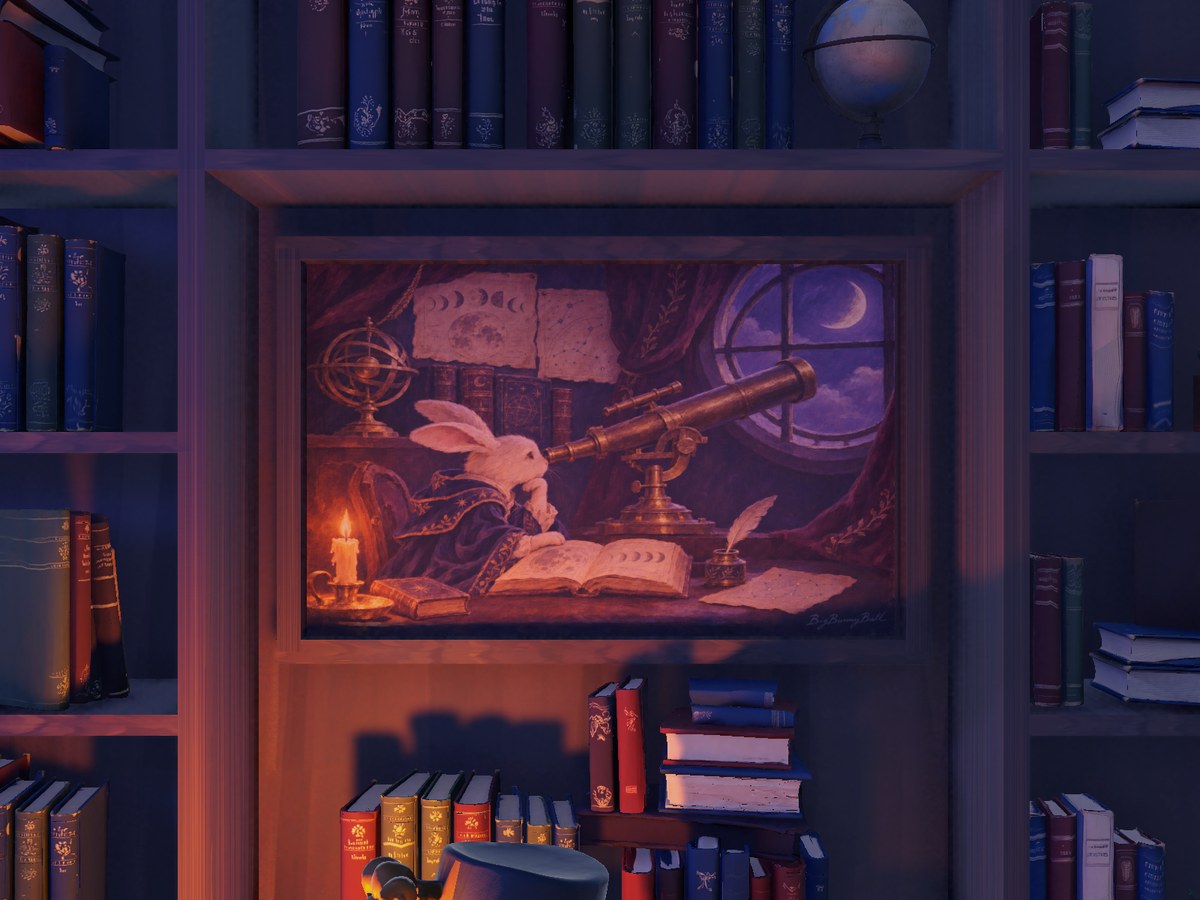
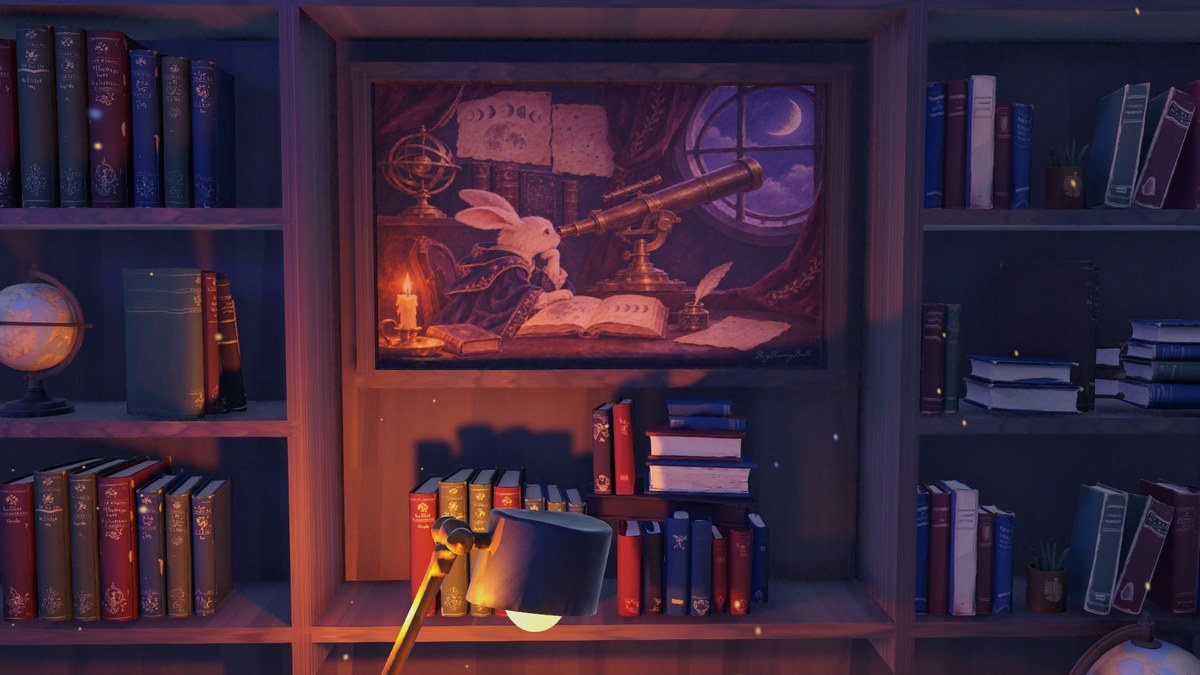
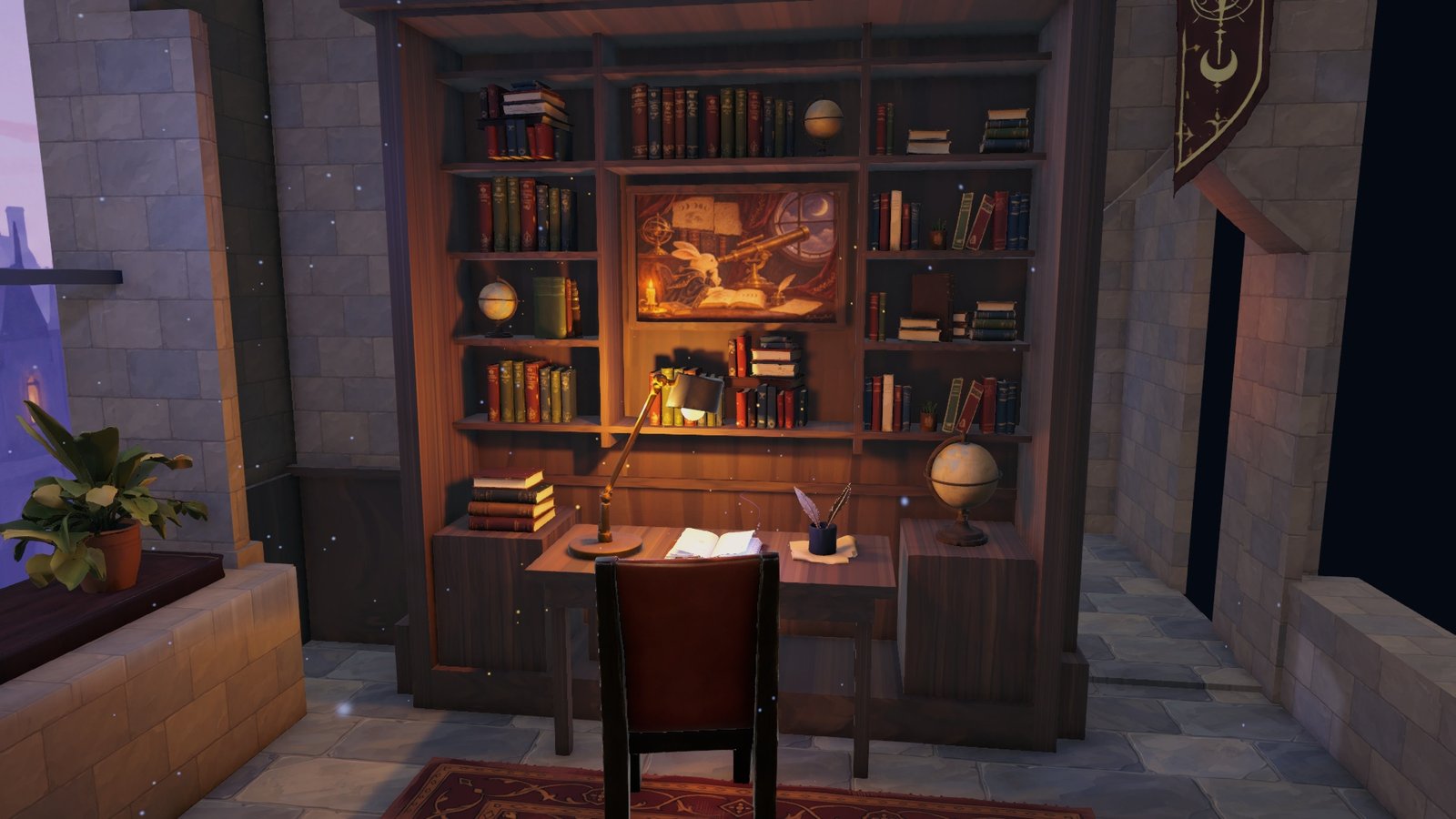
The Rabbit Astronomer painting above the desk

01 — Brainstorming

The reference search

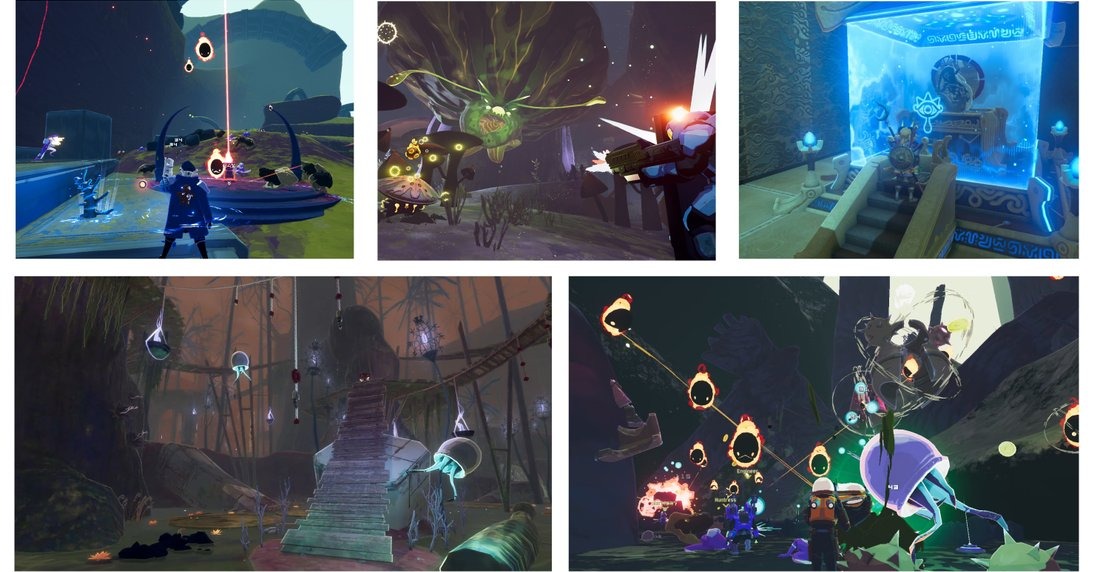
Twenty-nine game captures, three questions: light, surface, mood. Directional only; nothing is copied.

Colour & Composition

family 1 · 7 captures

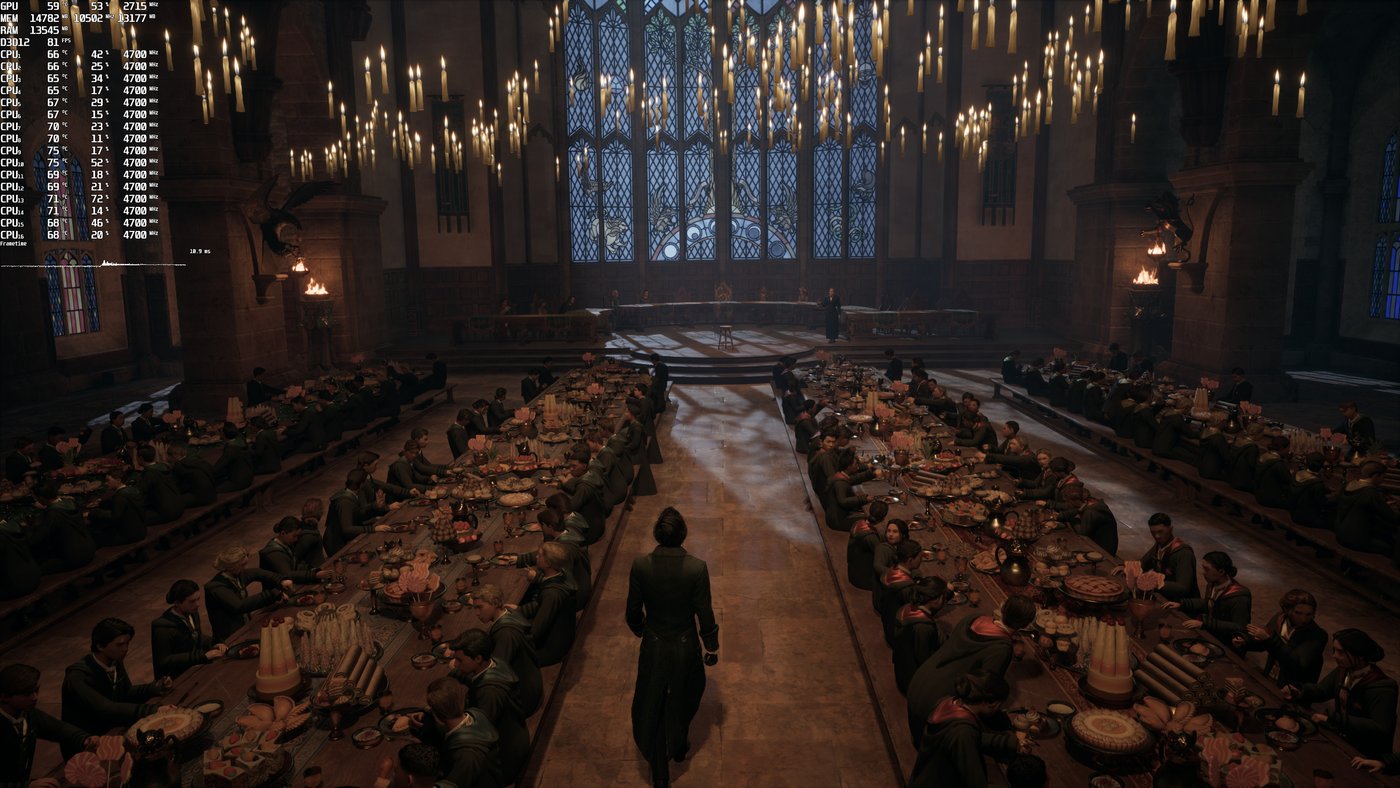
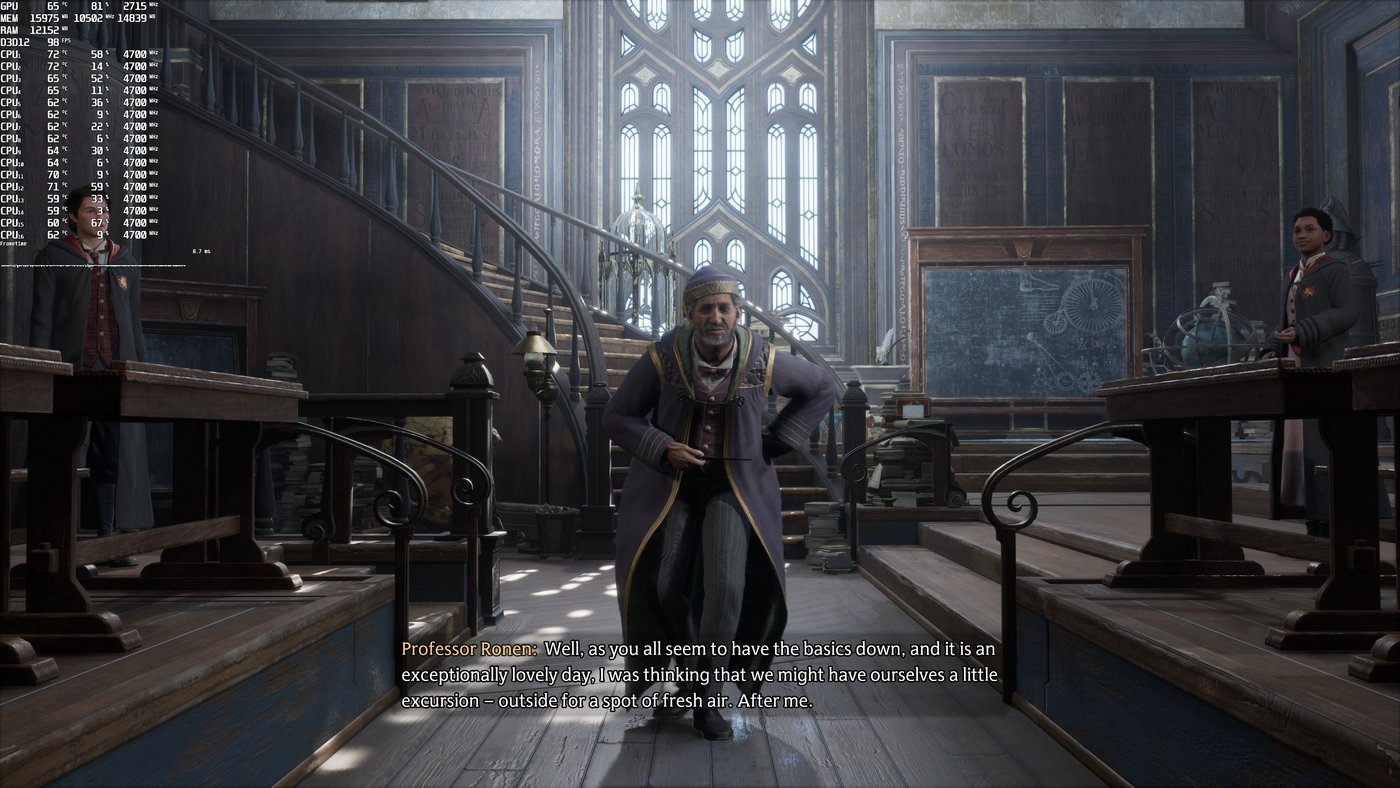
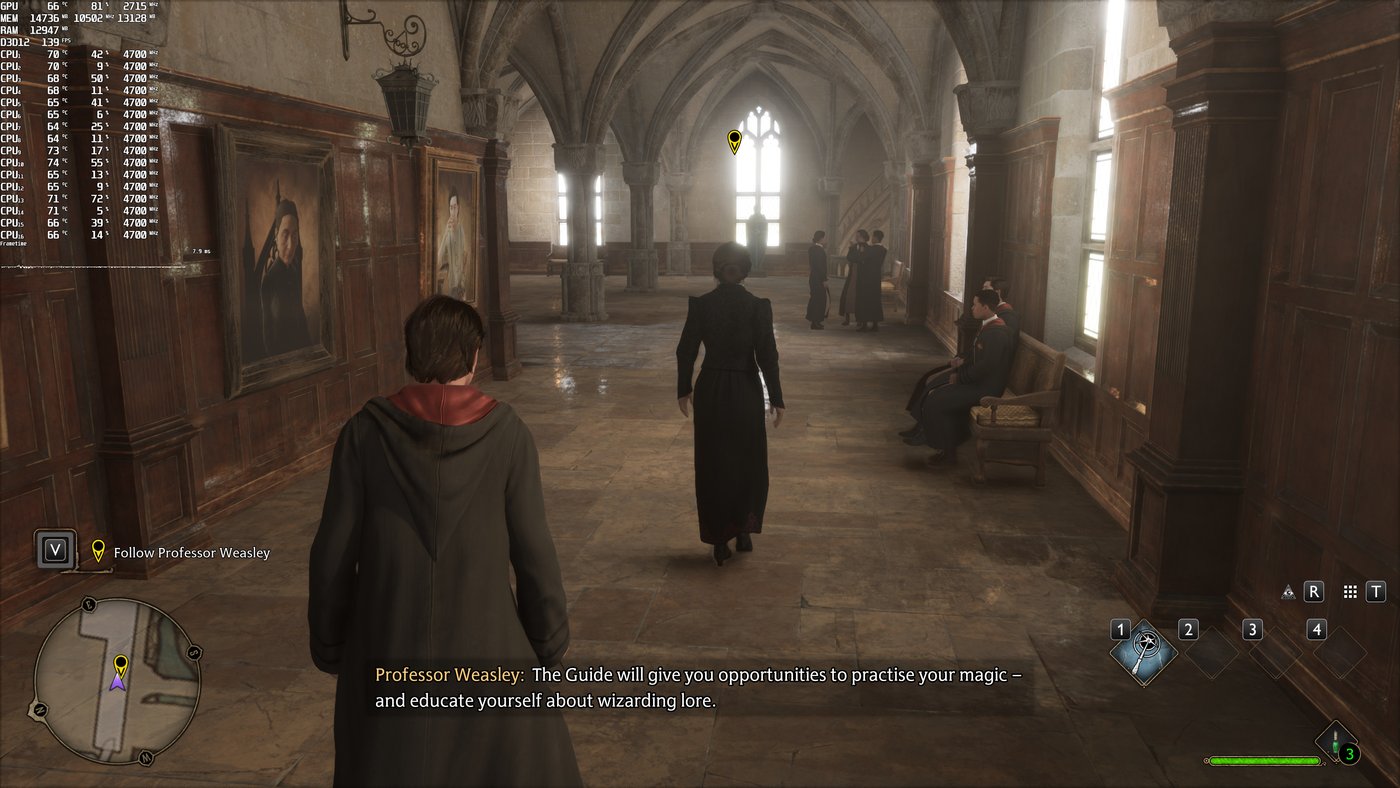
Warm lamplight and cool dusk in one frame, stone neutral between them. Hogwarts Legacy answered it best.

Hogwarts Legacy Great Hall Hogwarts Legacy · candle vs glass
Hogwarts Legacy classroom Hogwarts Legacy · window light on joinery
Hogwarts Legacy corridor Hogwarts Legacy · panelling depth

Material & Form

family 2 · 15 captures

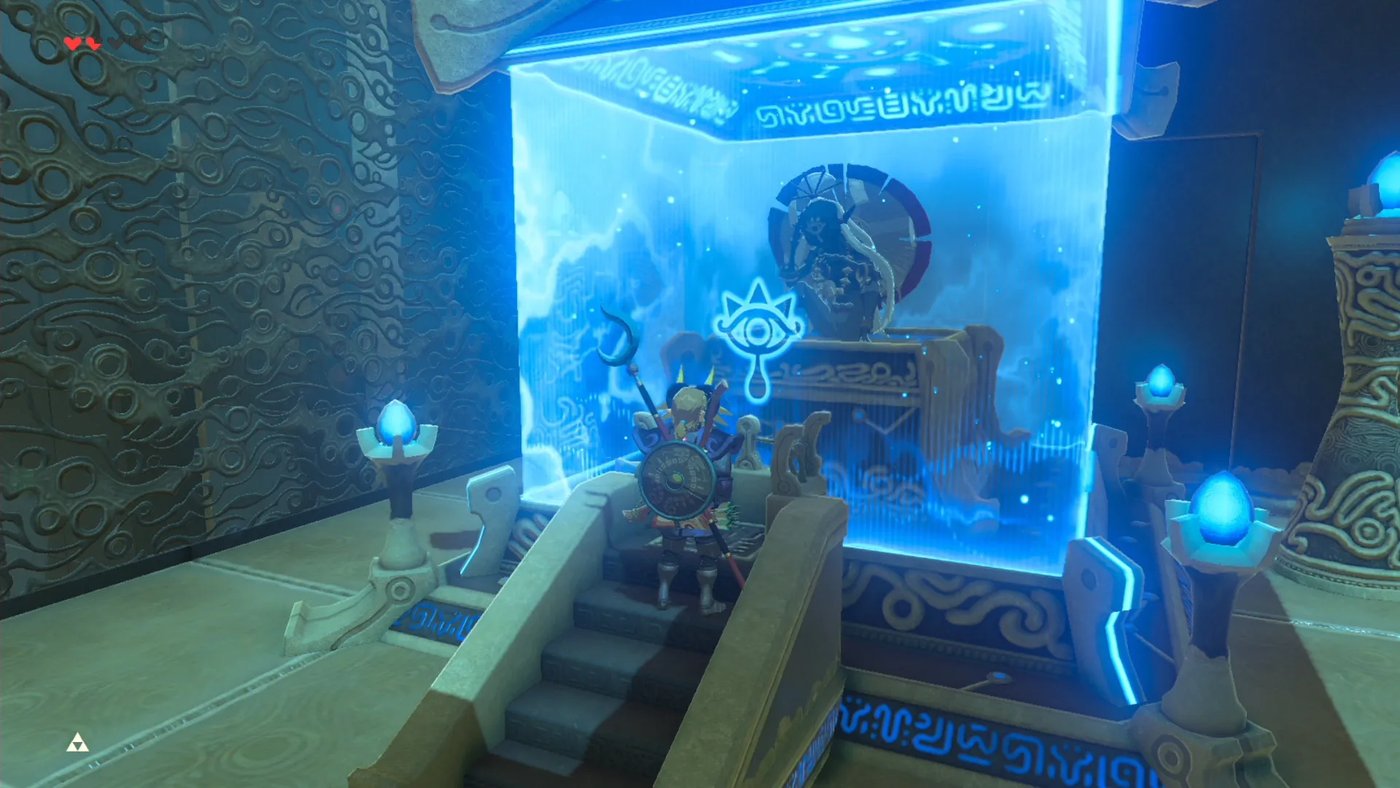
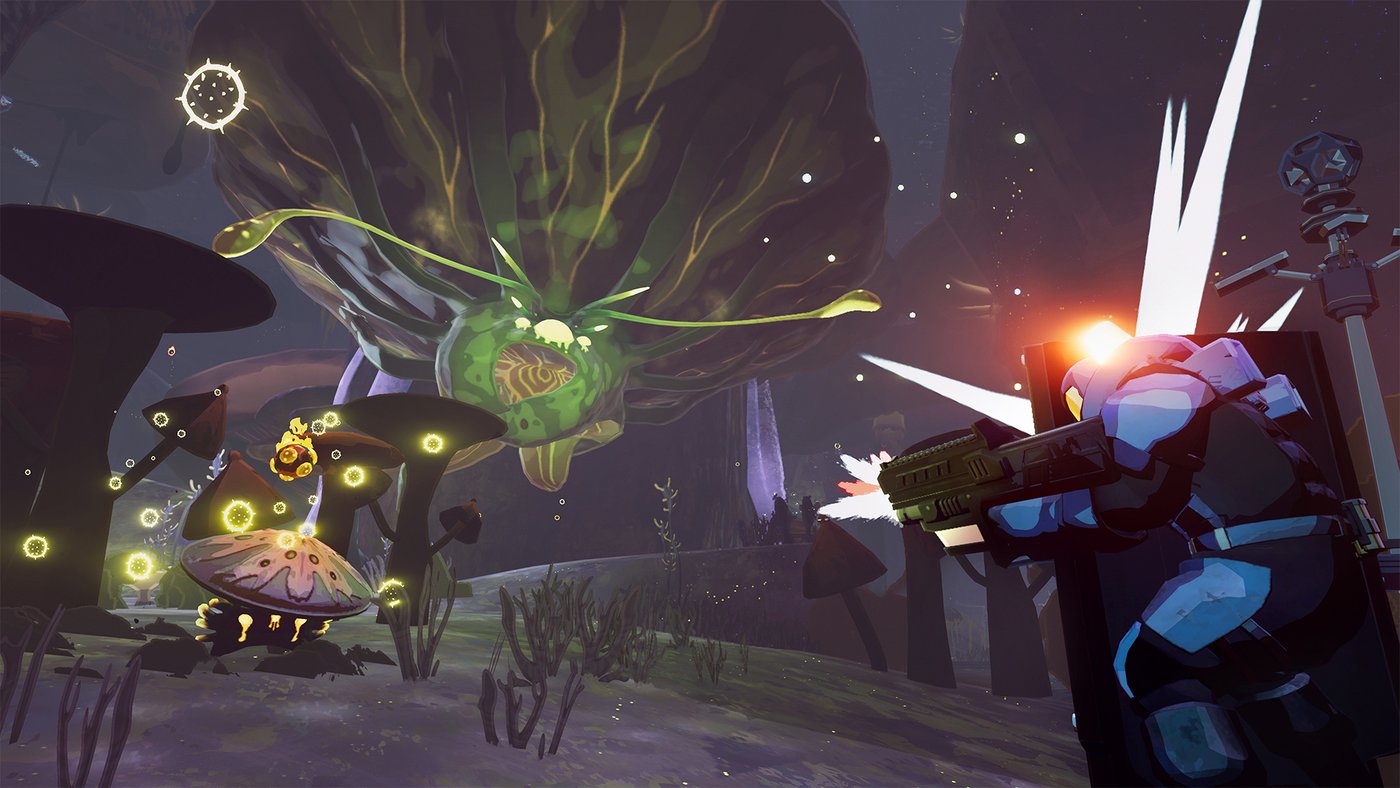
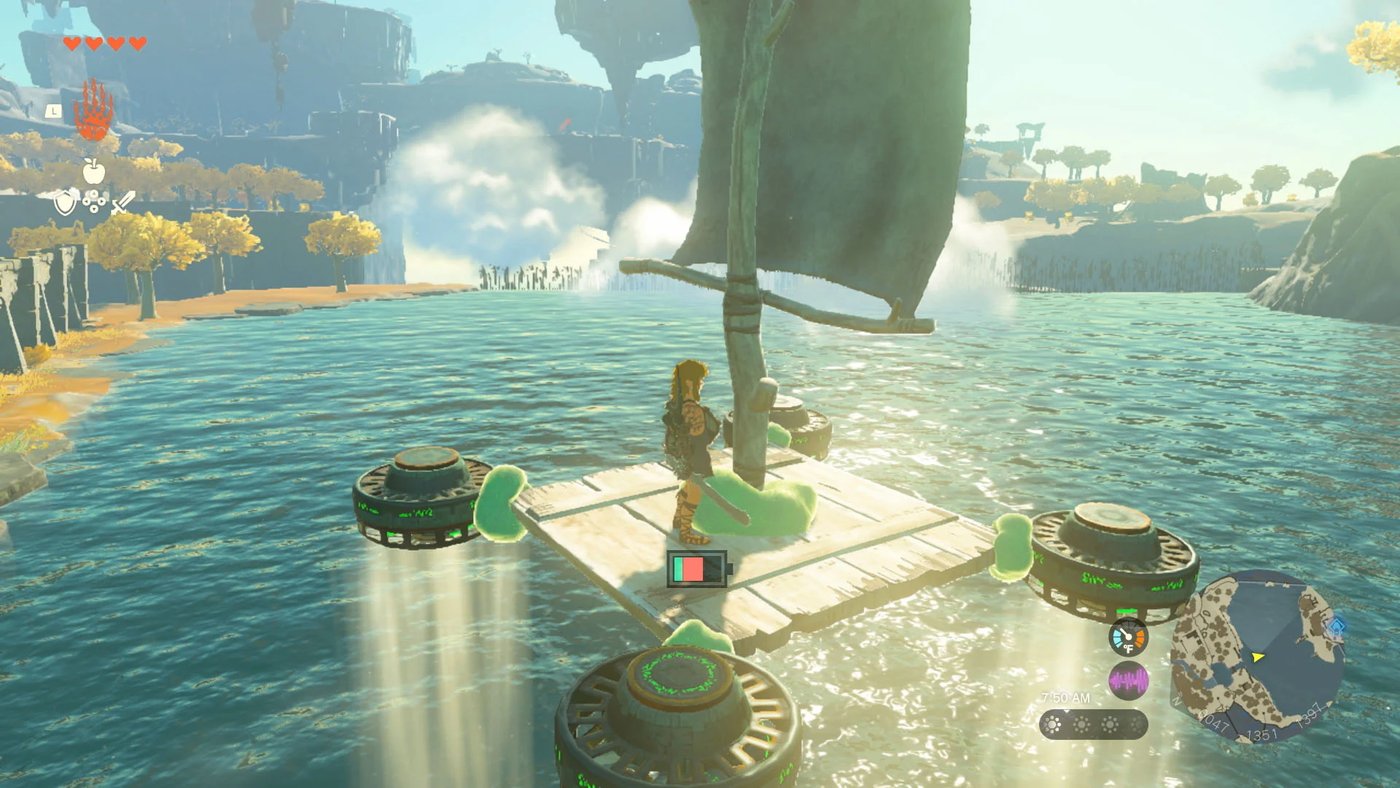
Hand-painted surfaces, simplified forms. Zelda's ornament and RoR2's planar stone are the two poles.

BOTW shrine Zelda BOTW · carved ornament
Risk of Rain 2 key art Risk of Rain 2 · painterly masses
TOTK water crossing Zelda TOTK · painted water

Mood & Atmosphere

family 3 · 12 captures

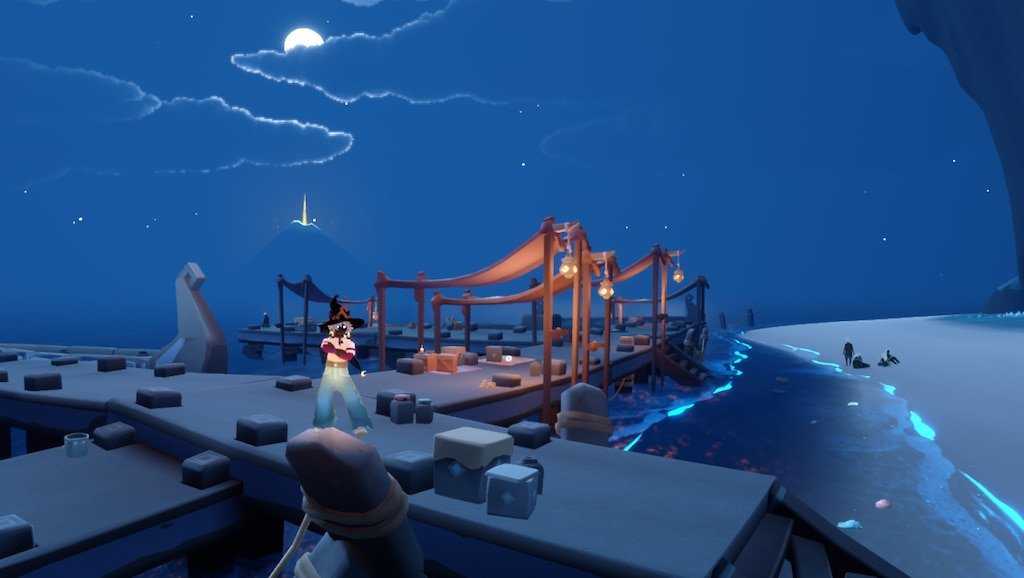
A room still in use after the reader left. Sky supplies the behaviour: warm practicals in cold air.

Sky rain and glow Sky · one warm practical
Sky temple light Sky · the single light shaft
Sky night harbour Sky · lanterns against night

02 — Option Flooding

One blockout, many hands

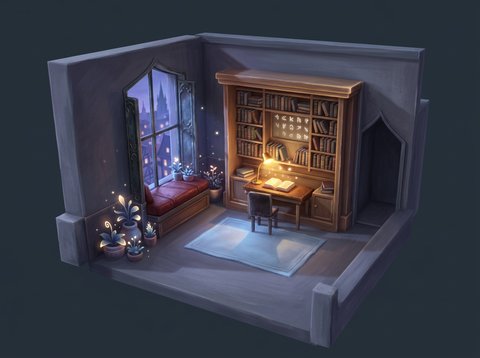
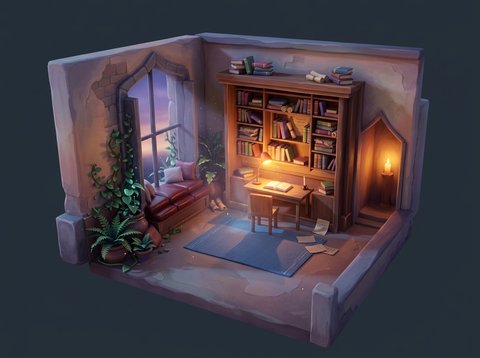
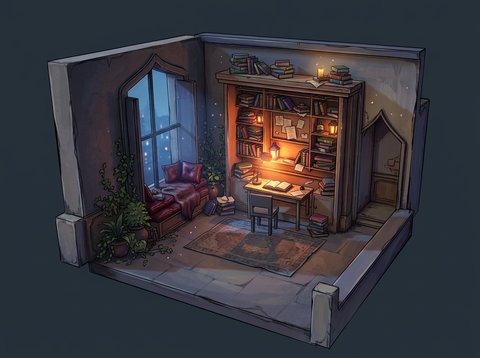
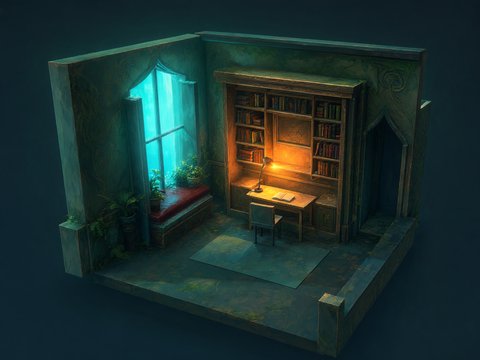
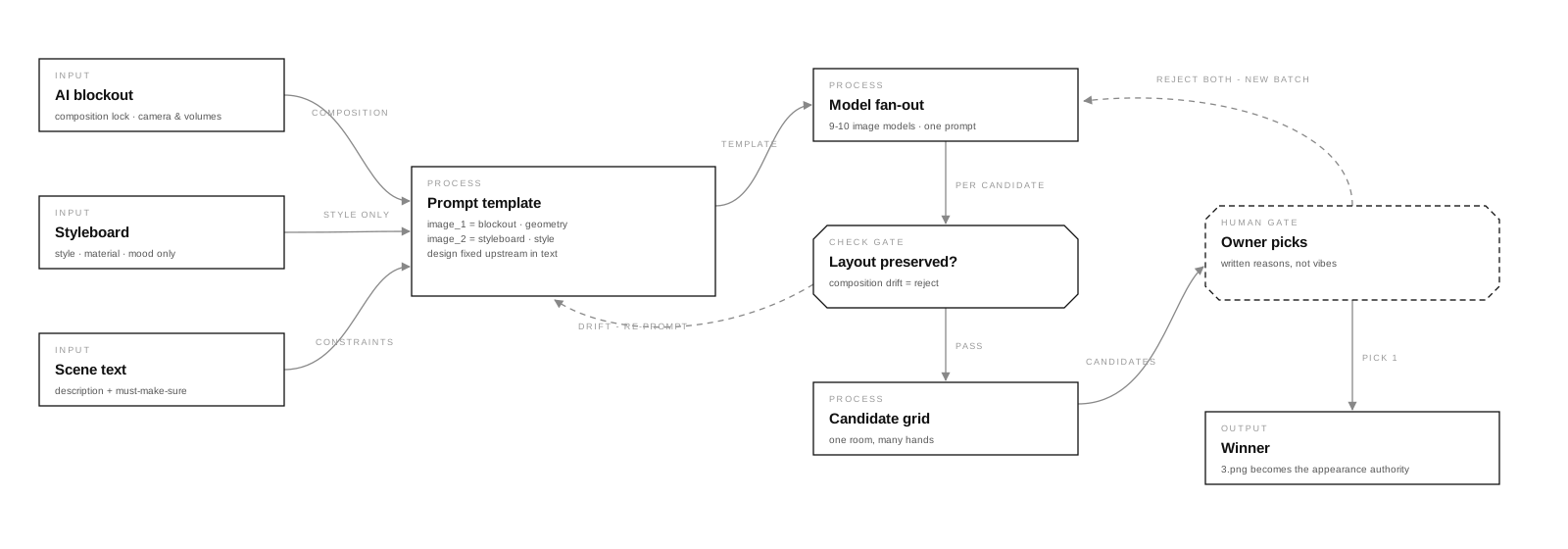
The composition was never up for debate. The blockout locks it; the styleboard only dresses it. The flood compares hands, not ideas.

Flowchart of the option-flooding workflow: three inputs feed a prompt template, fan out to nine to ten models, pass a layout gate, and end at the owner's pick, with two rework loops
Input Process Check gate Human gate Output Rework loop
A
Sky styleboard8 models · one prompt · one pass
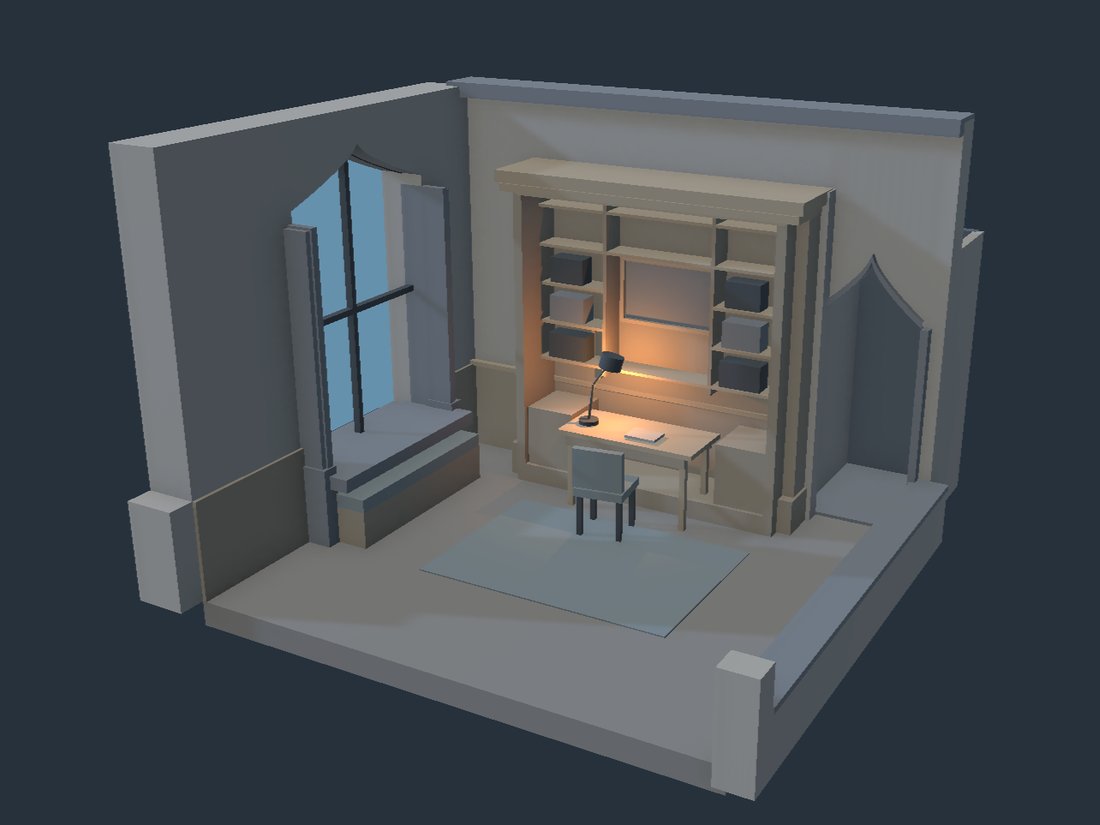
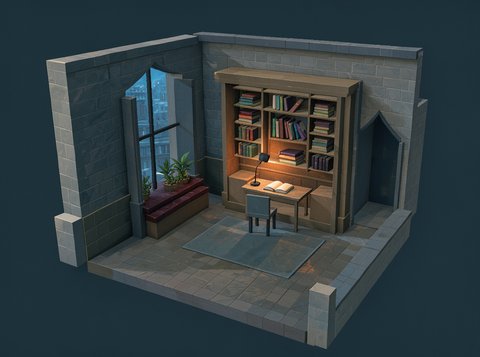
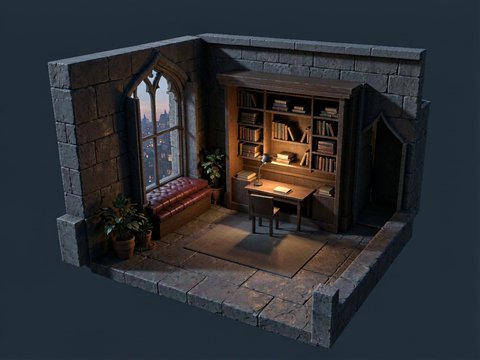
AI blockoutblockout · locked
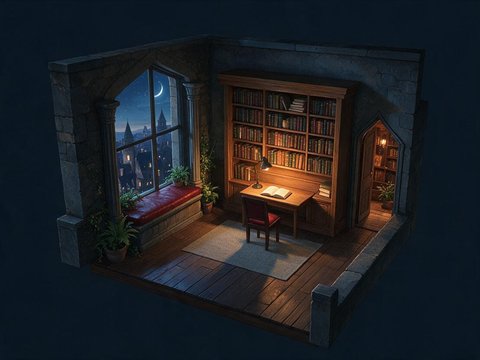
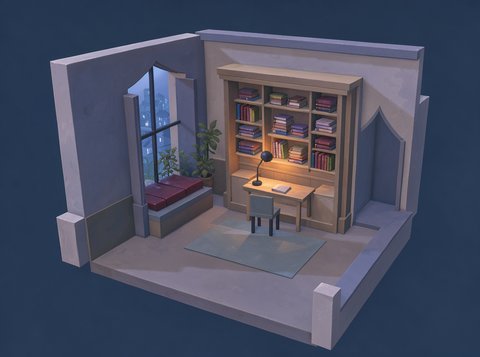
Styleboard Astyleboard · style

image_1 = blockout (geometry) · image_2 = styleboard (style). The design is fixed upstream in text; the flood compares hands, not ideas.
FLUX 3 KleinFLUX 3 Klein
Gemini 3.1 FlashGemini 3.1 Flash
Nano Banana 2.1Nano Banana 2.1
GPT Image SunburstGPT Image Sunburst
Qwen Image 2.1Qwen Image 2.1
Qwen Image 3Qwen Image 3
Sourceful RiverflowSourceful Riverflow
Tencent HunyuanTencent Hunyuan
Owner’s finalists
Run A candidate 1candidate 1
Run A candidate 2candidate 2

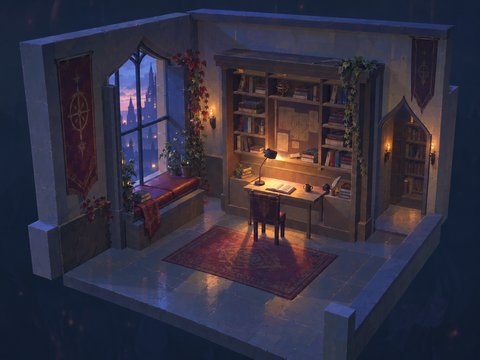
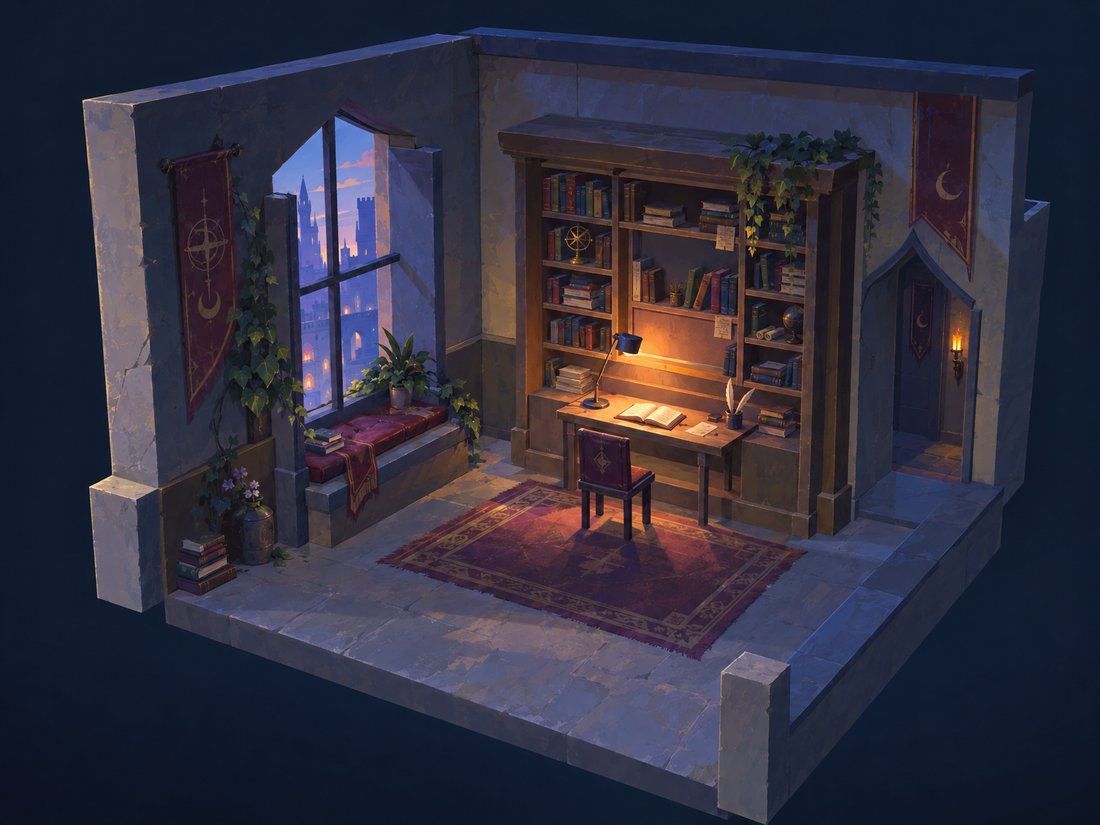
Owner's pick from Run A — kept as a study; Run B wins the room.
B
Risk of Rain 2 / Zelda styleboard8 models · one prompt · one pass
WINNER RUN
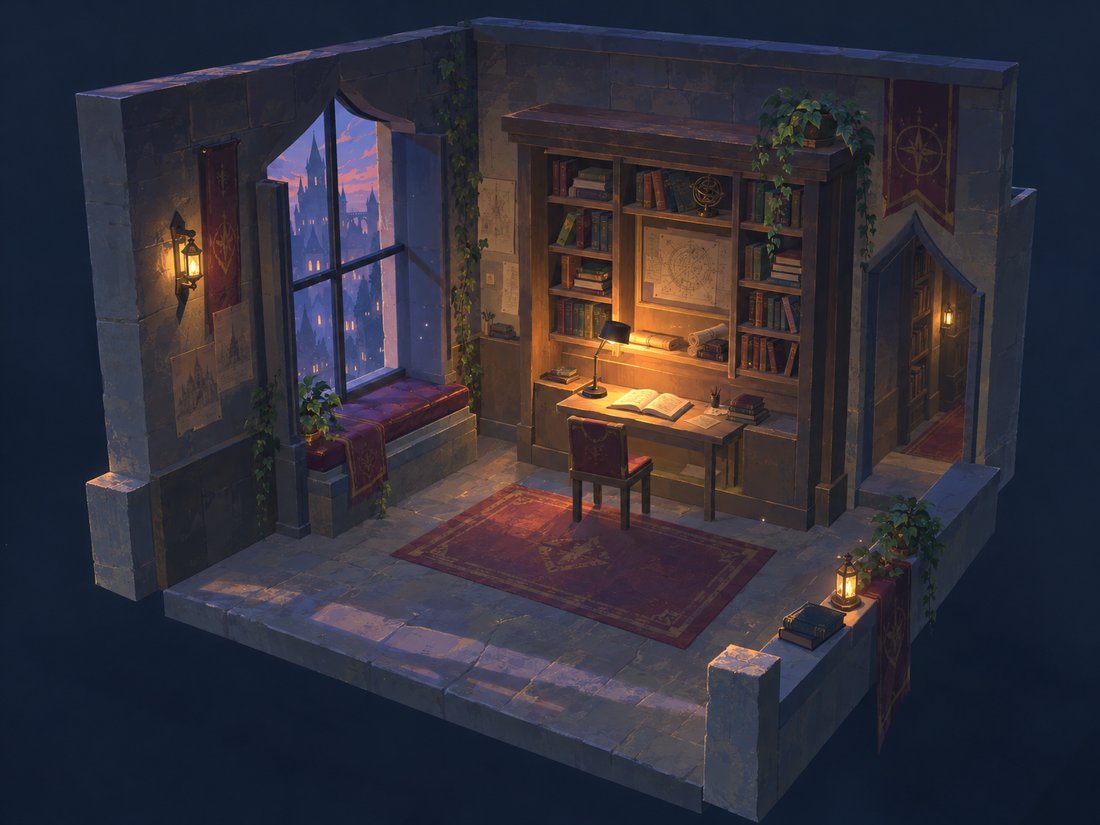
AI blockout unchangedblockout · unchanged
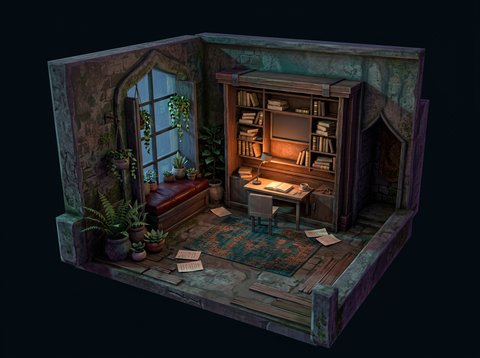
Styleboard Bstyleboard · style

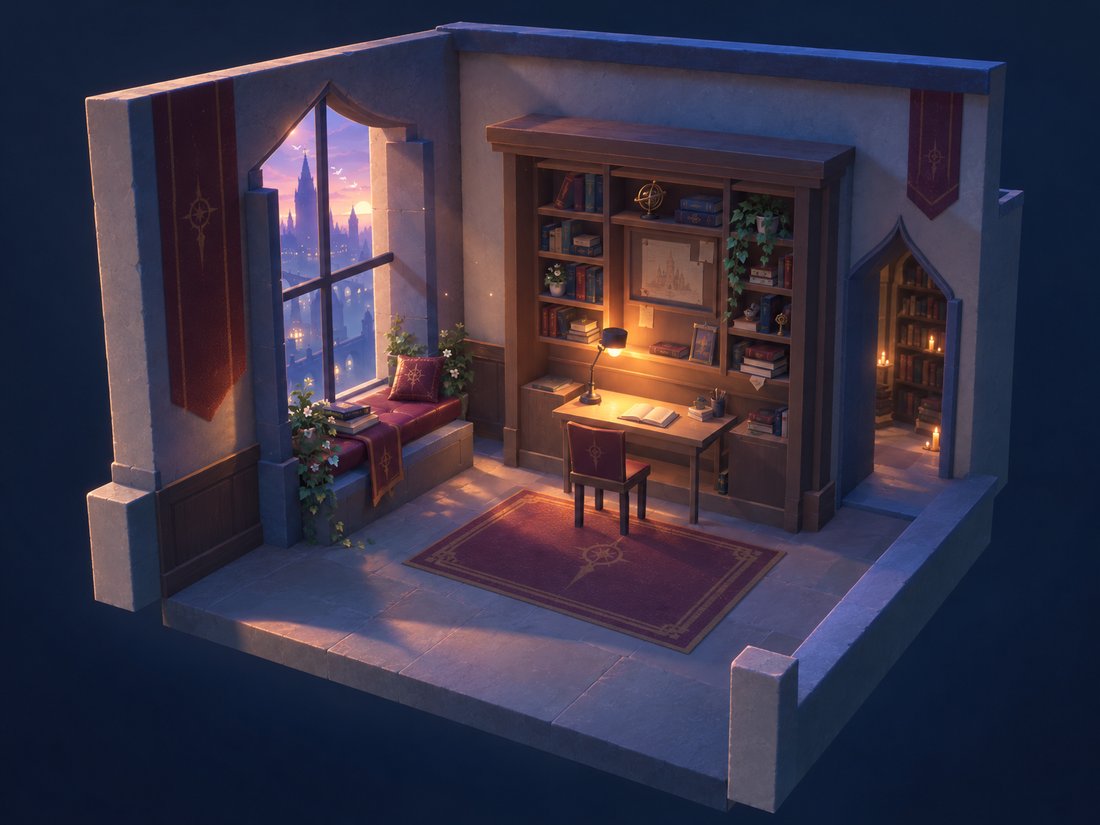
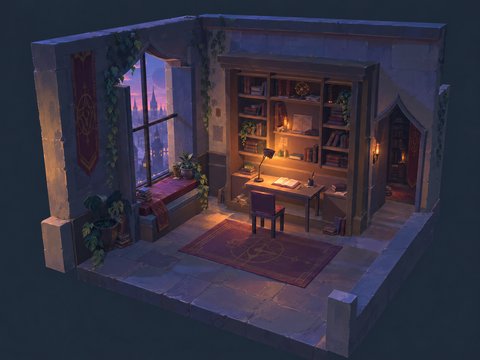
Same prompt, same locked blockout — only the styleboard changes. Nine hands dress the identical room.

FLUX 3 KleinFLUX 3 Klein
Seedream 5.0Seedream 5.0
Gemini 3.1 FlashGemini 3.1 Flash
Nano Banana 2.1Nano Banana 2.1
GPT Image SunburstGPT Image Sunburst
Qwen Image 2.1Qwen Image 2.1
Sourceful RiverflowSourceful Riverflow
Tencent HunyuanTencent Hunyuan
Owner’s finalists
WINNER
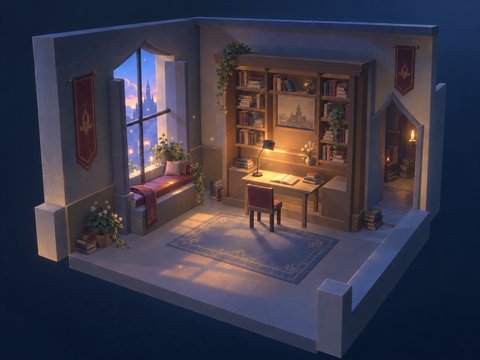
Run B winnercandidate 1
Run B candidate 2candidate 2

The winner supplies appearance only — geometry stays the blockout's; the contract decides what gets built.

A concept image is not a production plan. The winner supplies appearance and composition only. Geometry stays the blockout's; the contract decides what actually gets built.

03 — Contract

From winner to signed references

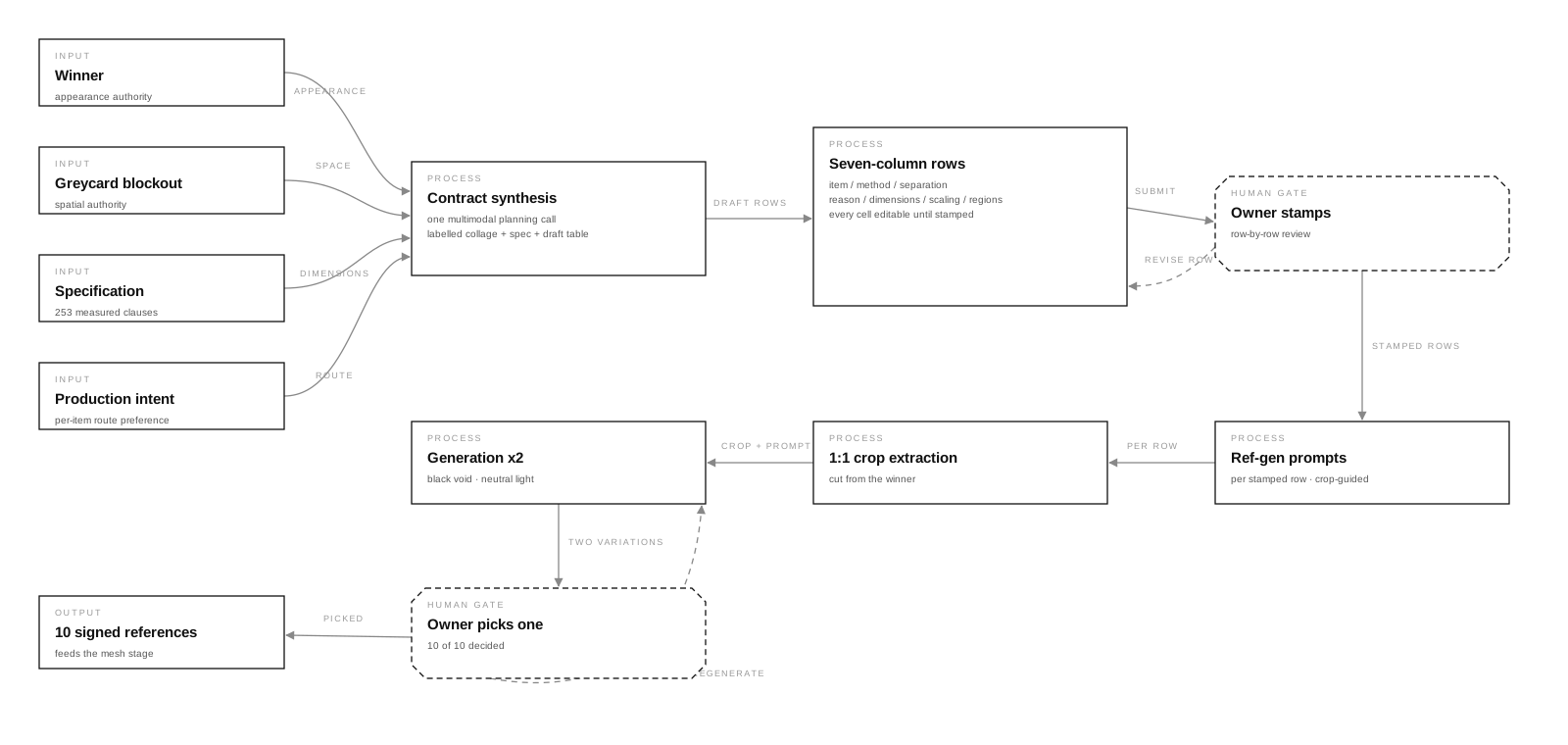
The contract turns the winner into rows of production intent, then turns each row into an isolated reference the mesh stage can trust. Appearance, space and specification stay separate authorities all the way through.

Flowchart of the contract workflow: four authorities feed a synthesis call, become editable seven-column rows, pass the owner's stamp gate, expand into ref-gen prompts, crops and two variations, and end at ten signed references, with two rework loops
Input Process Human gate Output Rework loop
Appearance authority
The winning concept image, attached as appearance reference
The option-flooding winner, attached locally as the appearance reference.
Spatial authority
The greycard blockout, attached as spatial reference
The greycard blockout: geometry, arrangement and clearances. Its greys are placeholders and never colours.
1
Typed by the ownerone row per item · route + optional reason · editable until stamped
ItemRouteReason
bookshelf3D Model API—
chair3D Model API—
lamp3D Model API—
wallLocal AI Agent—
booksHybridagent first; API fallback if spines too simple
2
Stamped contract rowsevery cell expanded: reason · dimensions · scaling · material regions
Output of this workflow
ItemMethodReasonDimensionsScalingMaterial regions
bookshelf3D Model APIHero joinery suits generation, then fitted to the alcove in Blender.2.65 × 2.85 × 0.65 m · 3 bays · boards 0.028 mUniform fit to envelope, centred 0.20 m right of rear-wall centreCarved canopies, shelves, cornice; warm varnish, dust & wear
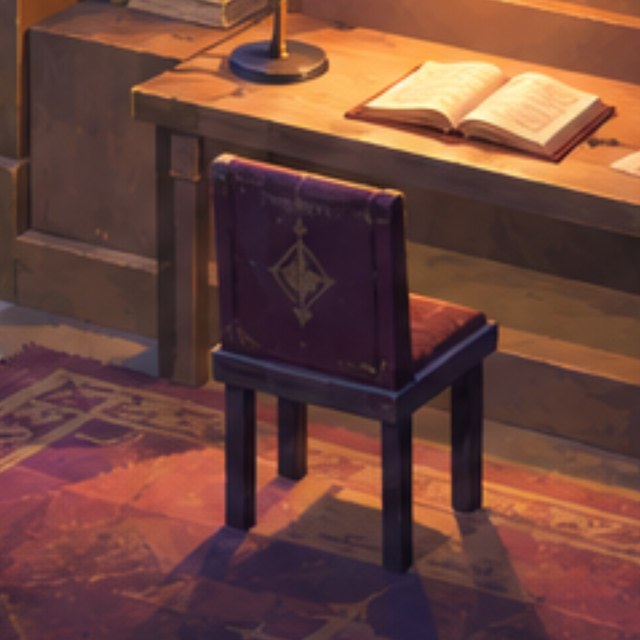
chair3D Model APITurned detail + upholstery benefits from generation.Seat 0.46 × 0.45 m · h 0.45 m · overall 0.88 mFit 0.52 × 0.54 × 0.88 m envelope, rotated 8° to windowDark timber frame; red leather seat/back; brass tacks if present
lamp3D Model APIArticulated silhouette; one interactive prefab.TBD — confirm before productionUniform fit; base centred on deskDark metal base/arm/shade; warm emissive bulb
wallLocal AI AgentTrue thickness + cutaway is deterministic — agent-built.4.60 × 4.00 × 3.65 m · clear 3.40 m · walls 0.30–0.45 mBuilt directly to measured envelopeAged stone + plaster; cut edges; weathering as mask variation
booksHybridAgent parametric first; API fallback if spines too simple.TBD — confirm before productionSpines to 0.28 m depth, fit 0.33–0.38 m openingsLeather/cloth spines, gilt titles; varied hues & lean

The synthesis also inserts [AI added] rows the owner never typed — e.g. timber wainscot, omitted in the input but specified and visible in both references.

Ref-gen prompts — shared template + one clause per stamped row

Shared template. "According to the attached tight 1:1 crop of the approved winner — a localisation and appearance reference, never a composition to reproduce. Create exactly one isolated reference of the single TARGET … absolutely uniform RGB(0,0,0) black void, no floor or cast shadow … neutral, even object-only illumination … no text, labels, watermark or UI."

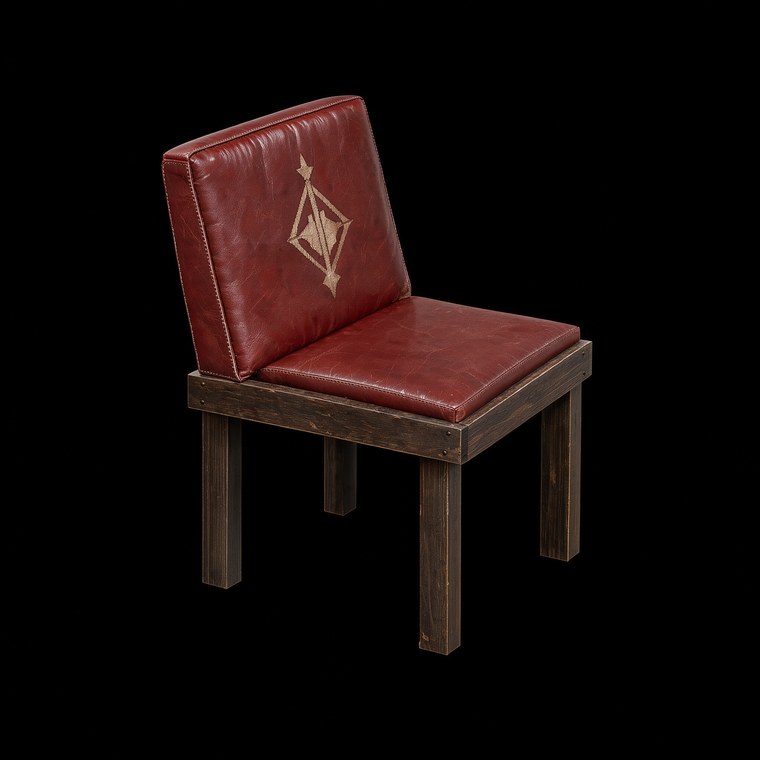
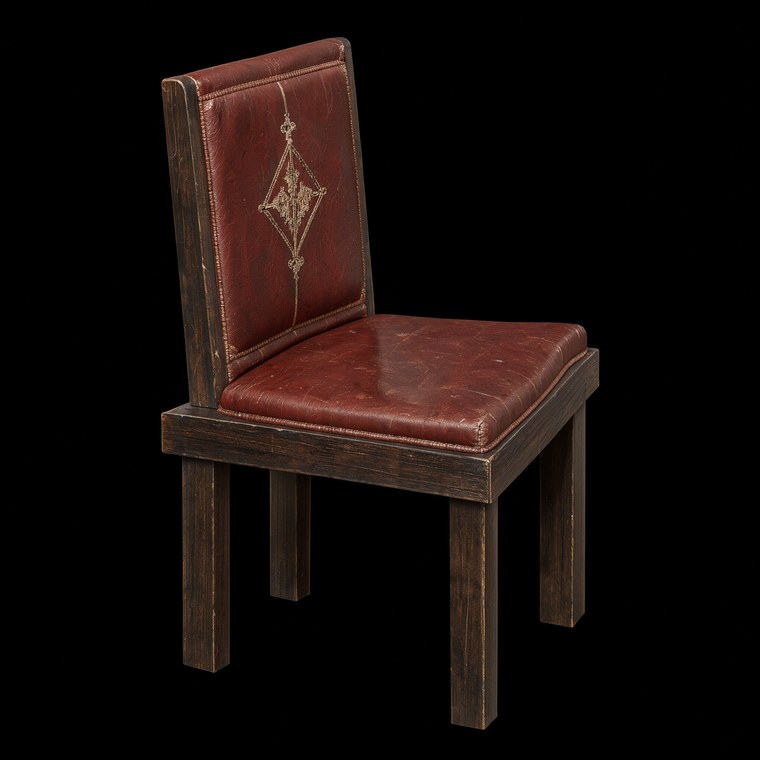
Chair clause. "…only the depicted chair — reclined back panel, padded seat, leg-to-rail joinery … dark-stained timber with visible grain … deep red leather seat and back … readable upholstery boundaries so timber and leather stay independently editable."

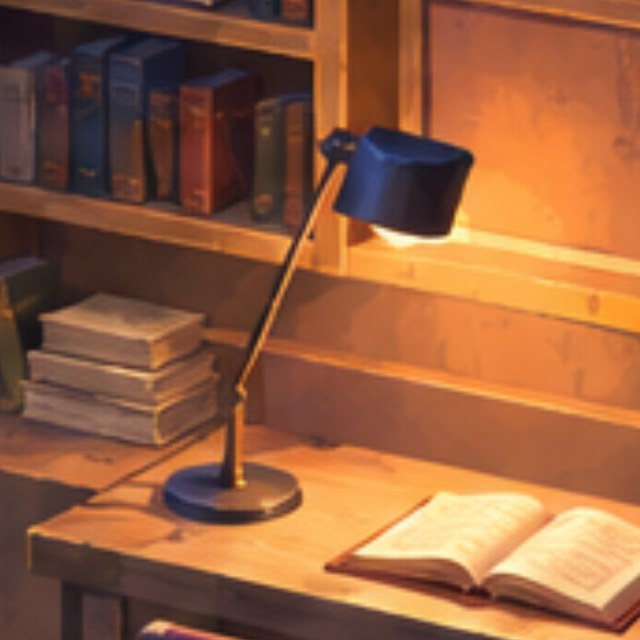
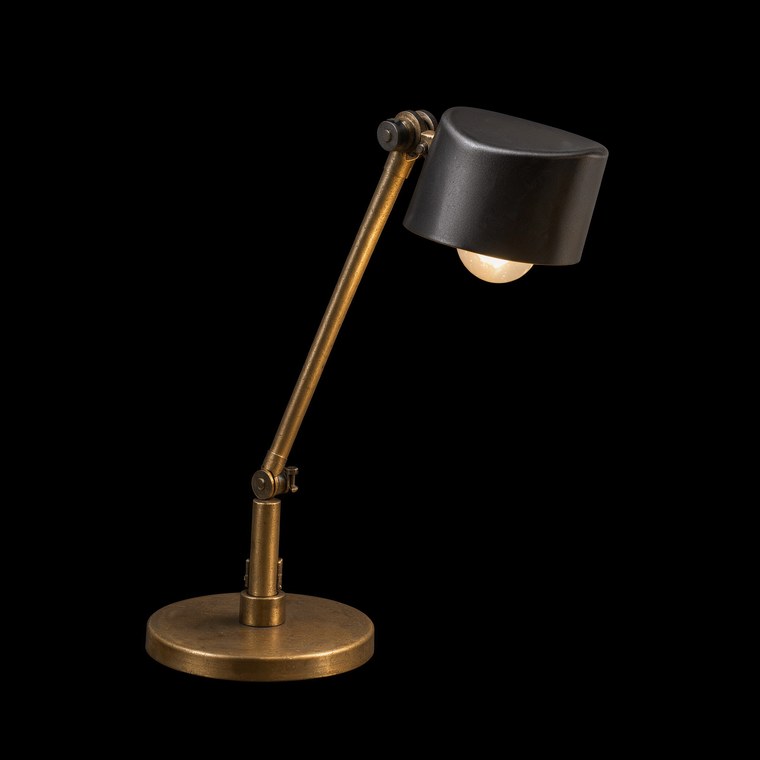
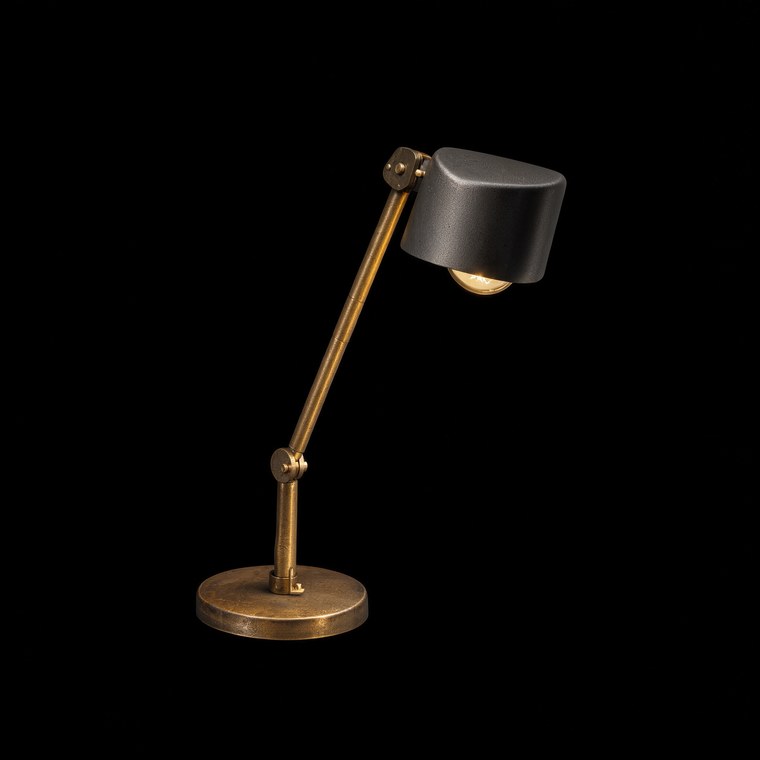
Lamp clause. "…the depicted task lamp — circular weighted base, slender arm segments, joints, shade profile, exposed bulb … warm aged brass base and arm … near-black gunmetal shade … all four components visibly distinct."

The ten references — crop, two variations, one picked

Every asset got the same treatment: a tight 1:1 crop cut from the winner, then two generated 1:1 coloured references on a pure black background under neutral light, construction readable. The owner picked one per asset; the picked references below are exactly what the mesh stage consumed.

01 · Task chairv2 picked
1:1 crop of the chair from the winnercrop
Chair reference variation 1v1
Chair reference variation 2, pickedv2 · picked

timber frame / red leather upholstery · single mesh, material-separated submeshes

02 · Task lampv1 picked
1:1 crop of the lamp from the winnercrop
Lamp reference variation 1, pickedv1 · picked
Lamp reference variation 2v2

base / arm / shade / bulb · separate component meshes

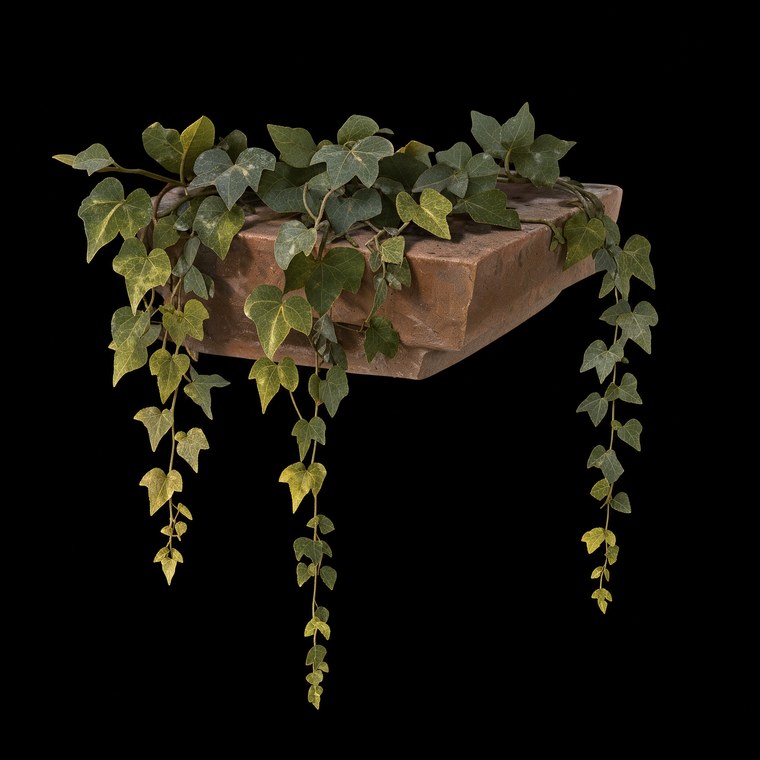
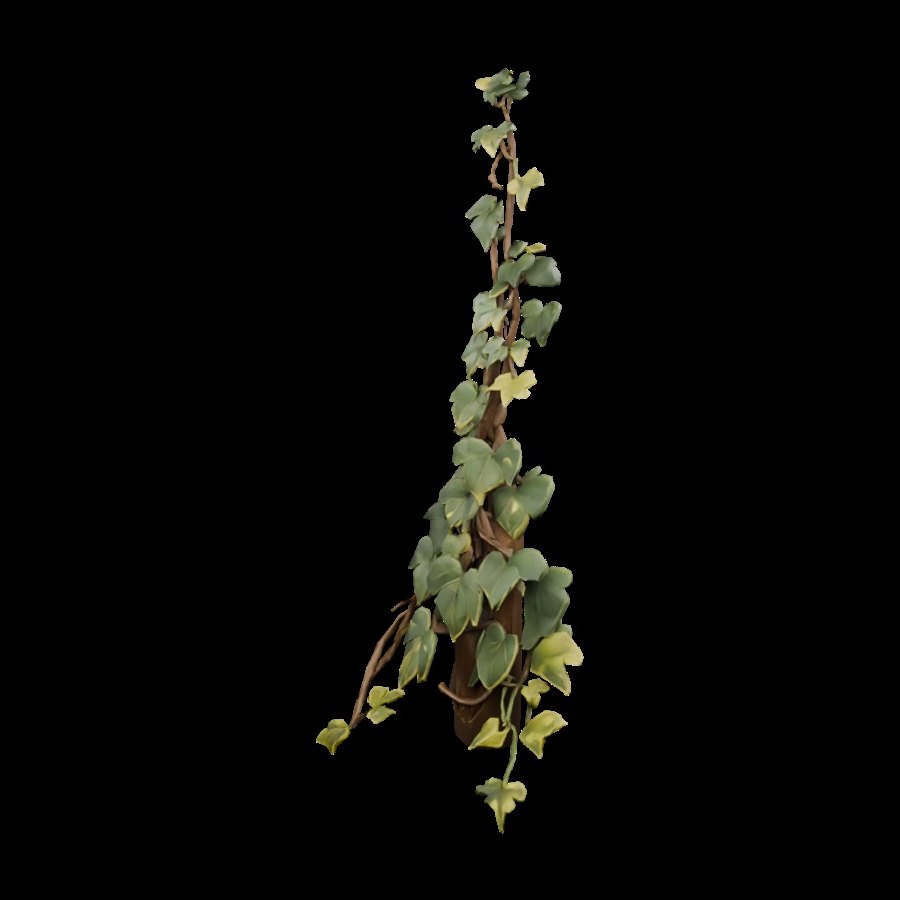
03 · Trailing ivy arrangementv1 picked
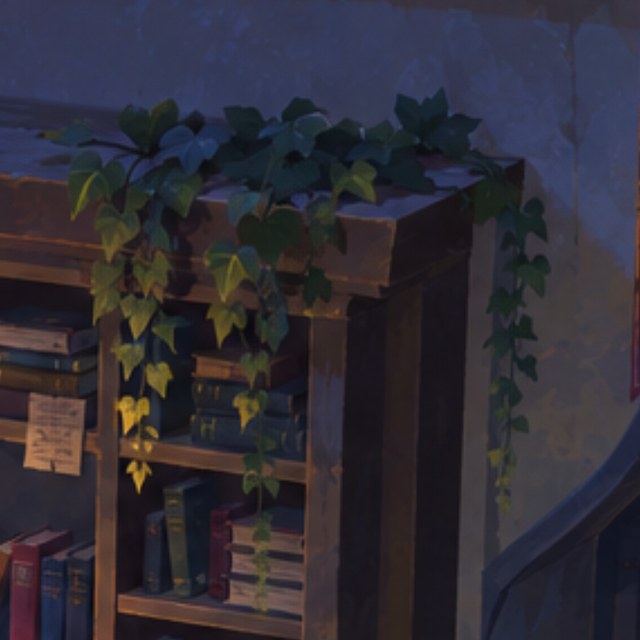
1:1 crop of the trailing ivy from the winnercrop
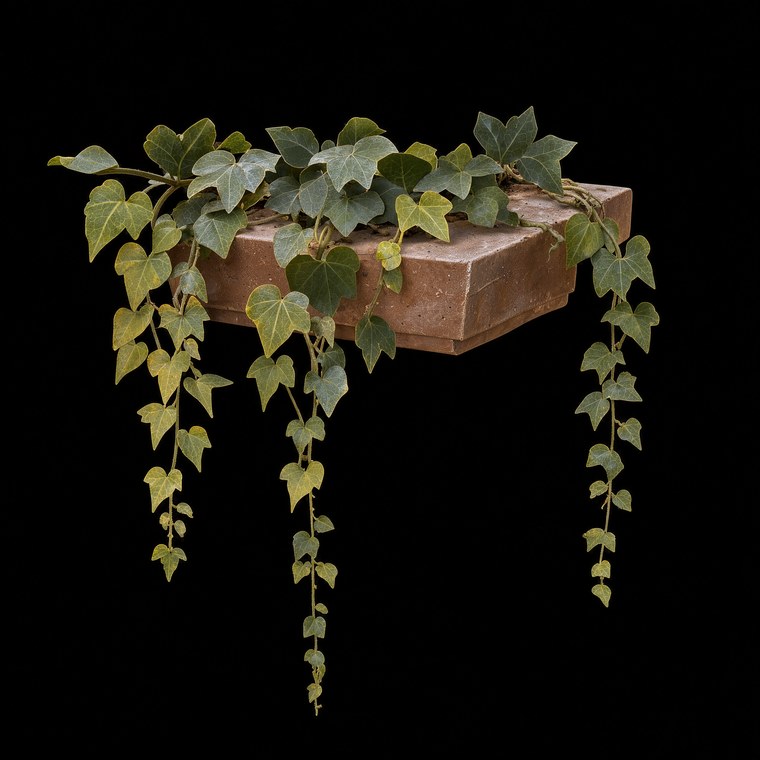
Ivy reference variation 1, pickedv1 · picked
Ivy reference variation 2v2

pot / stems / ivy foliage · single mesh, material-separated submeshes

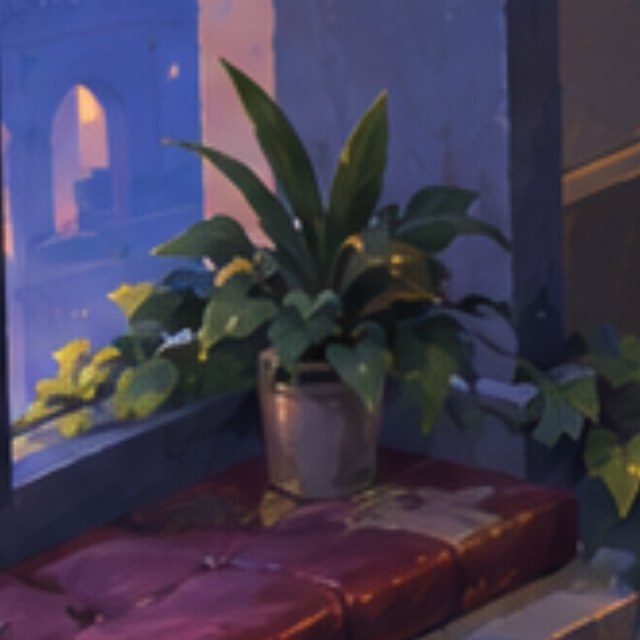
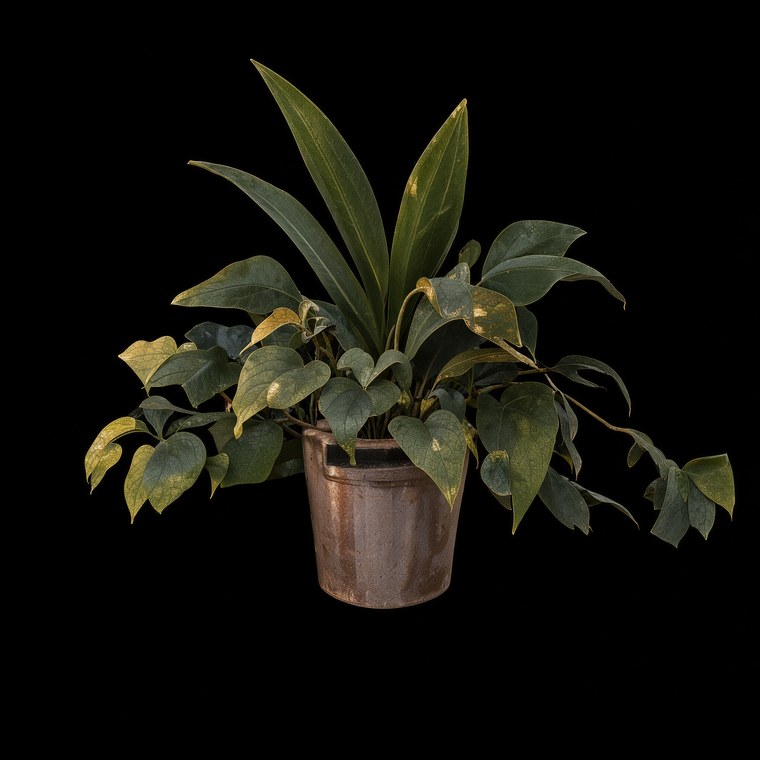
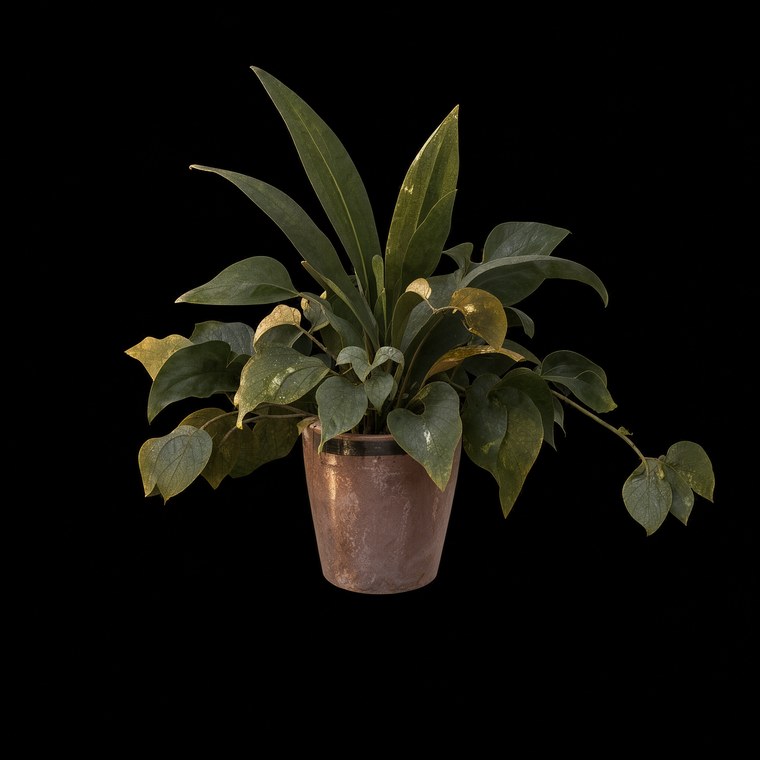
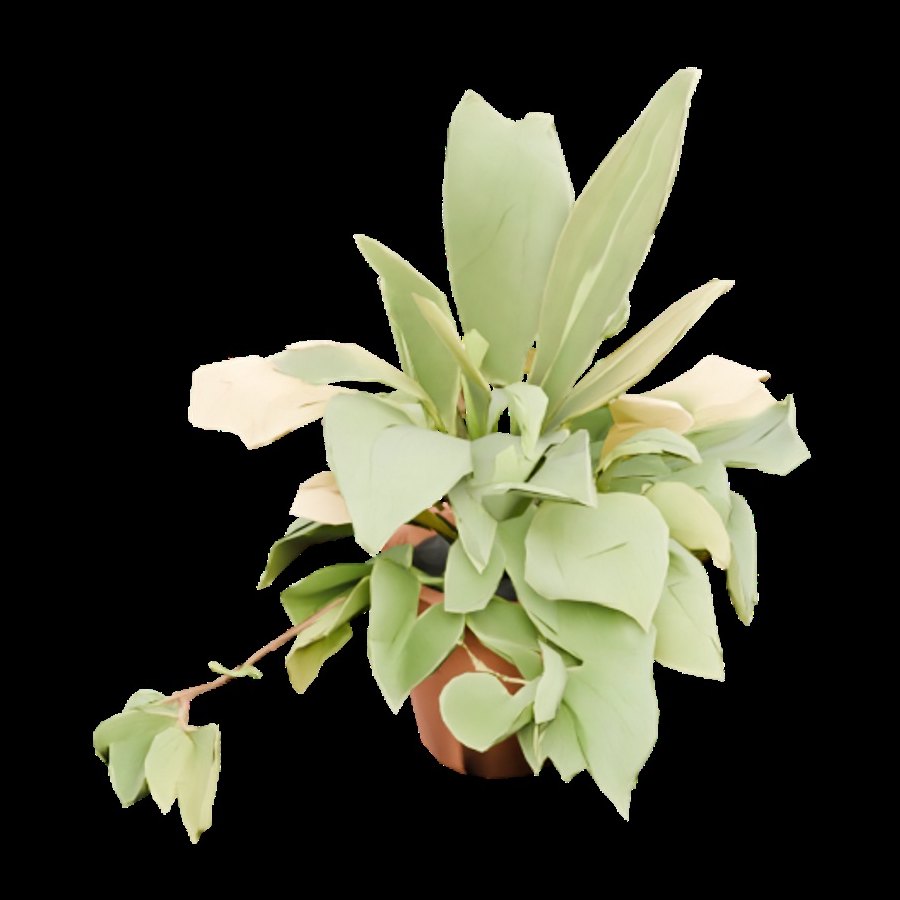
04 · Bonsai / potted greeneryv2 picked
1:1 crop of the bonsai from the winnercrop
Bonsai reference variation 1v1
Bonsai reference variation 2, pickedv2 · picked

pot / trunk / foliage · single mesh, material-separated submeshes

05 · Globe and standv2 picked
1:1 crop of the globe from the winnercrop
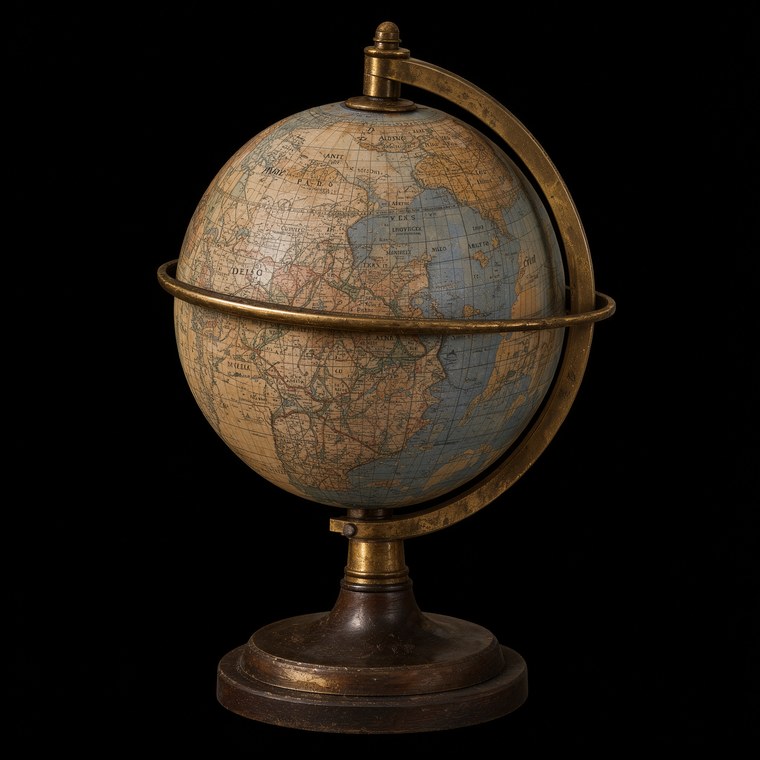
Globe reference variation 1v1
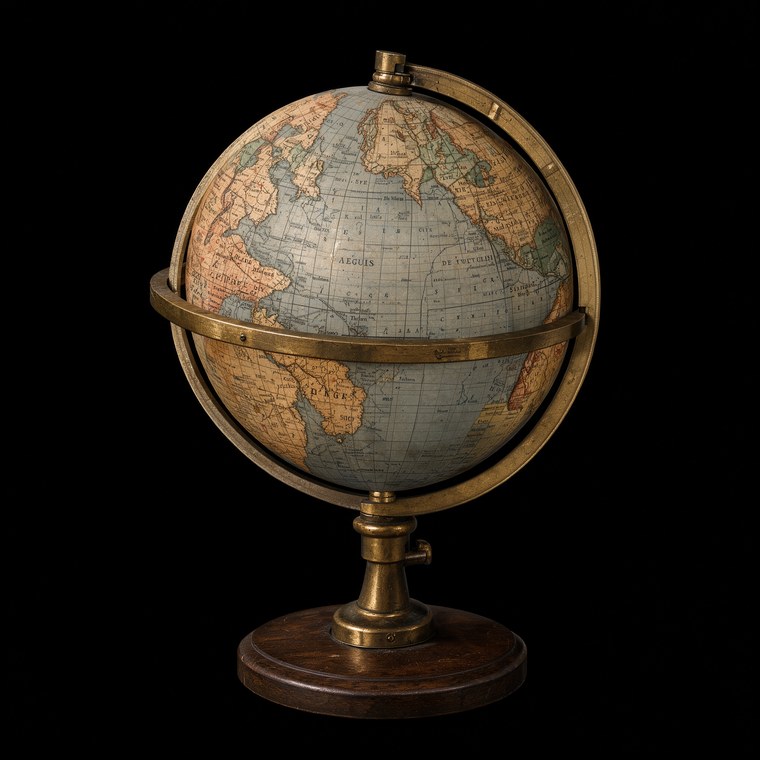
Globe reference variation 2, pickedv2 · picked

printed sphere / brass meridian / timber and brass stand

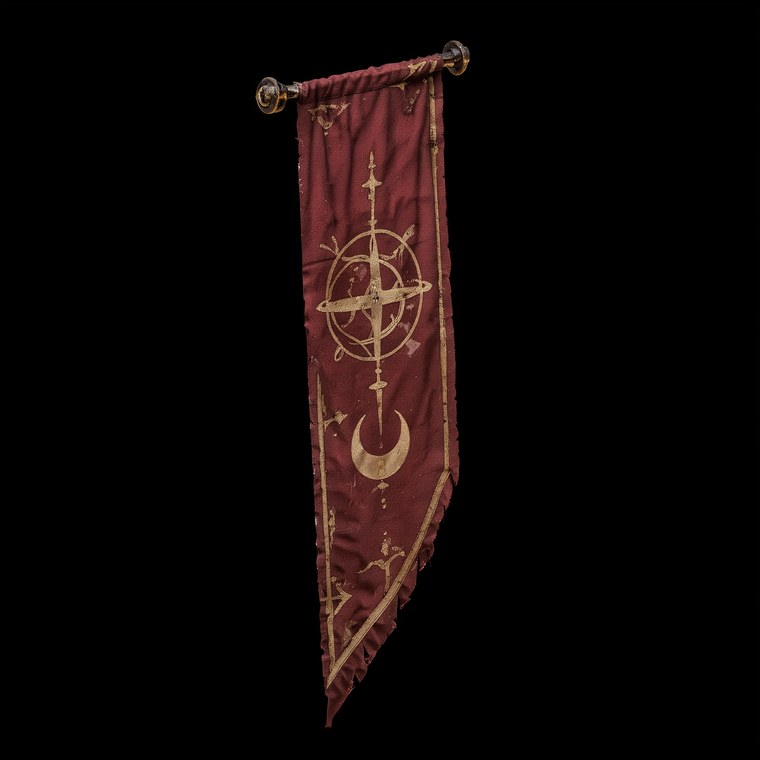
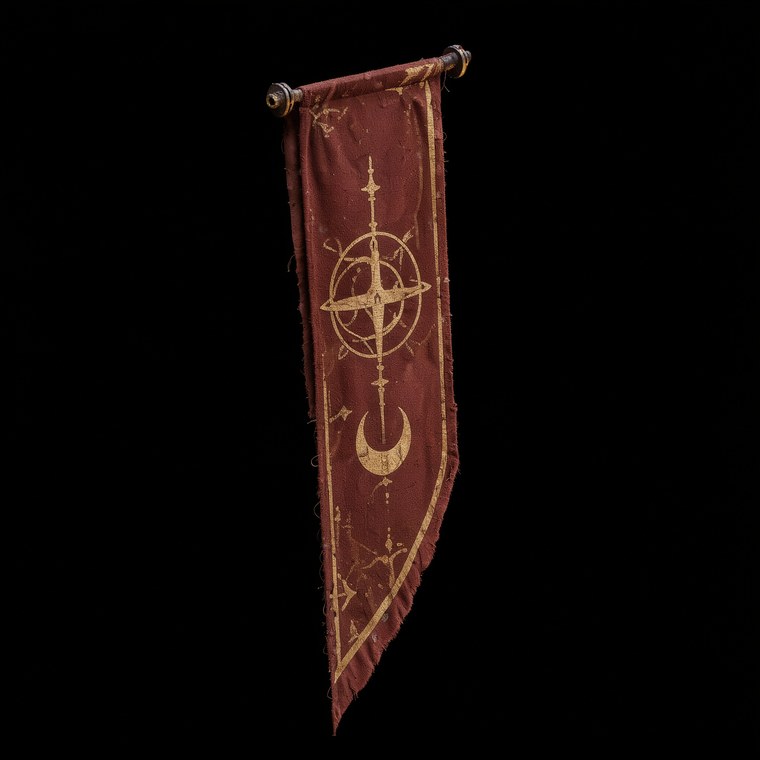
06 · Red hanging bannerv2 picked
1:1 crop of the banner from the winnercrop
Banner reference variation 1v1
Banner reference variation 2, pickedv2 · picked

red cloth / aged-gold emblem / hanging support

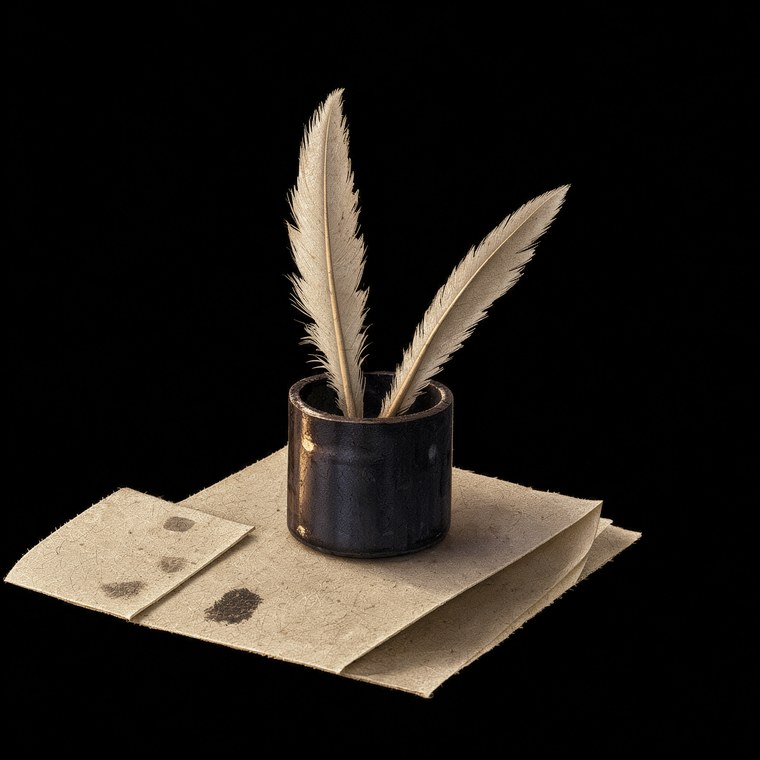
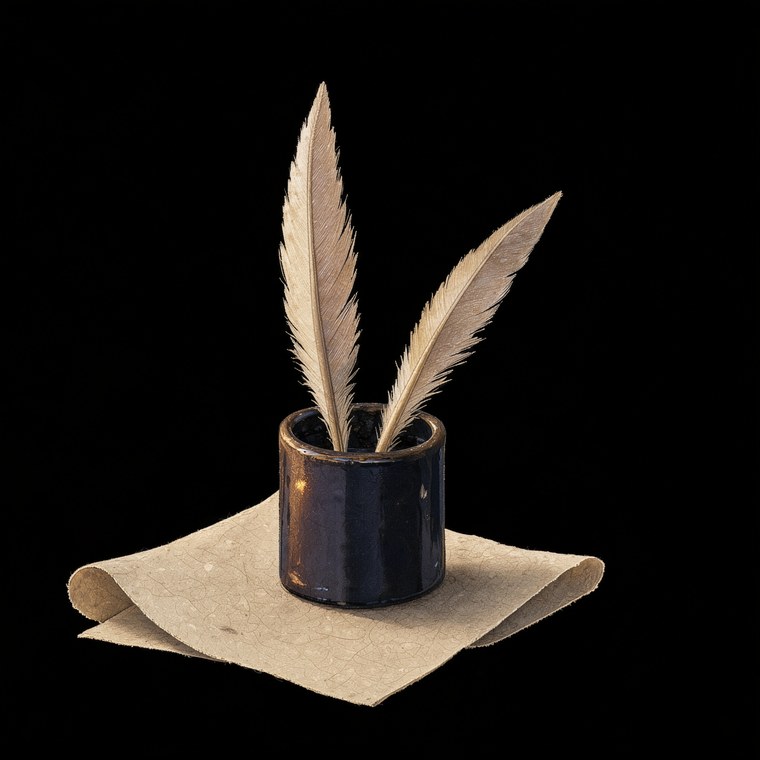
07 · Papers and inkwellv2 picked
1:1 crop of the papers and inkwell from the winnercrop
Inkwell reference variation 1v1
Inkwell reference variation 2, pickedv2 · picked

paper / inkwell · single mesh, material-separated submeshes

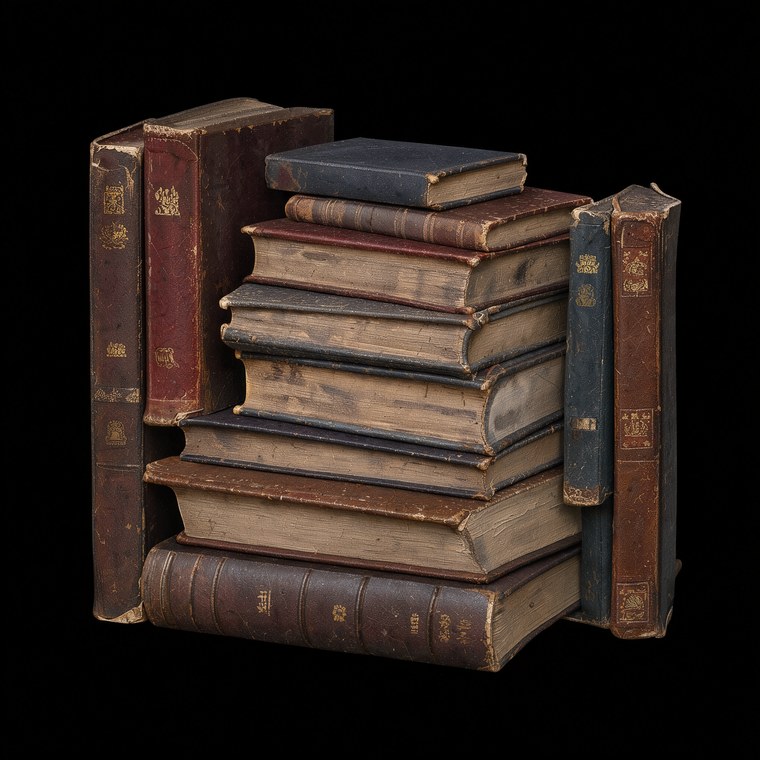
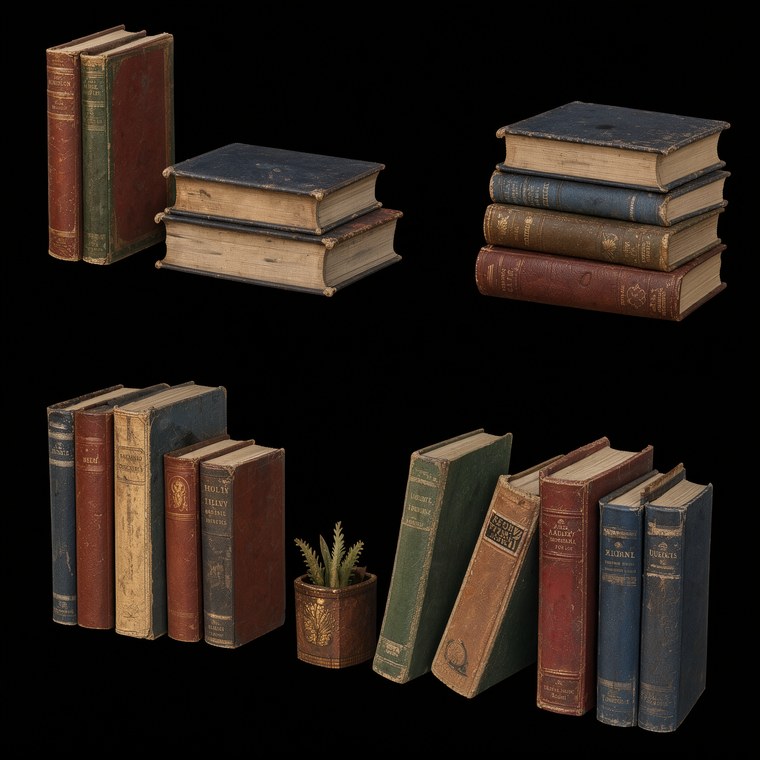
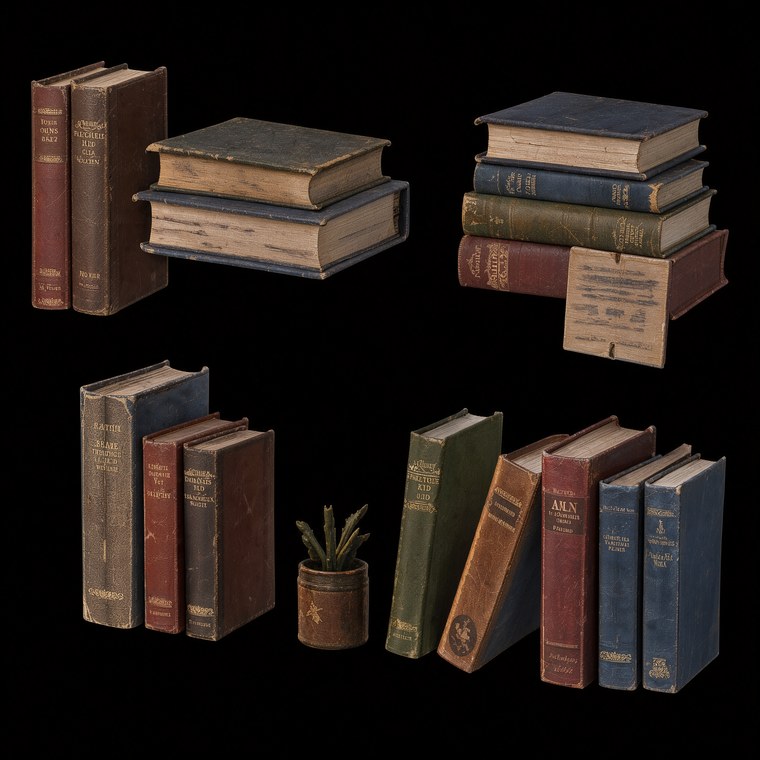
08 · Stacked booksv1 picked
1:1 crop of the stacked books from the winnercrop
Books reference variation 1, pickedv1 · picked
Books reference variation 2v2

covers / spines / gilt / paper blocks

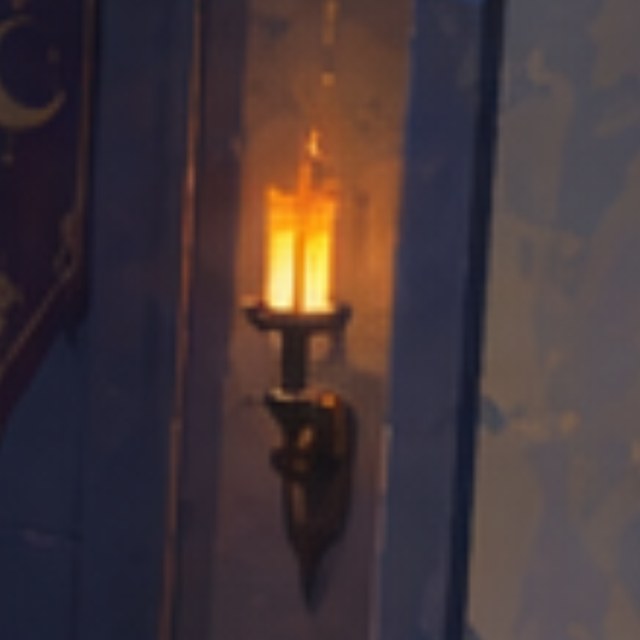
09 · Wooden passage sconcev1 picked
1:1 crop of the passage sconce from the winnercrop
Sconce reference variation 1, pickedv1 · picked
Sconce reference variation 2v2

carved timber / flame mesh

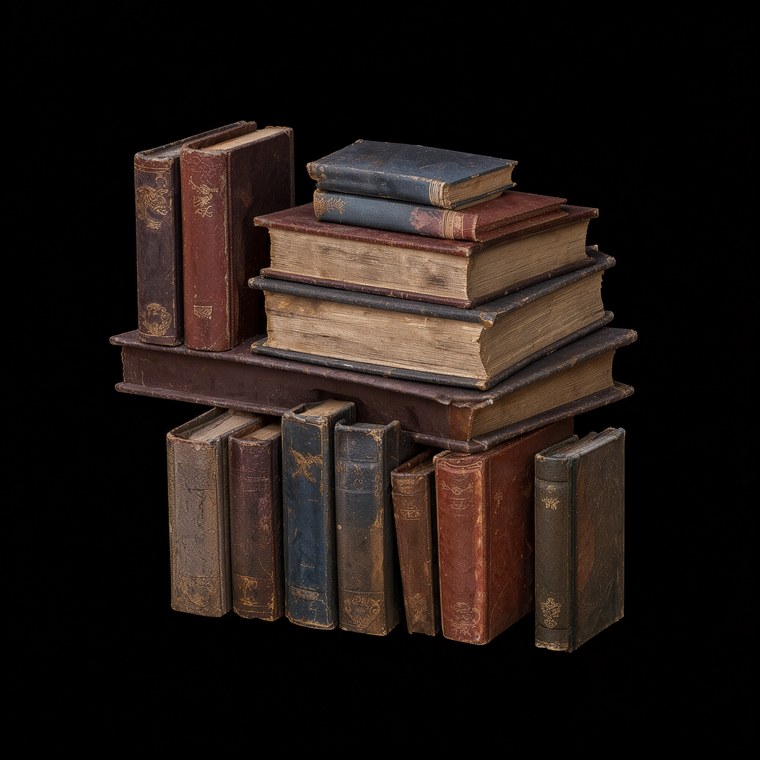
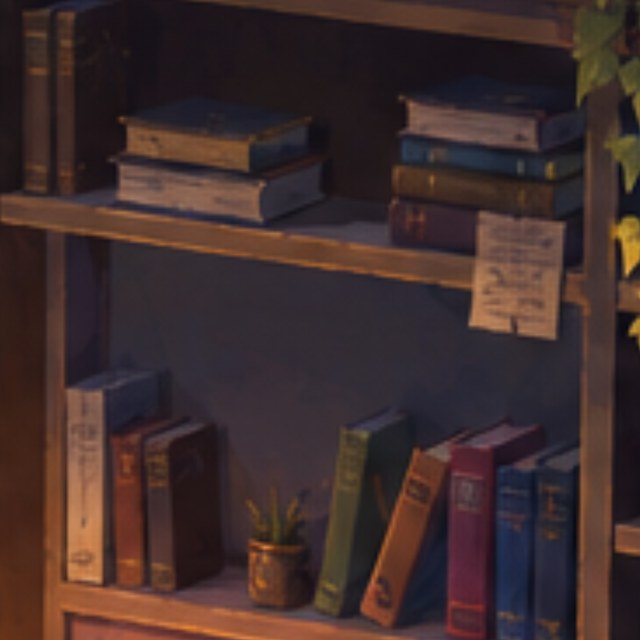
10 · Shelf book clusterv1 picked
1:1 crop of the shelf book cluster from the winnercrop
Book cluster reference variation 1, pickedv1 · picked
Book cluster reference variation 2v2

leather and cloth bindings / gilt / paper blocks

Different materials alone do not force a split. An asset becomes Beta only when it needs addressable components for material replacement, geometry repair, part replacement or interaction. Bang is a decision, never a default.

04 — Mesh Pipeline

QA, then fix. Prove it, then ship it.

Every generated mesh passes through the same pipeline: inspect with Blender MCP, diagnose with hide/only matrices and boundary audits, repair within a measured bound, normalise to a shared rig, and verify against the source before Unity ever sees it. The pipeline is the product — the chair is just the first asset to survive it.

I
The pipeline

One flowchart, five maths, zero guesses

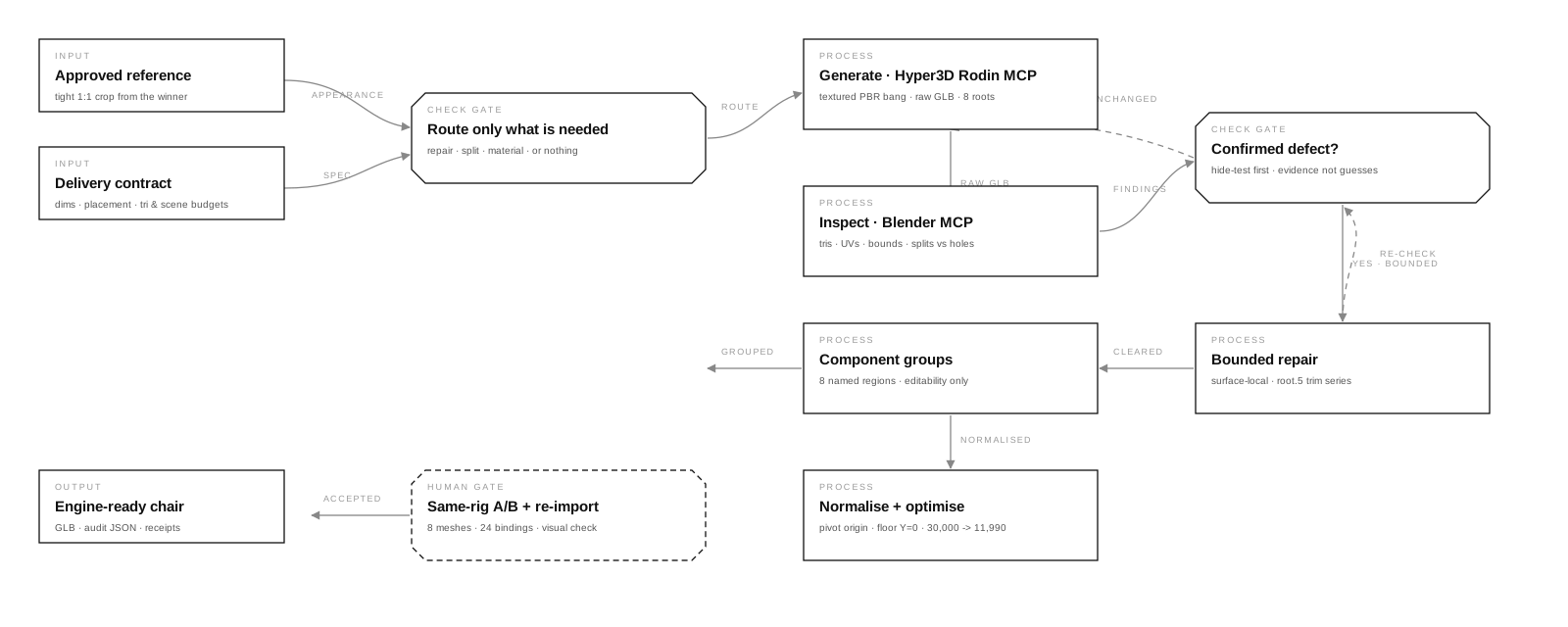
The route every mesh runs — highest level Flowchart of the mesh pipeline: approved reference and delivery contract feed a routing gate, generate through Hyper3D Rodin MCP, inspect through Blender MCP, pass a defect gate into bounded repair, component groups, normalise and optimise, a same-rig acceptance gate, and an engine-ready output, with re-check and pass-unchanged loops
Input QA step Fix step Check gate Human gate Rework loop
II
QA in action

Take it apart. Measure everything. Assume nothing.

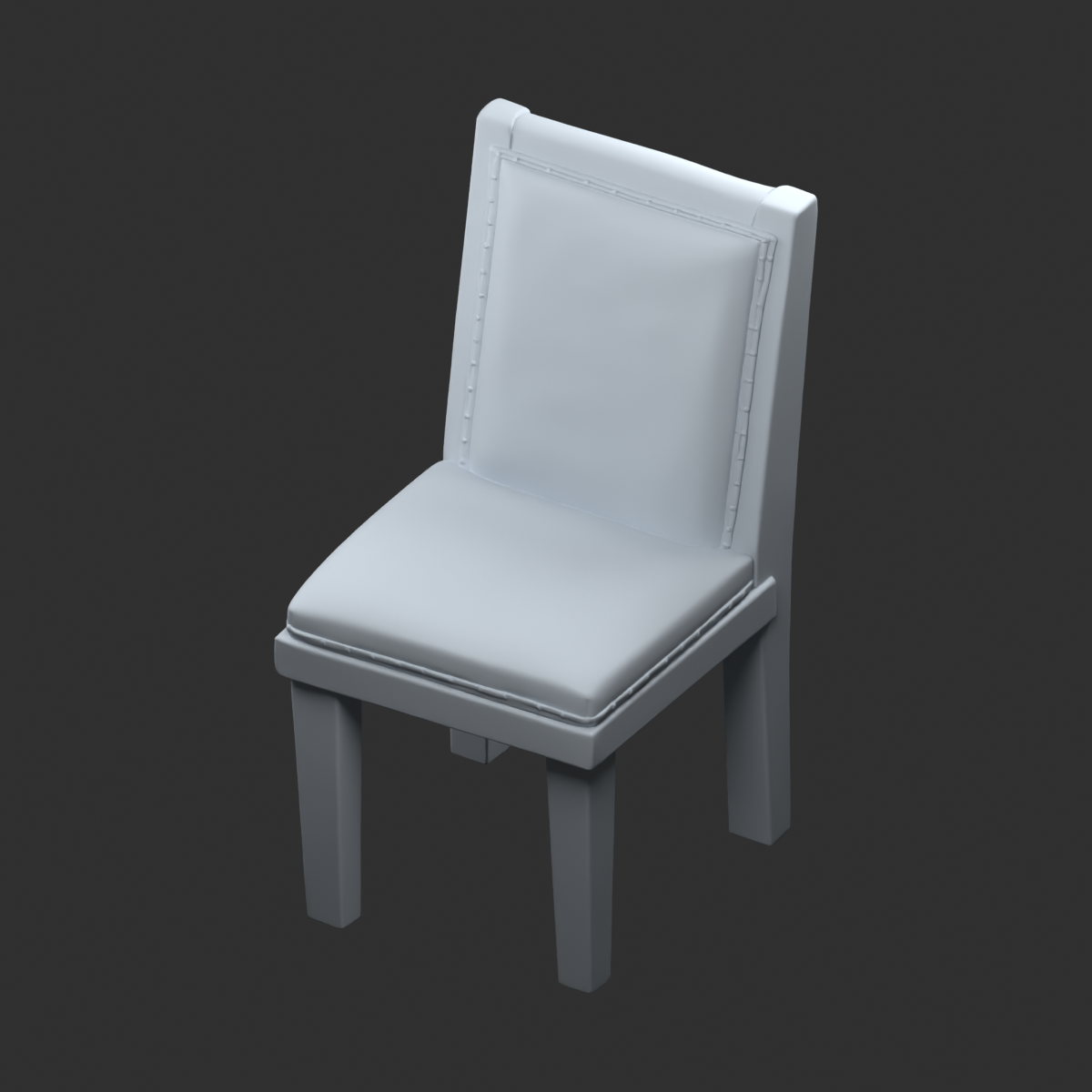
30,000tris in
8unnamed roots
424open edges · root.0
0after weld @ 1e‑6
Raw generated chair, clay render, 30,000 triangles
raw GLB · 30,000 tris
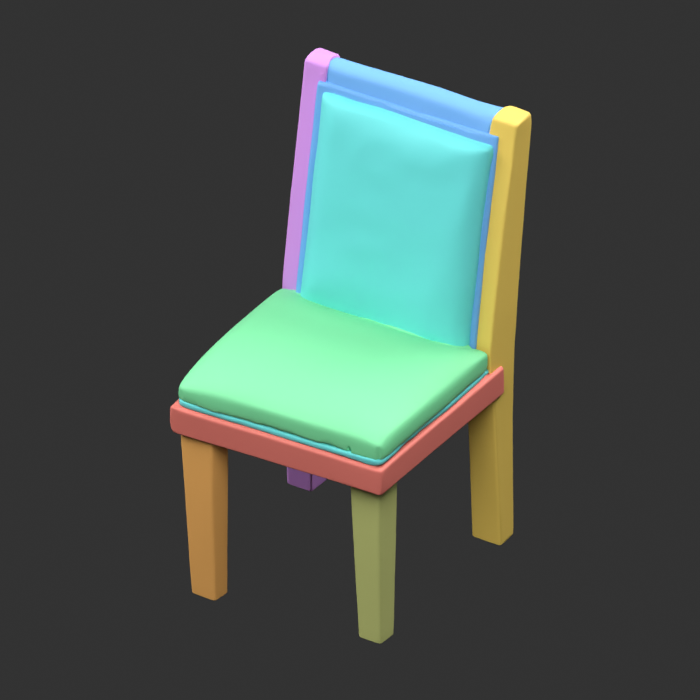
Colour-coded assembly region index, eight components
inspected · 8 roots colour-coded

The raw mesh arrives as eight unnamed roots. Before any edit, each root is isolated and audited — triangles, UVs, bounds, boundary edges. The question is never "does it look right" but "what survives measurement".

root.0
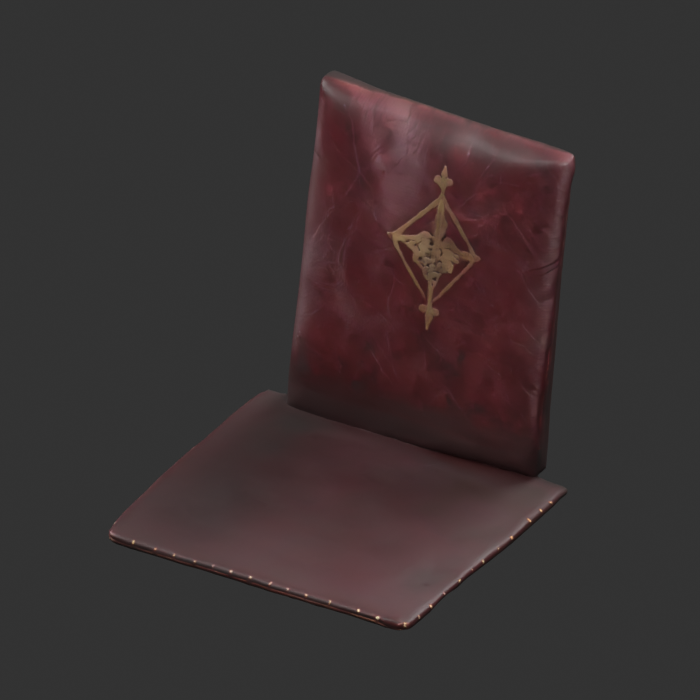
root.0 · frame
root.1
root.1 · back
root.2
root.2 · cushion
root.3
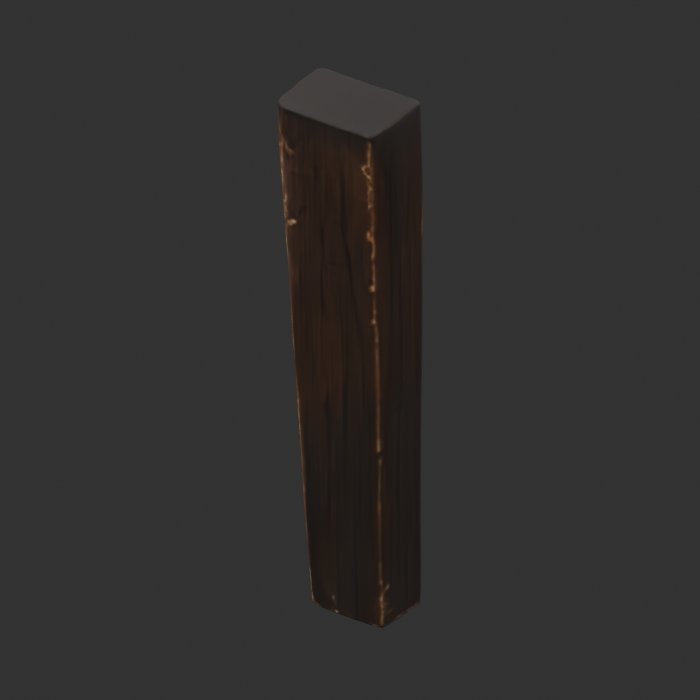
root.3 · stile
root.4
root.4 · stile
root.5
root.5 · backrest
root.6
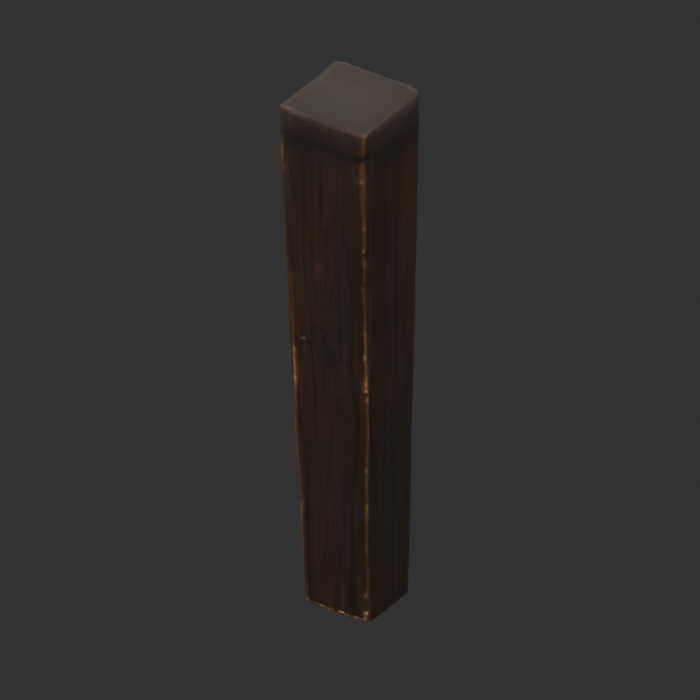
root.6 · leg
root.7
root.7 · leg

What A hide/only matrix of every component, front and rear, plus a boundary-edge audit per part.

How Diagnostic hiding before any destructive edit. Boundary edges are welded at 1e-6 and recounted before anyone says "hole".

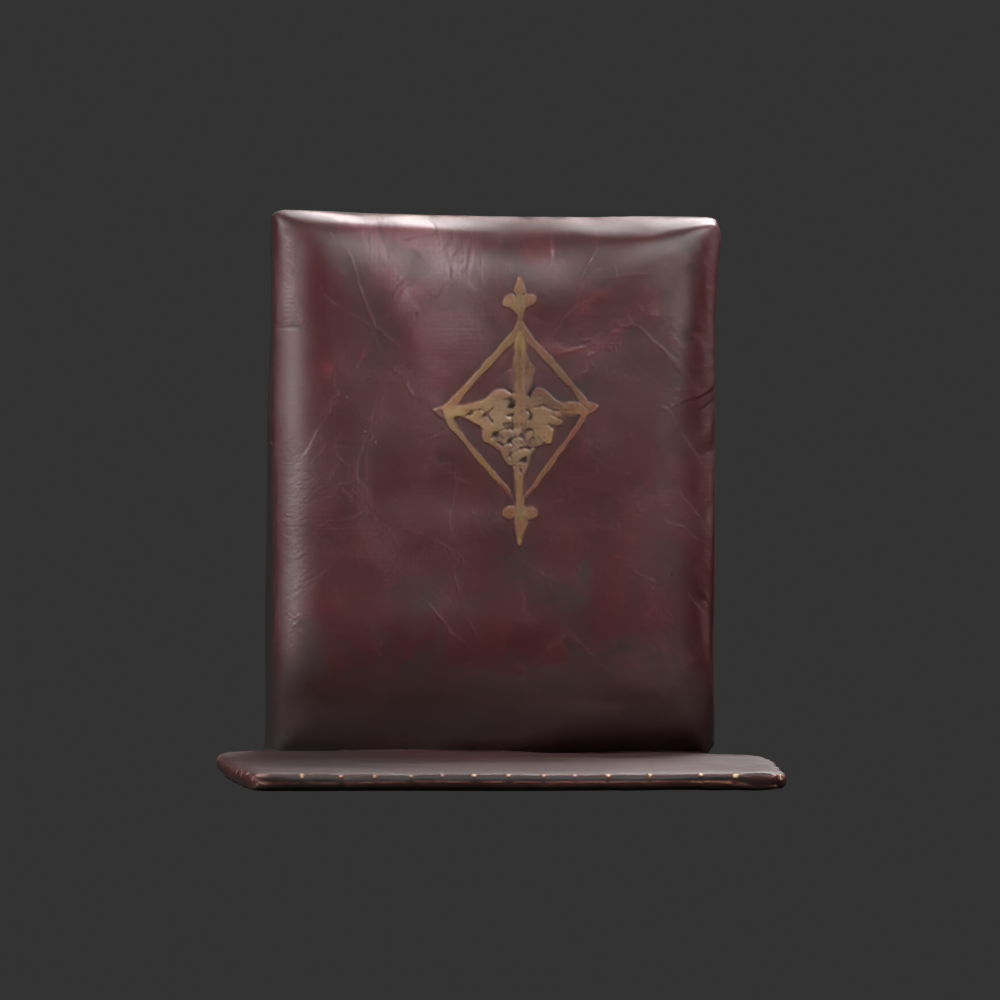
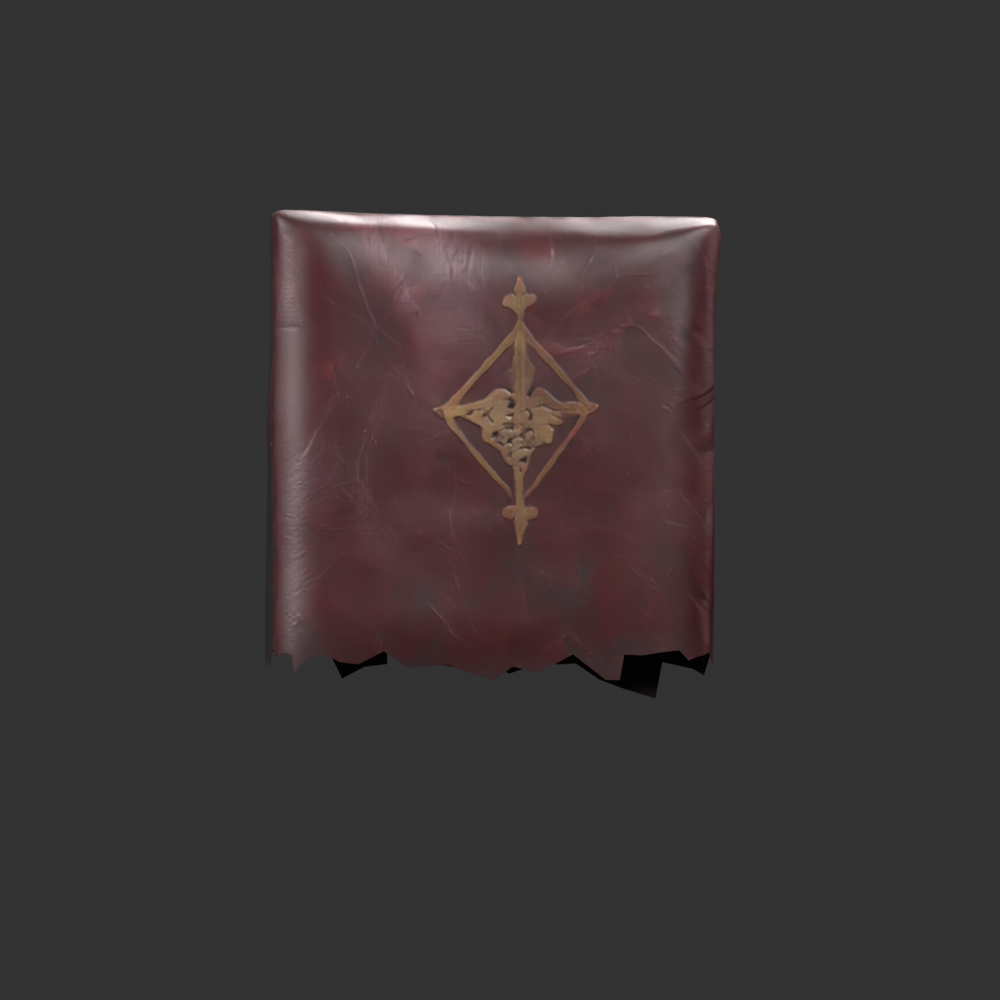
Why root.5 carries the front backrest and the gold motif — deleting the overlap would delete the chair's face. And root.0's 424 boundary edges weld to zero: export splits, not defects.

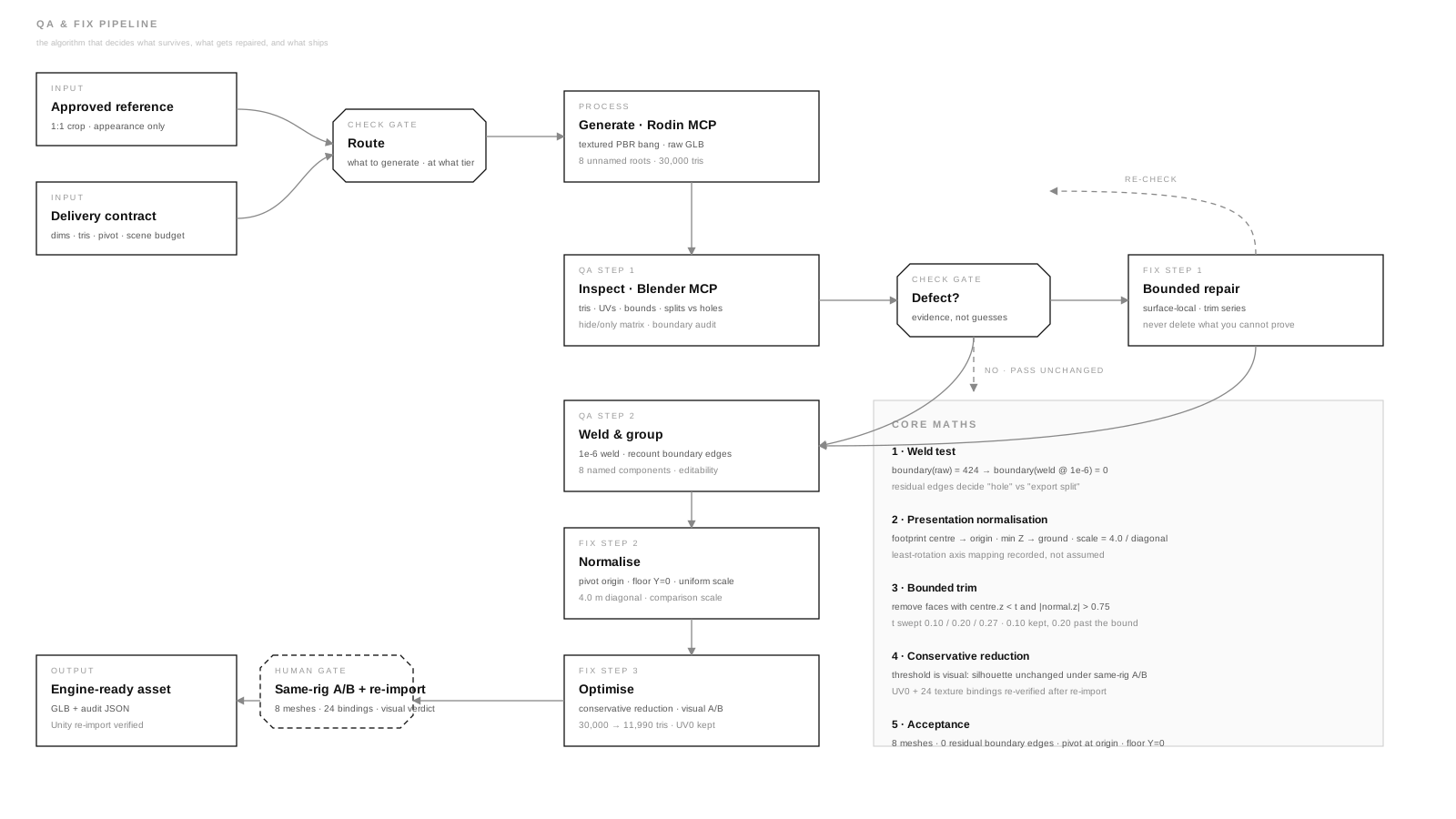
Under the hood — the QA & optimisation algorithm Detailed QA and optimisation algorithm: inspect with Blender MCP, a defect gate routes to bounded repair or passes unchanged, weld and group into named components, normalise to a shared rig, conservative optimise, human same-rig A/B acceptance gate, engine-ready output, with a re-check loop
Core maths · the chair, worked

Four measurements, zero guesses — animated

1Weld test — splits vs holes
boundary(raw) = 424 → boundary(weld @ 1e-6) = 0

Export splits are not automatically holes. Weld coincident verts at 1e-6 and recount; only a residual boundary is a real hole.

2Presentation normalisation
centre → origin · min Z → ground · scale = 4.0 / diagonal

Least-rotation axis mapping is recorded, not assumed. The chair lands at floor Y=0, height 1.0501 m, pivot at origin.

3Bounded trim — root.5
remove faces: centre.z < t and |normal.z| > 0.75

t swept 0.10 / 0.20 / 0.27. 0.10 kept (removes only the proven overlap); 0.20 crosses the bound and deletes the chair's face.

4Conservative reduction
30,000 → 11,990 tris · UV0 + 24 bindings kept

The threshold is visual: silhouette unchanged under same-rig A/B. Optimise the asset, not the triangle number.

Bounded trim sweep — root.5 each step captured on the same rig; iteration without a bound is vandalism
root.5 before repair
beforethe overlap
→
root.5 after trim 0.10, kept
0.10kept
root.5 after trim 0.20, past the bound — backrest deleted
0.20past the bound
→
Surface repair, rear view
surfacerepaired where proven
III
Fix in action

Bounded repair, conservative reduction, then proof

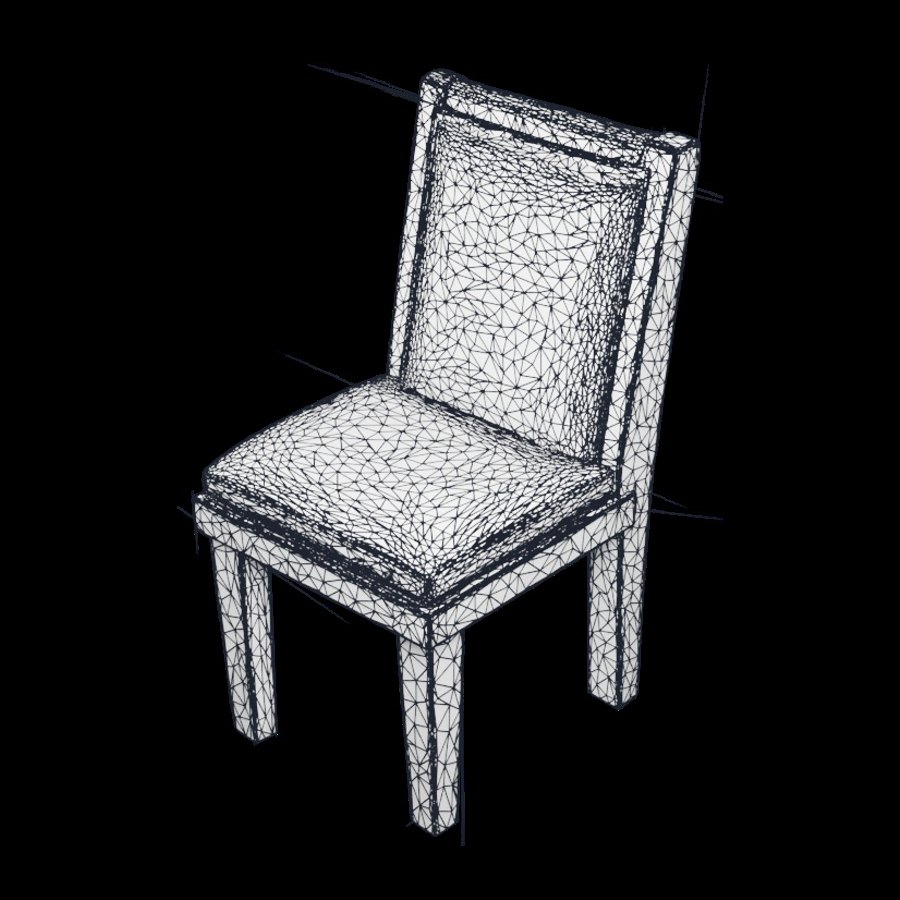
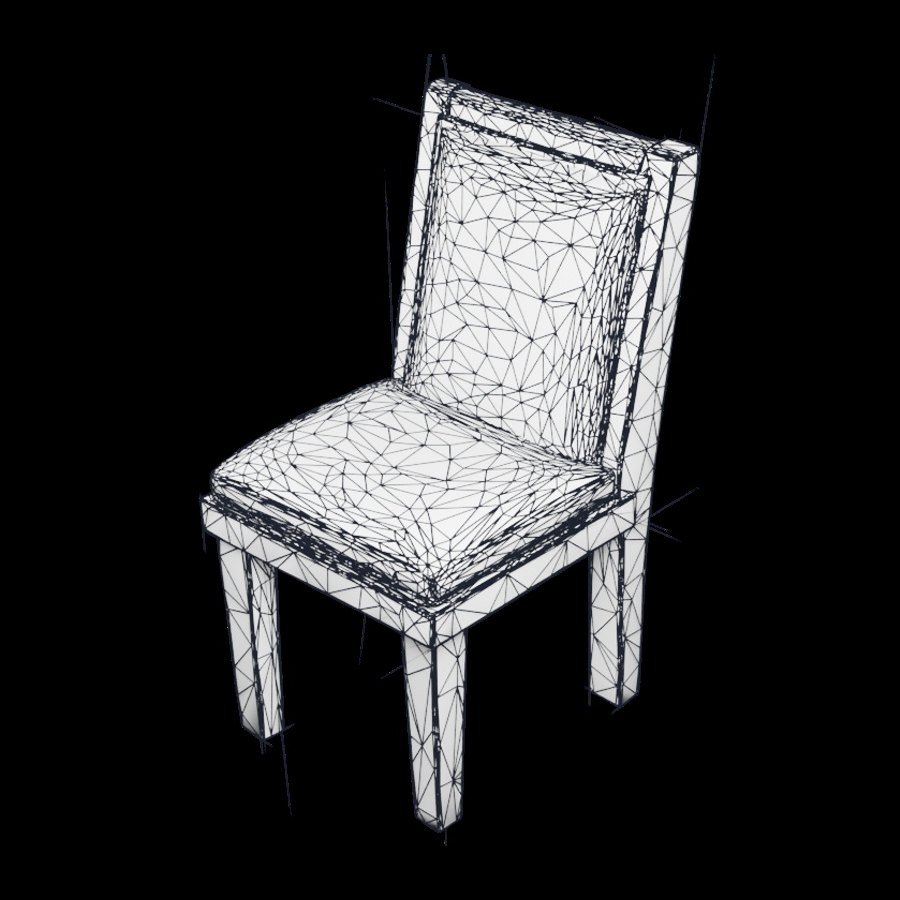
Chair wireframe, original 30,000 triangles
30,000 tris · original wireframe
30,000→30,000 same rig · same light · silhouette unchanged
30,000triangles delivered
8named components
24bindings re-verified
1.0501 mfloor Y = 0
Chair wireframe, delivered 11,990 triangles
11,990 tris · delivered wireframe
5Acceptance — the re-import audit8 meshes · 0 residual boundary edges · pivot at origin · floor Y=0

What A same-rig A/B of the reduction: 30,000 → 11,990 triangles, UV0 and 24 texture bindings preserved across re-import.

How Fixed camera and light; the threshold is visual, not arithmetic. The re-imported GLB is re-audited: 8 meshes, 0 residual boundary edges, pivot at origin.

Why Optimise the asset, not the triangle number. The owner signs the visual verdict; the receipts make it reproducible.

→
The route generalises

Six more assets, the same pipeline, the same receipts

One bounded generation, one conservative reduction, original PBR kept. Every asset below ran the same QA & fix pipeline as the chair — same rig, same gates, same audit trail.

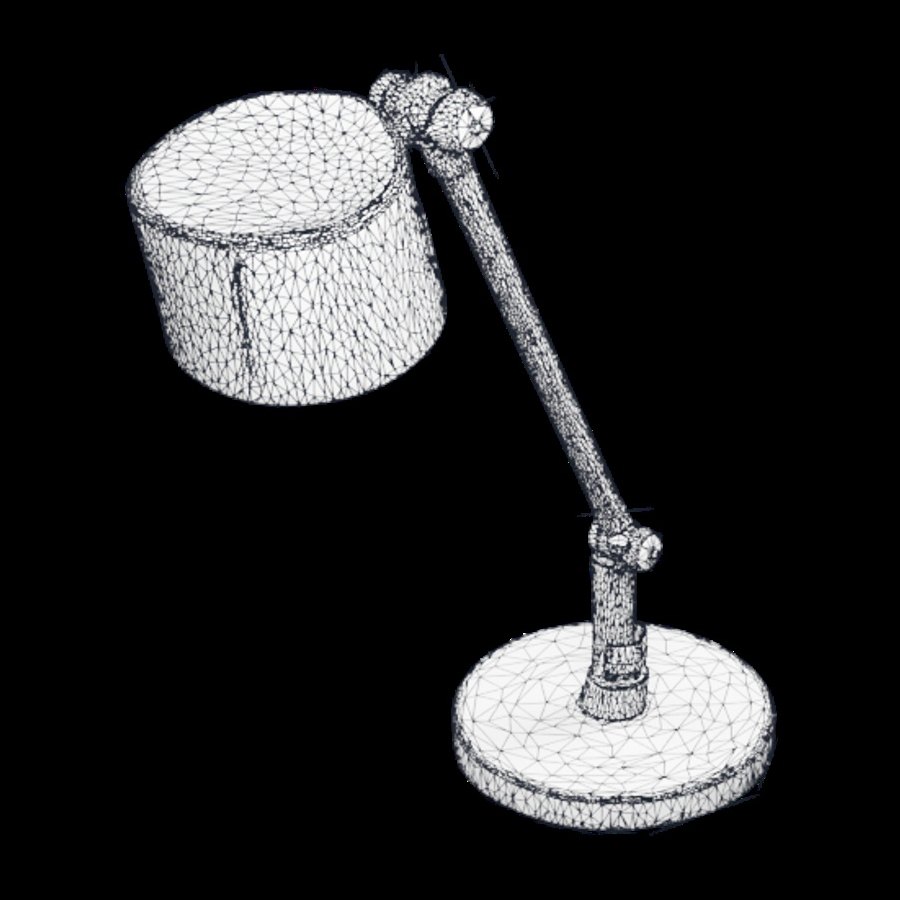
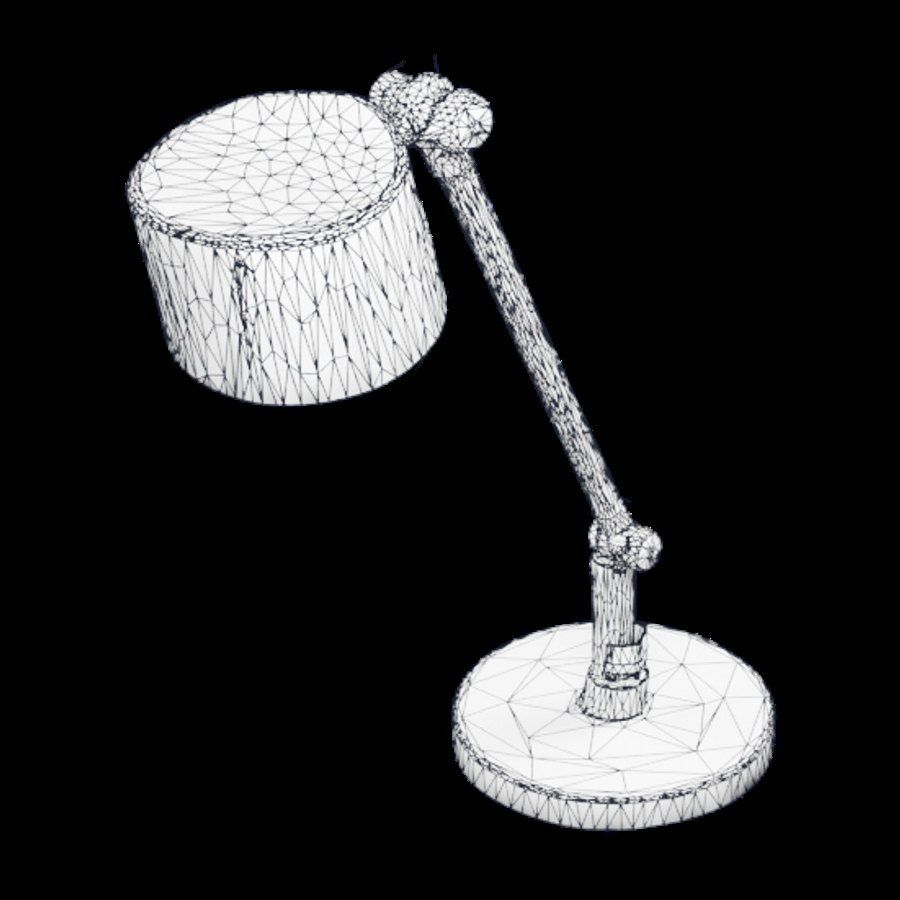
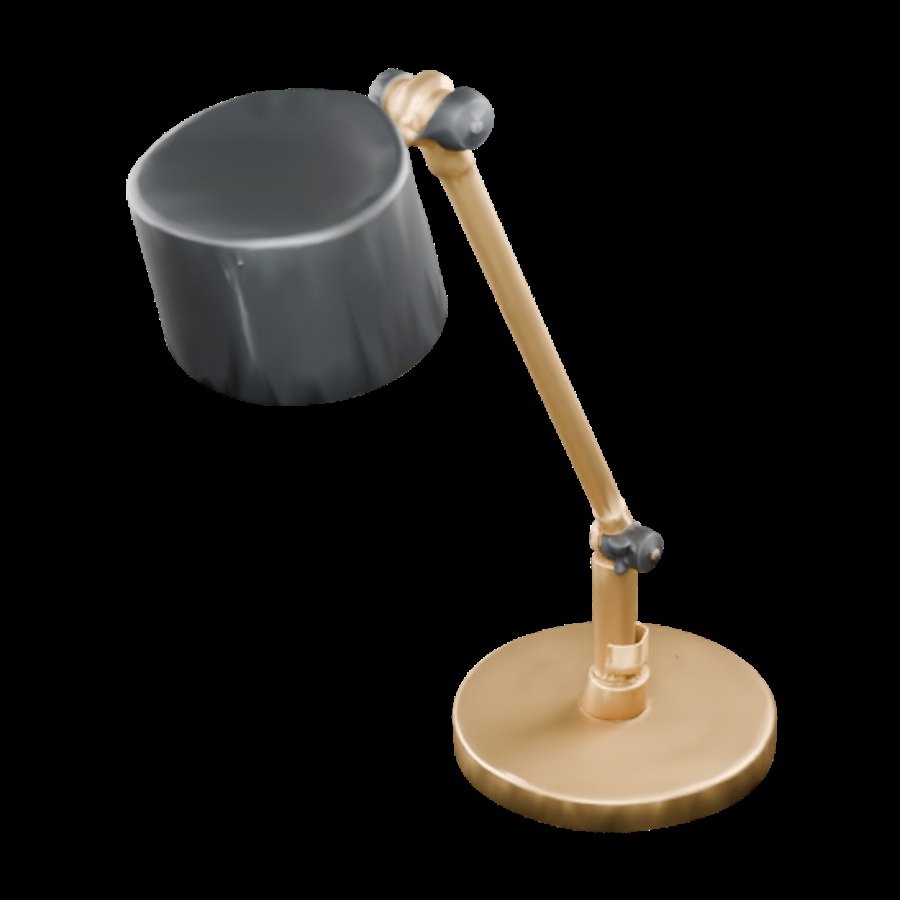
Lampinteractive bang
Source lamp wireframe
source · 20,000 tris
Optimised lamp wireframe
optimised · 9,200 tris
Delivered lamp render
render
20k → 9.2k · 5,837 brass · 2,163 gunmetal · 1,200 bulb
Bookstackstatic prop
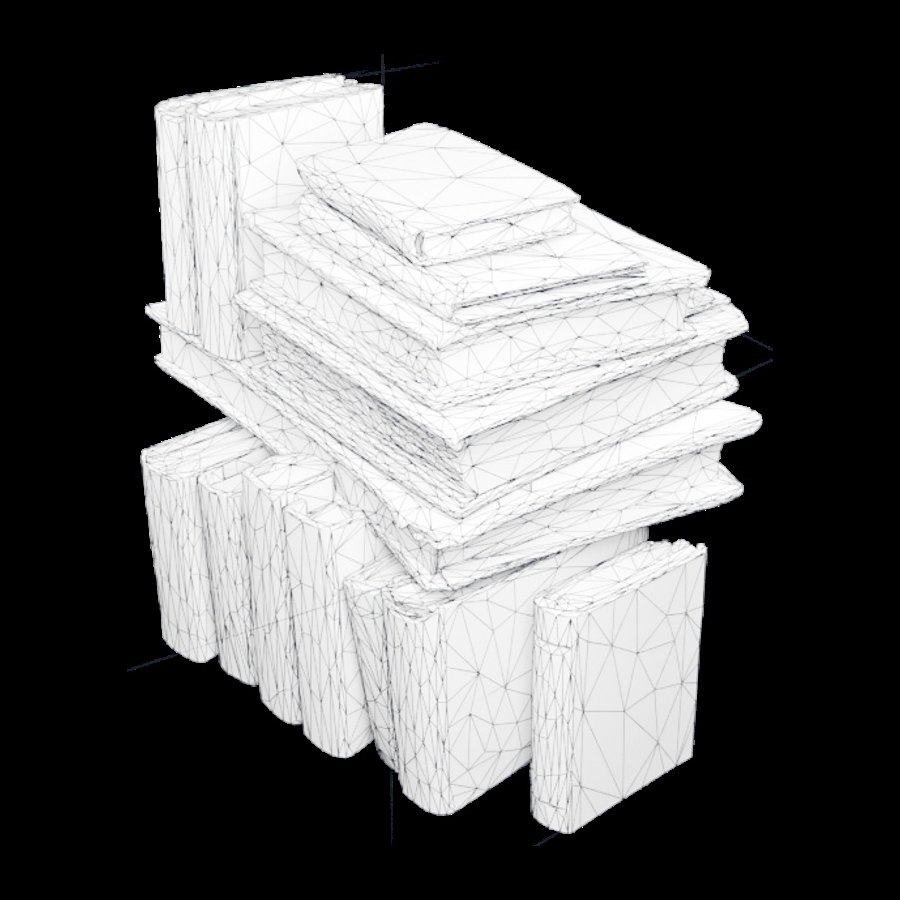
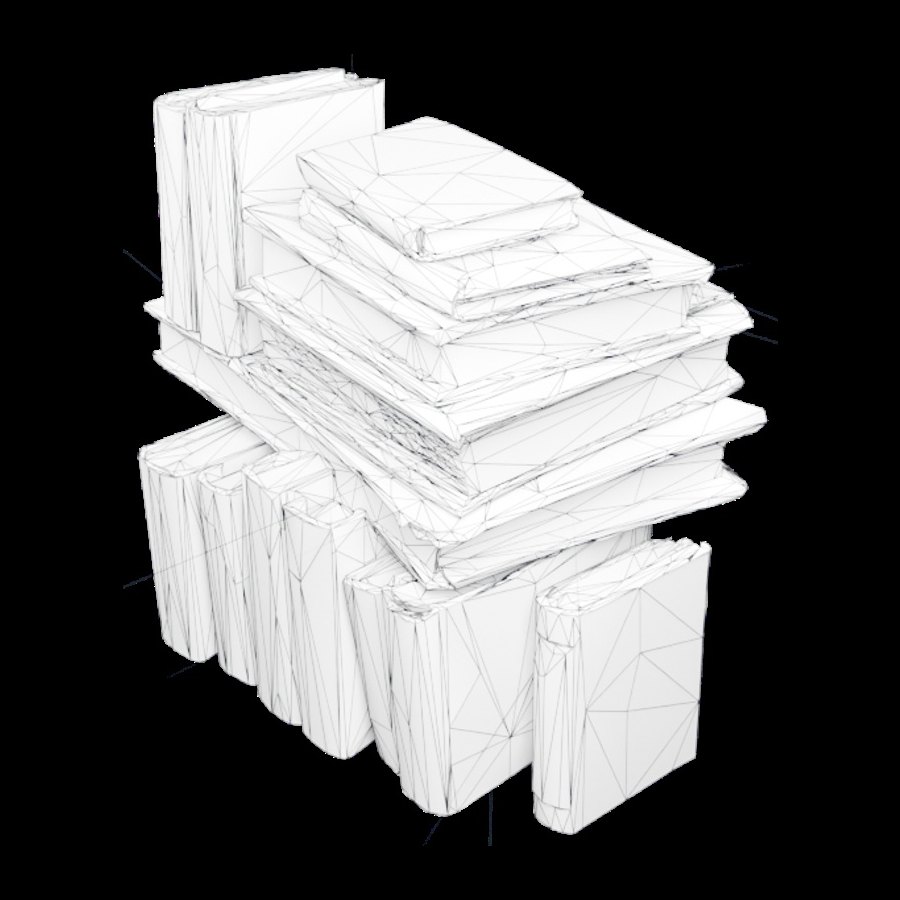
Source bookstack wireframe
source · 16,000 tris
Optimised bookstack wireframe
optimised · 7,999 tris
Delivered bookstack render
render
~16k → ~8k · original PBR preserved
Bonsaistatic prop
Source bonsai wireframe
source · 16,000 tris
Optimised bonsai wireframe
optimised · 8,000 tris
Delivered bonsai render
render
organic silhouette preserved · leaf variation retained
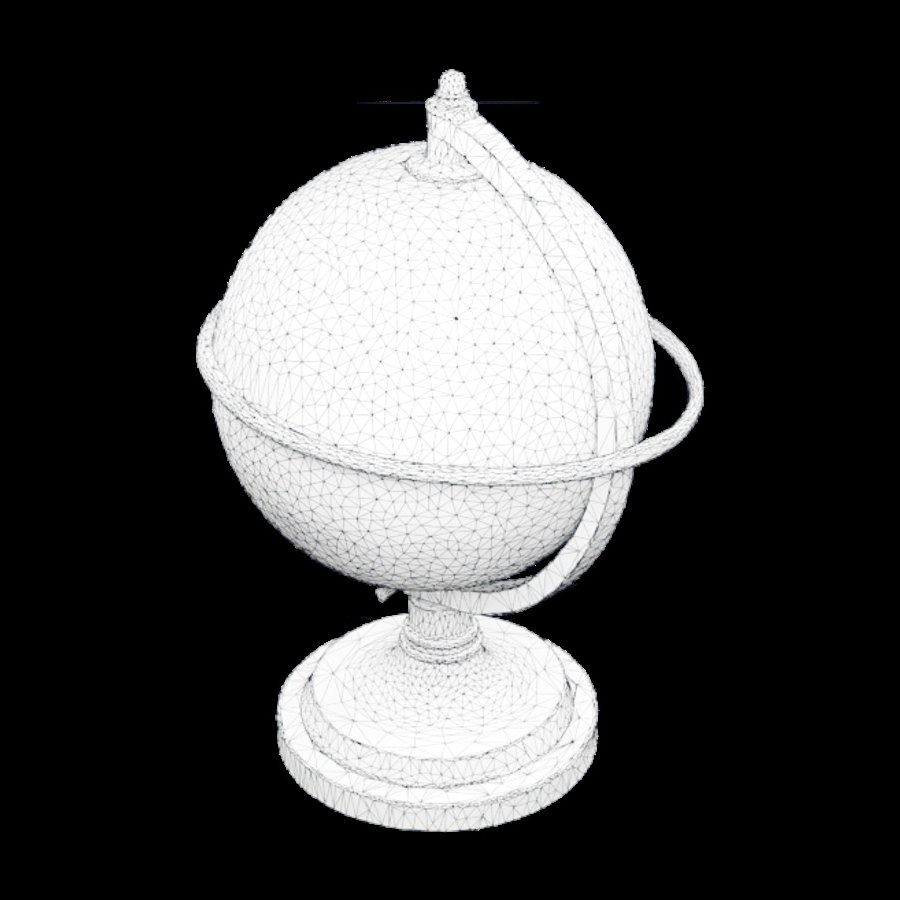
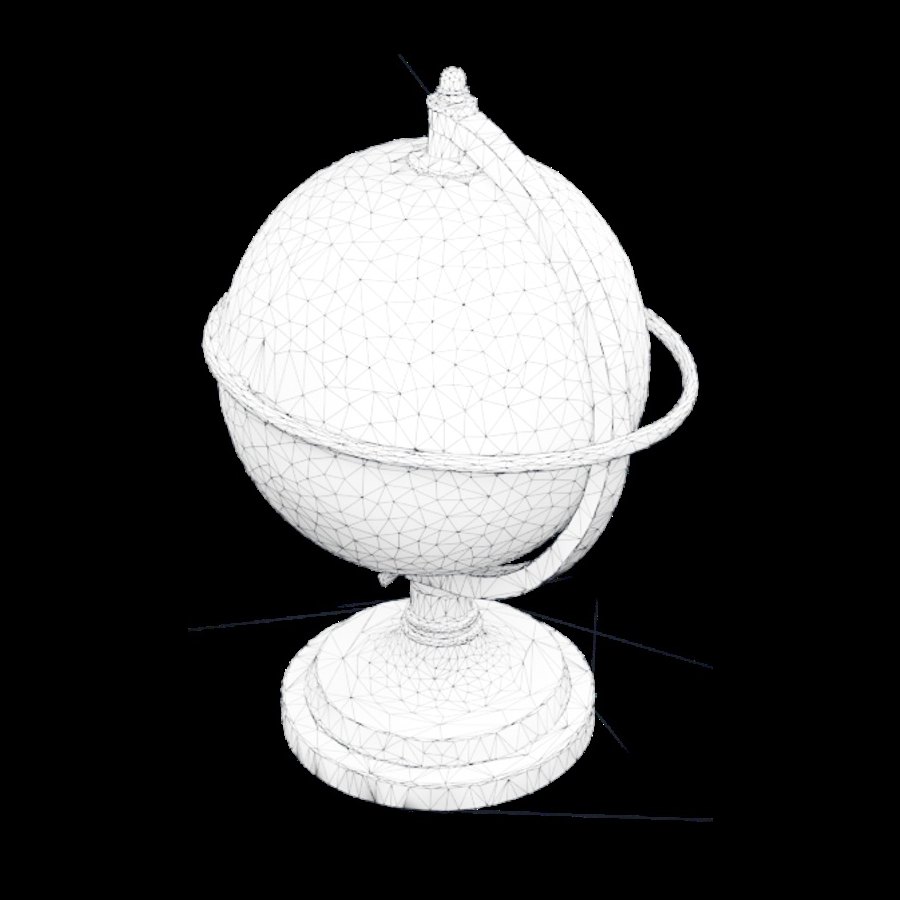
Globestatic prop
Source globe wireframe
source · 16,000 tris
Optimised globe wireframe
optimised · 7,999 tris
Delivered globe render
render
sphere topology preserved · map texture intact
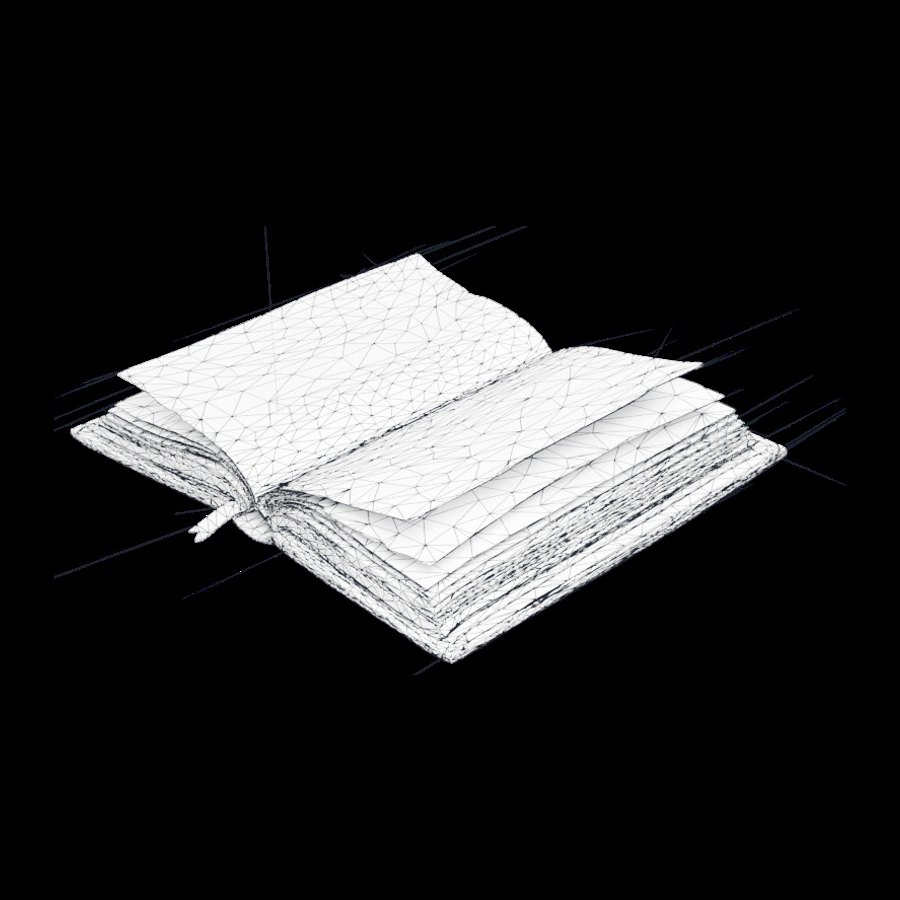
Open Bookstatic prop
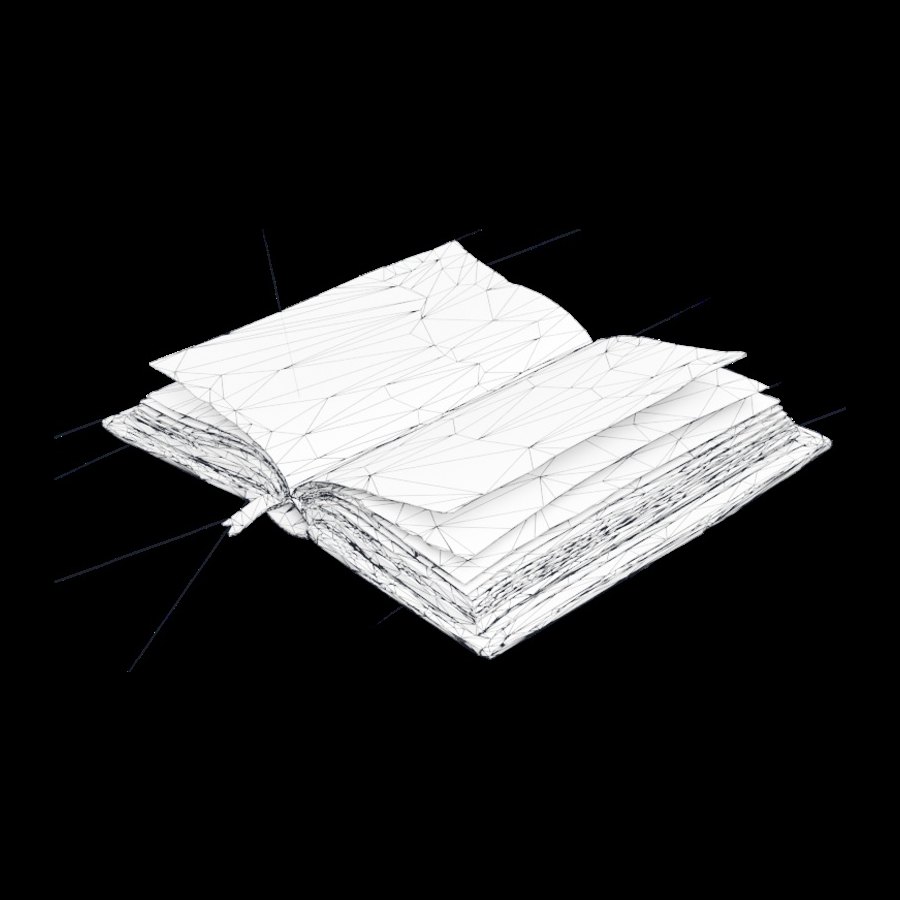
Source openbook wireframe
source · 16,000 tris
Optimised openbook wireframe
optimised · 8,000 tris
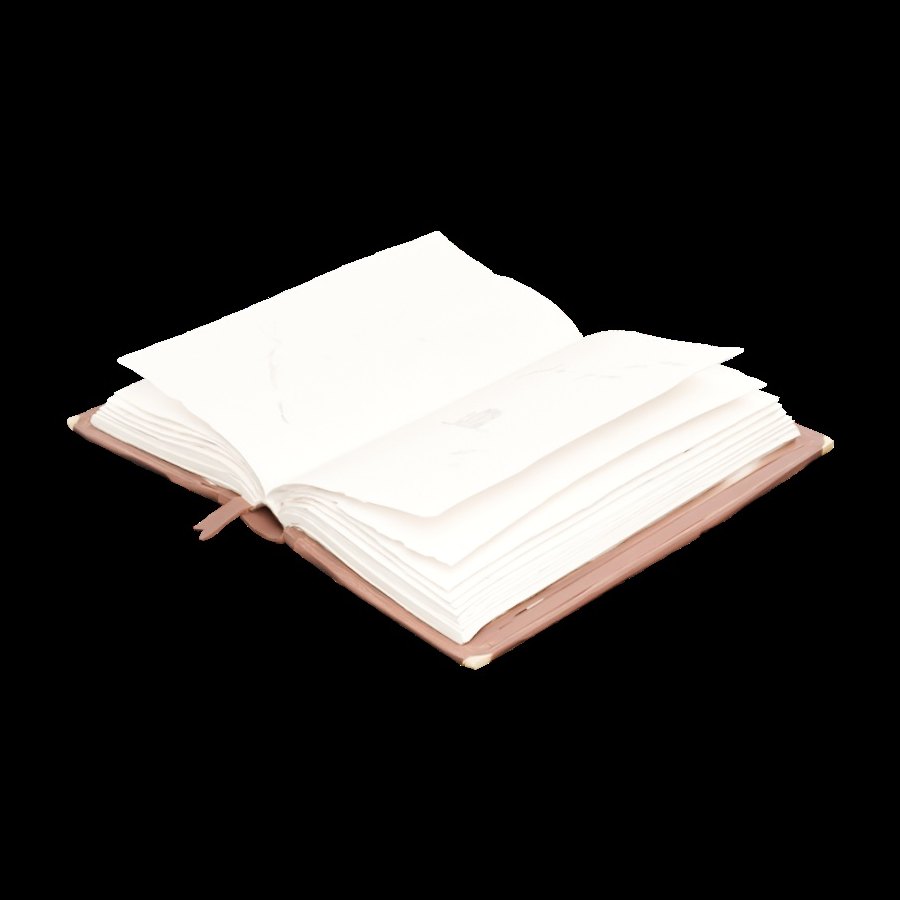
Delivered openbook render
render
page curl preserved · text legible at distance
Ivystatic prop
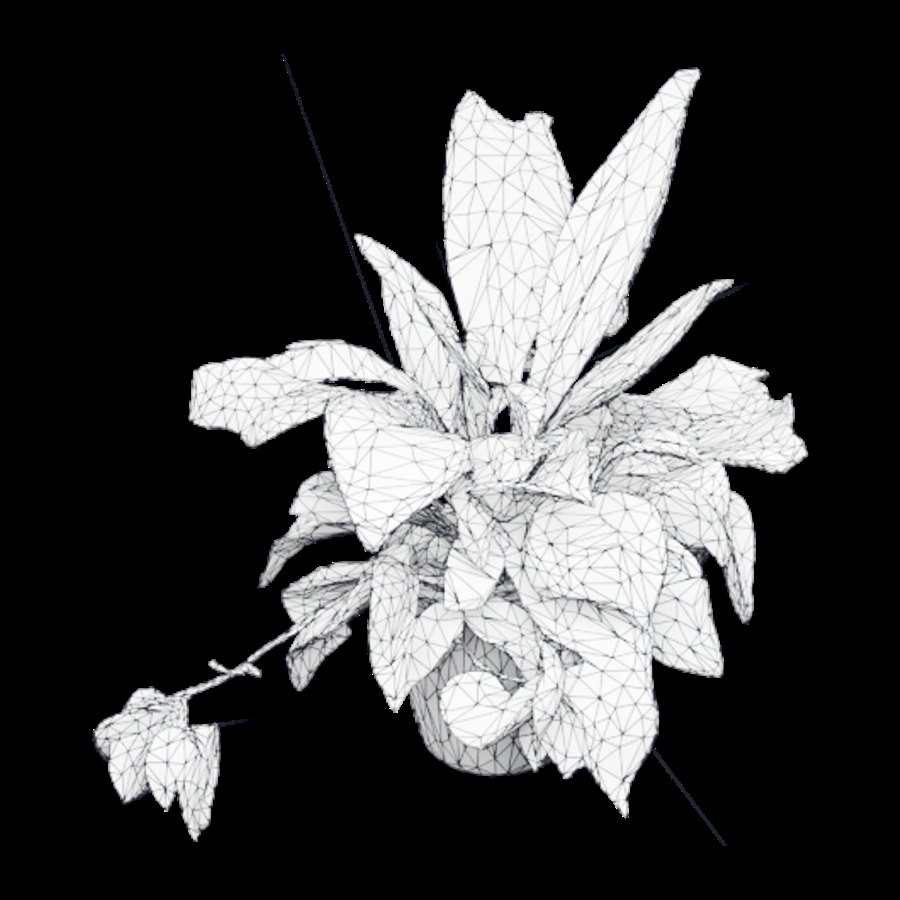
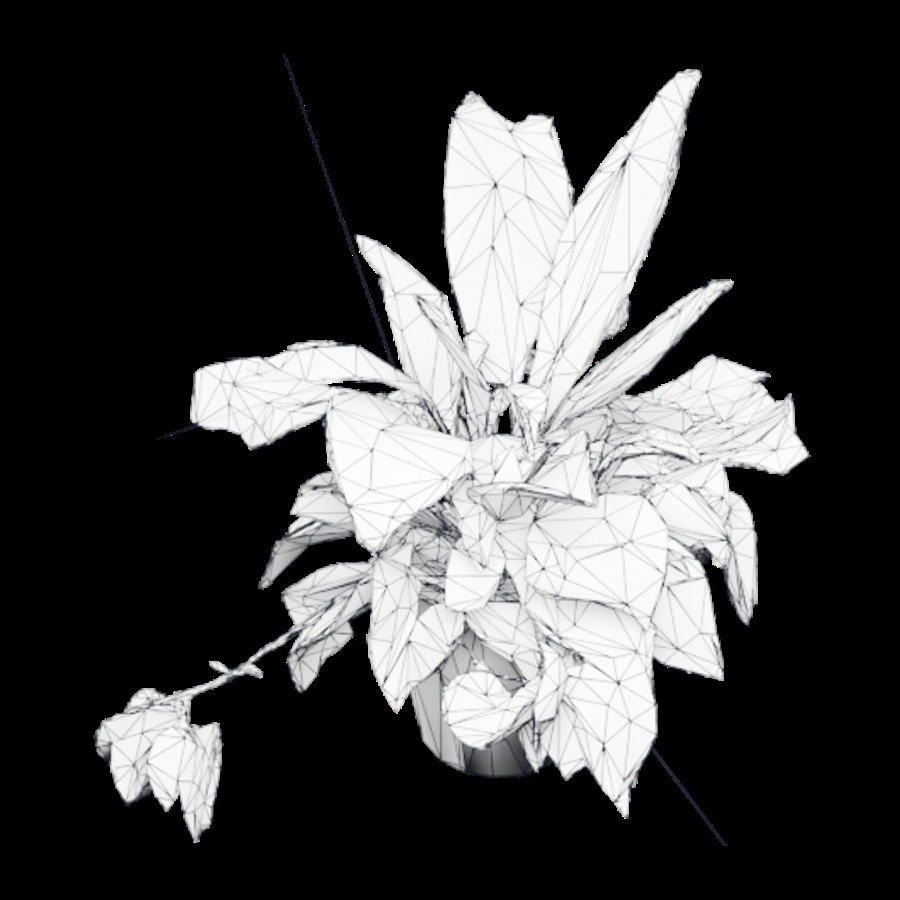
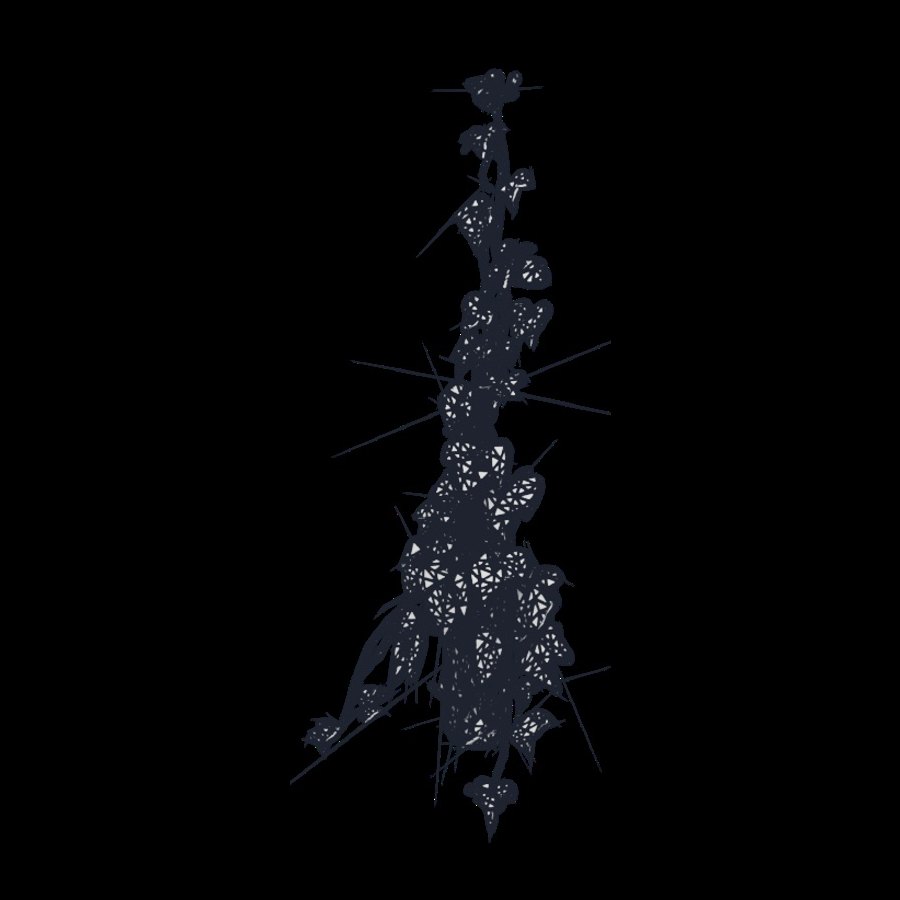
Source ivy wireframe
source · 16,000 tris
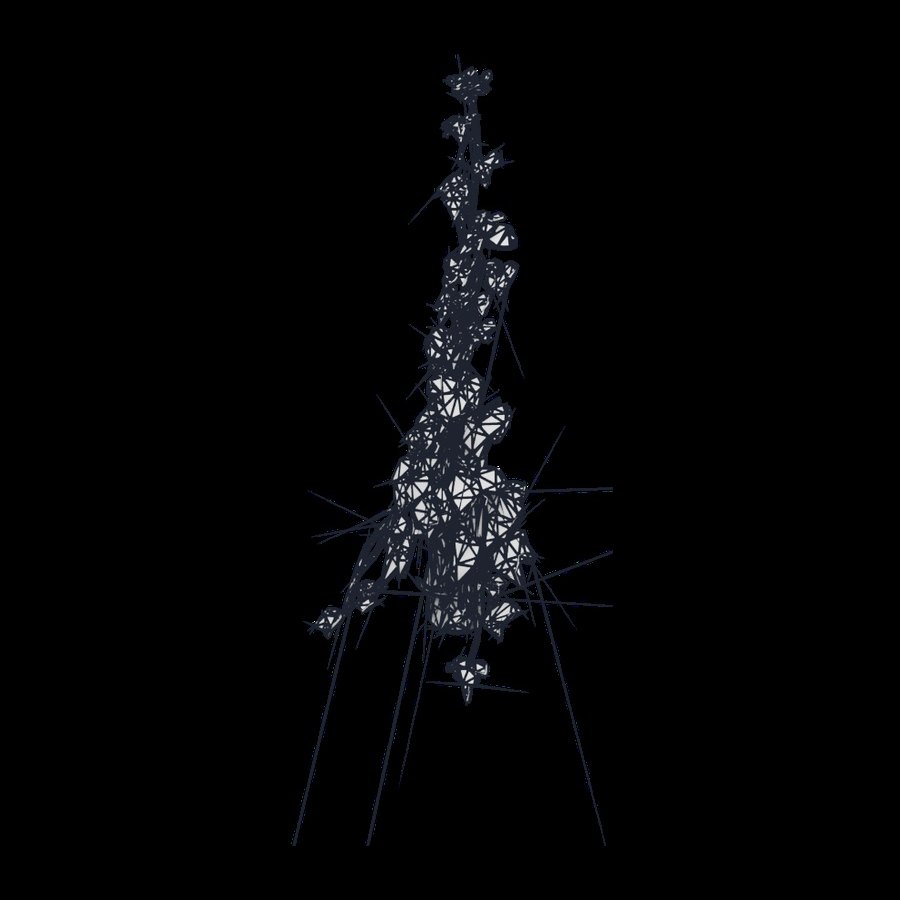
Optimised ivy wireframe
optimised · 8,000 tris
Delivered ivy render
render
leaf clusters preserved · alpha cards intact

Placeholders hidden rather than deleted so every before/after stays possible.

05 — Mat Pipeline

Condition, derive, swap.

Every surface family runs the same trial — measured, corrected only where a defect is proven, then judged in the engine.

Wood, stone, textile, leather and metal. The maps are computed from the source, the edits are scoped to the regions that own them, and the chair proves the swap: original → navy leather → scratched-metal frame, on unchanged geometry.

I
The route

One path, five families, one verdict

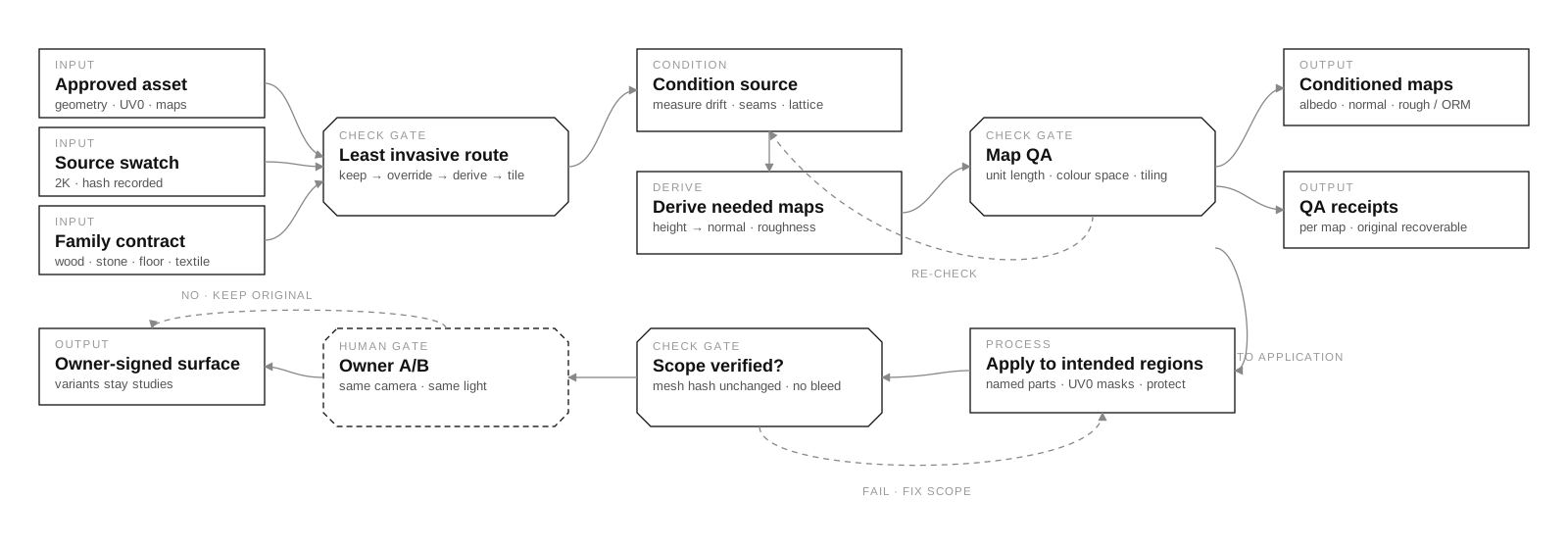
The overall MAT workflow — highest level MAT workflow from inputs through route, condition, derive, map QA, application, scope and owner gates to output
InputProcessCheck gateHuman gateOutputRework loop
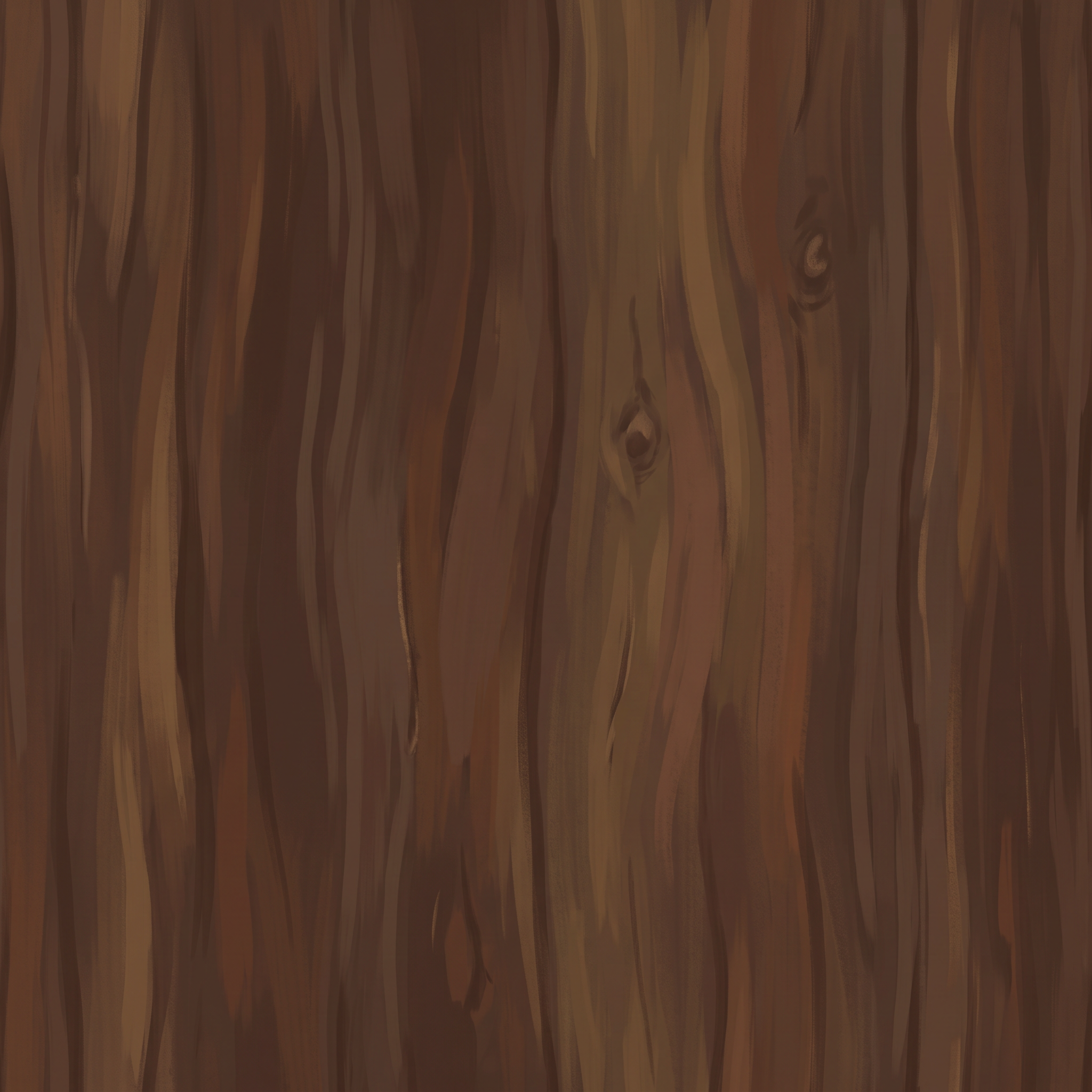
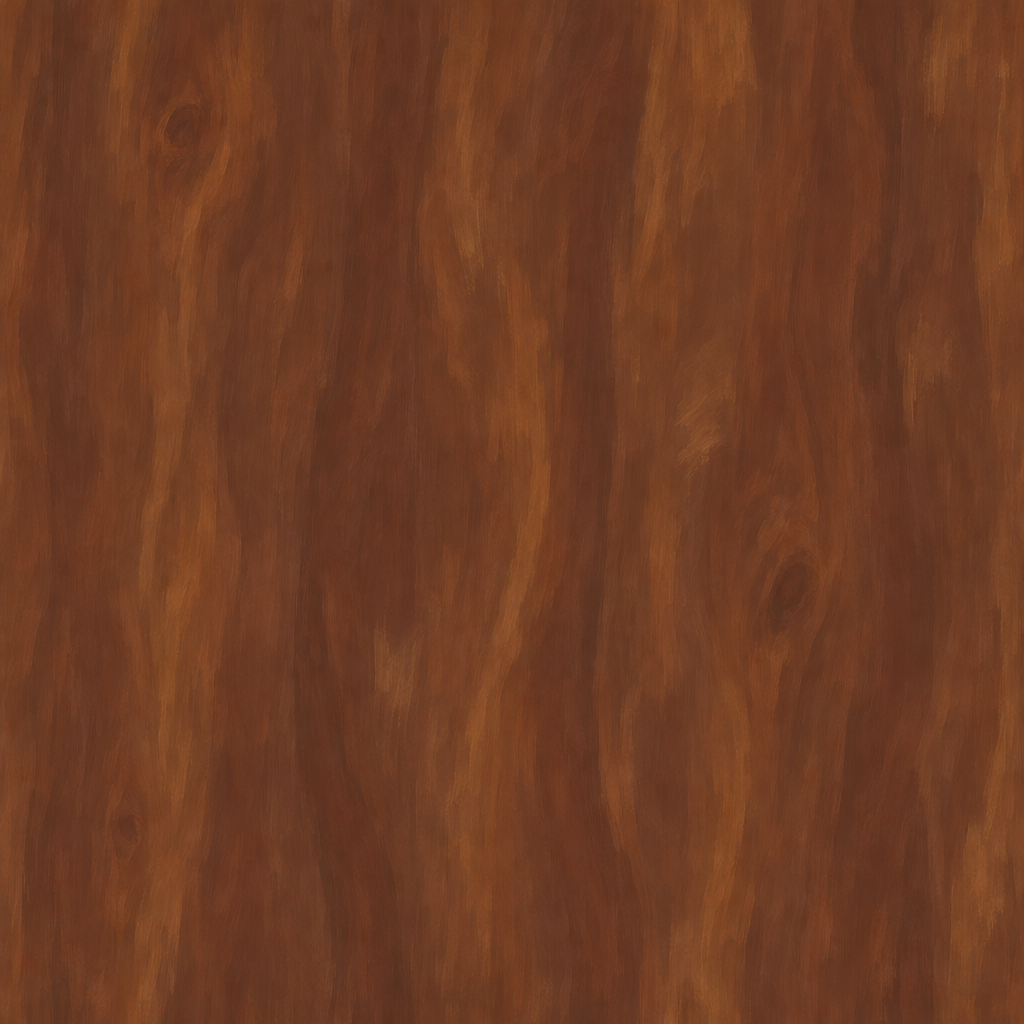
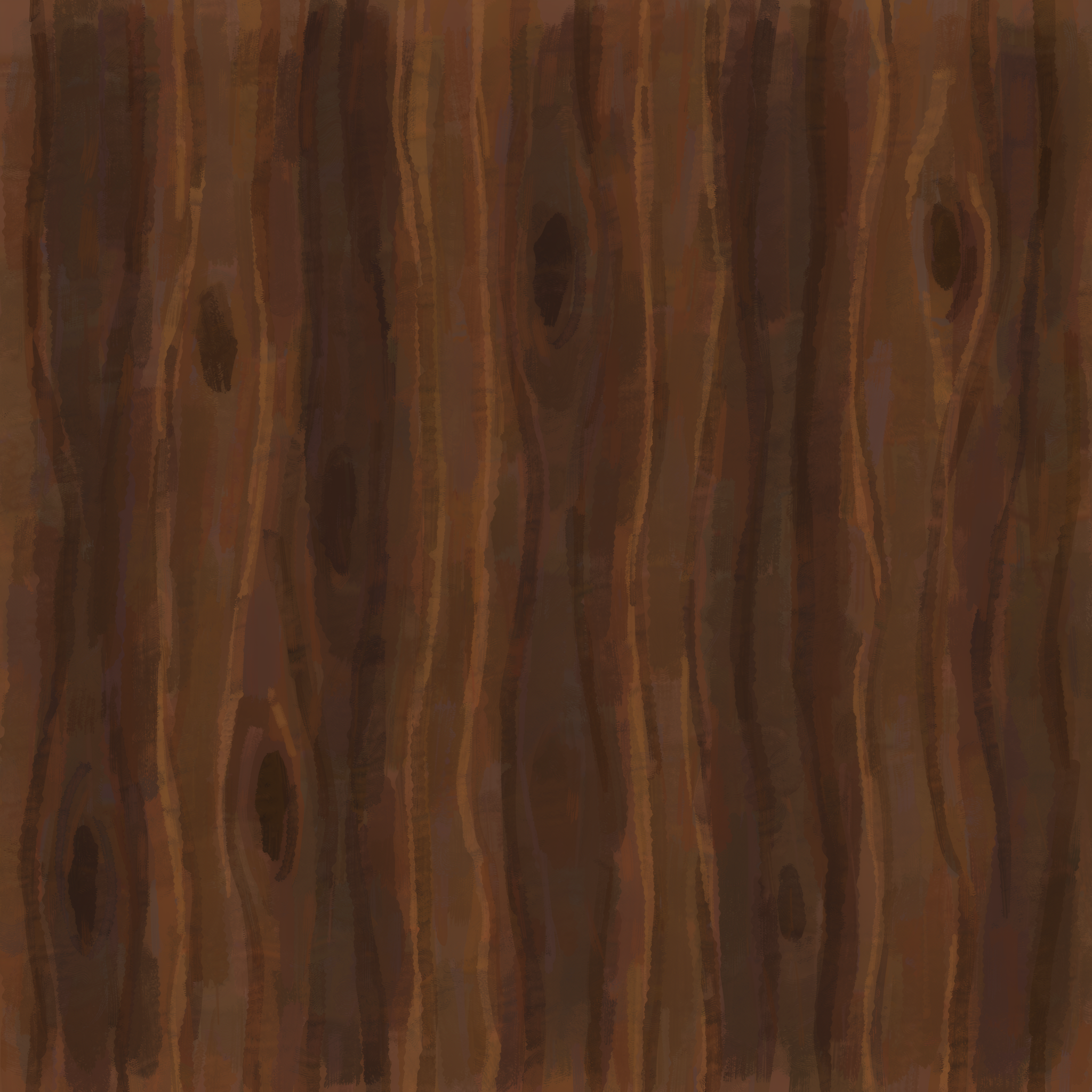
Woodhand-illustrated walnut · local grain axes
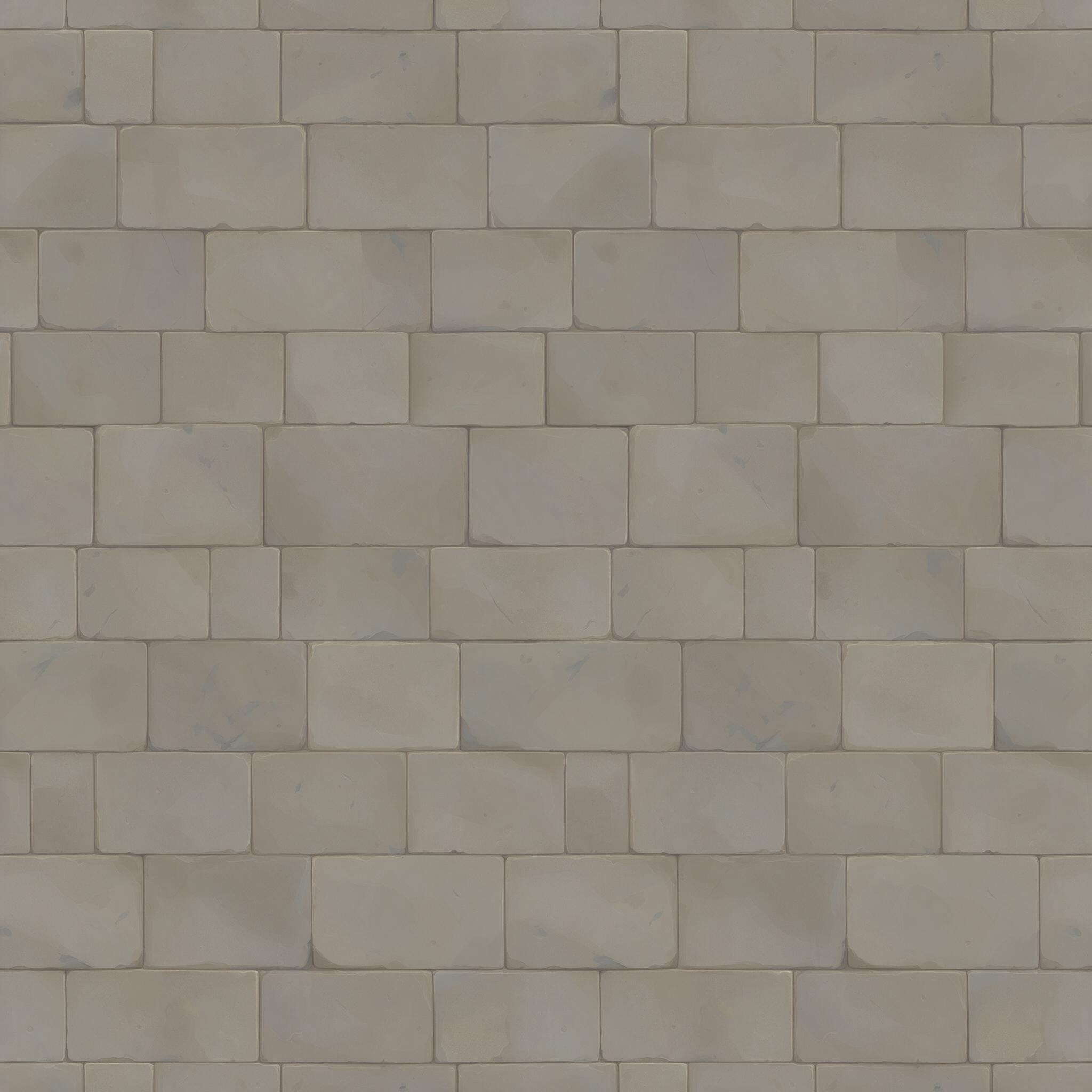
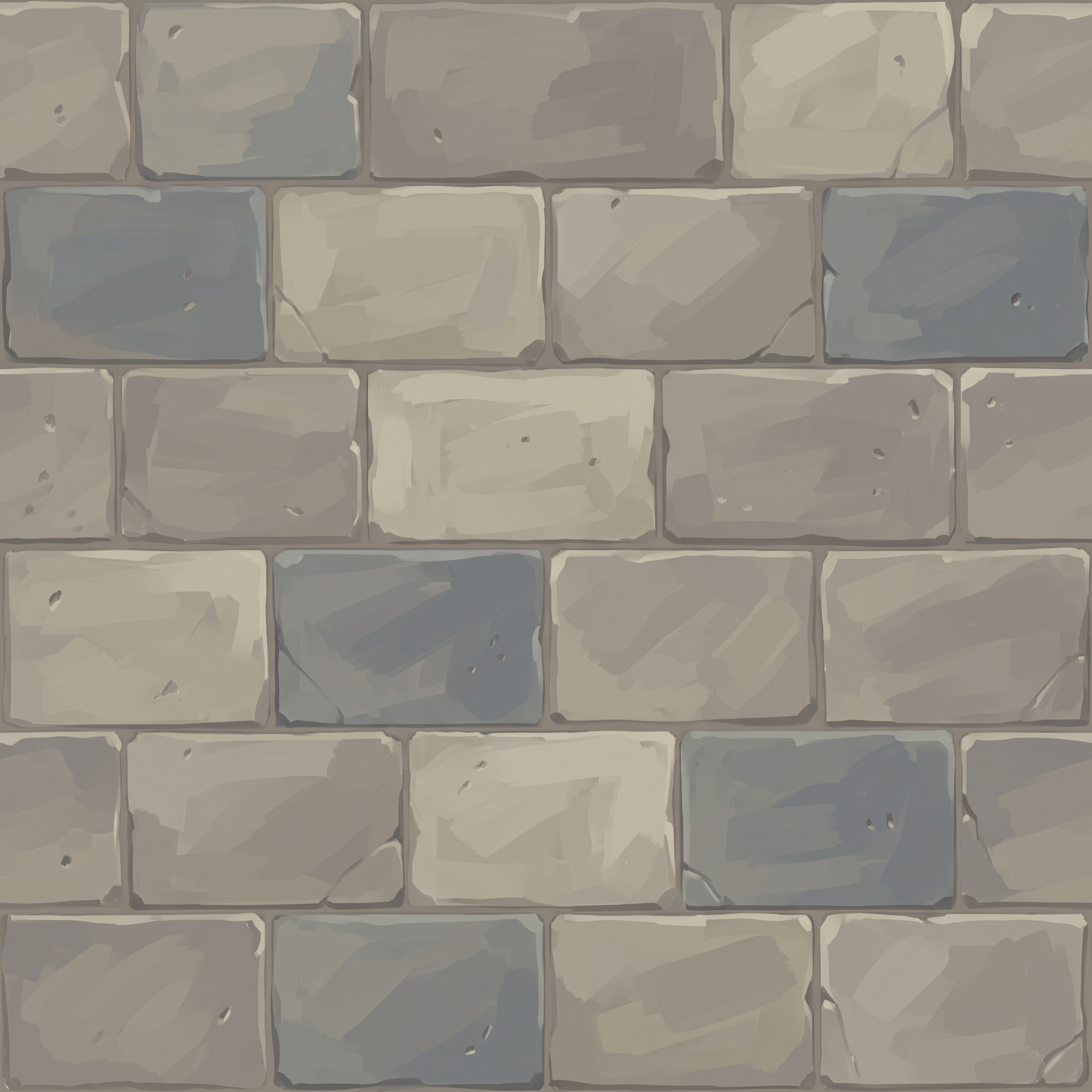
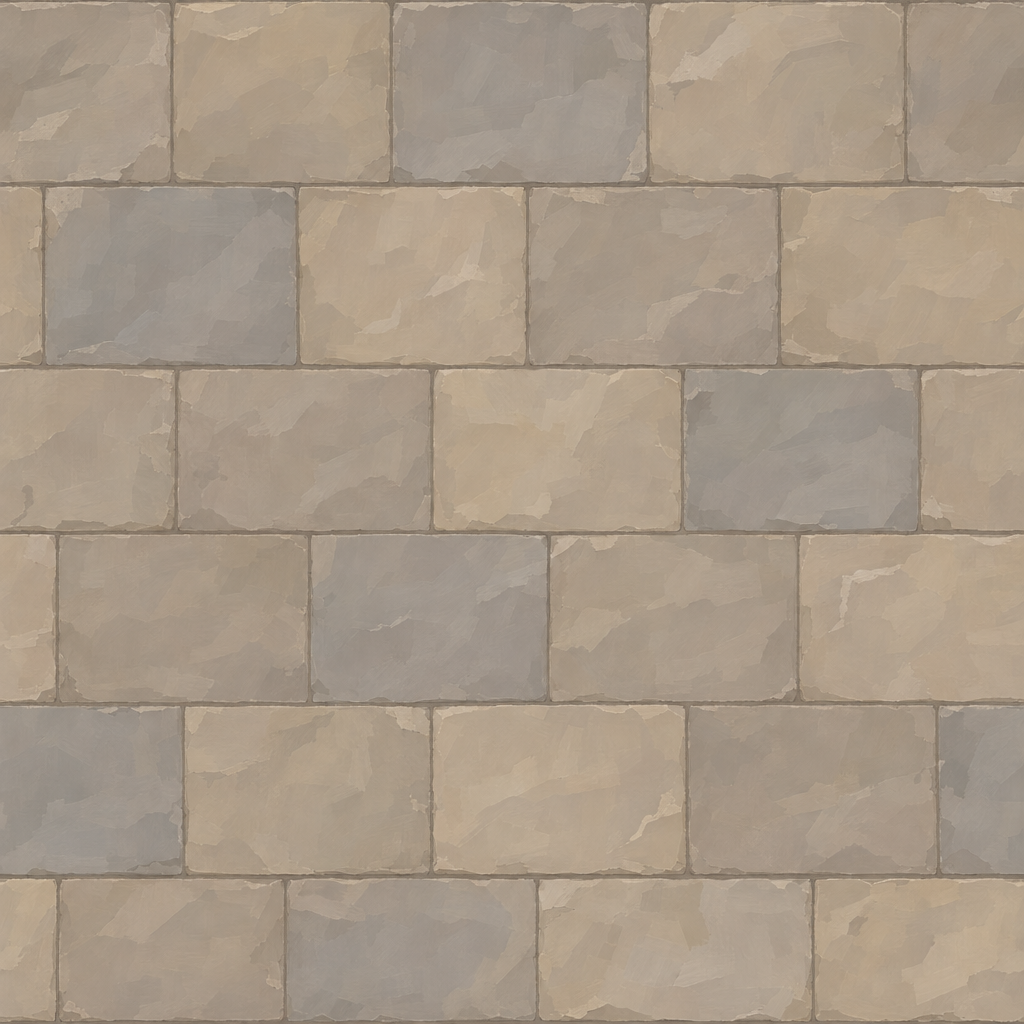
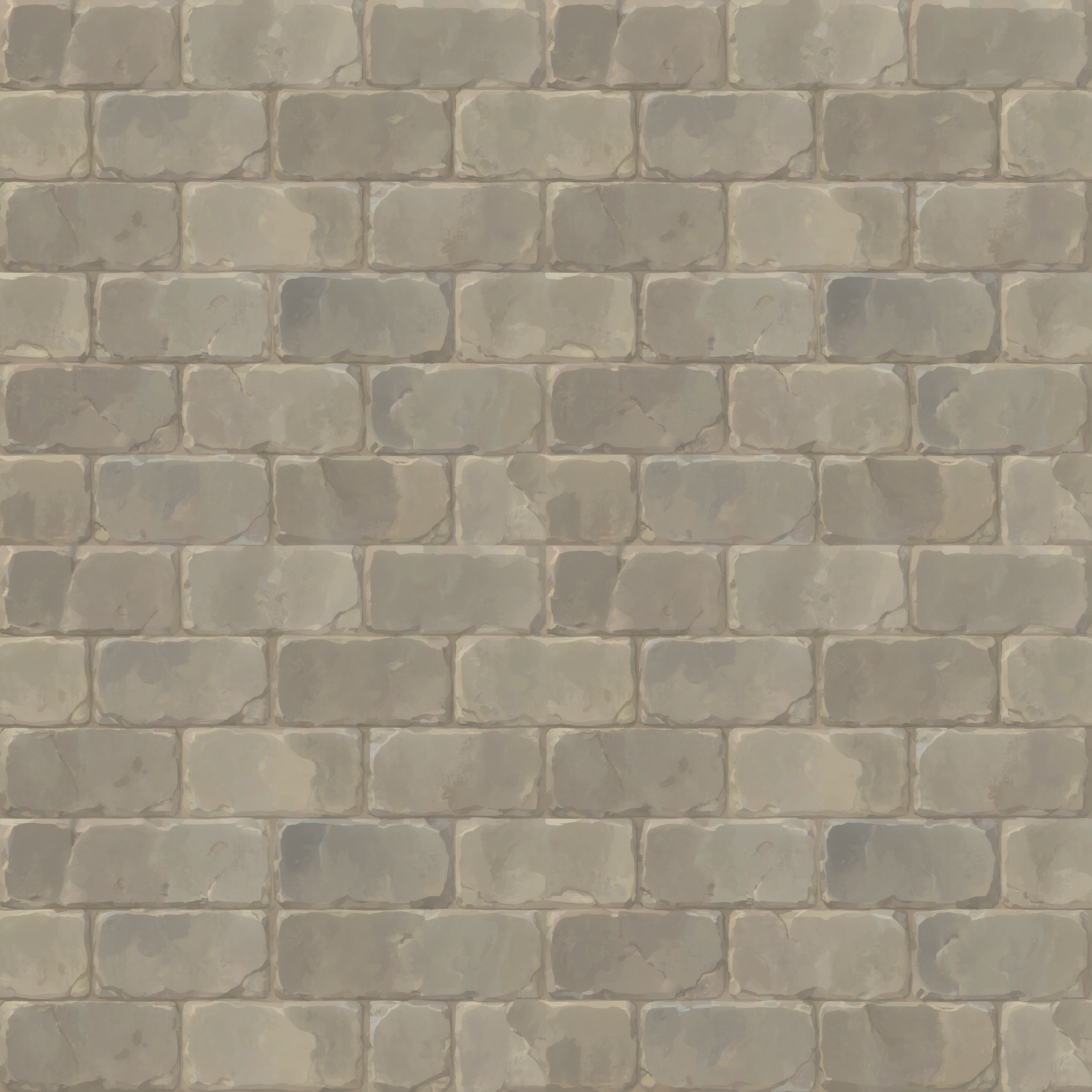
Stoneashlar walls · world-metric scale
Textilered-gold rug & mat · protected
Leathernavy grain study · 1.5 repeats/m
Metalscratched frame · metallic .80
II
Generation & conditioning

Choose the swatch, then earn the right to fix it

One brief, four models, one pick per family. The winner is an art-direction decision — then measurement decides whether any correction is allowed near it.

Wood — walnut joineryone brief, one pick
Seedream wood candidate
Seedream 5.0
Gemini wood winner
Gemini 3.1 WINNER
GPT wood candidate
GPT Image 2.6
Tencent wood candidate
Tencent HY 3.5

Warm bias and knot density drove the pick — the grain must survive de-lighting.

Stone — ashlar wallsone brief, one pick
Seedream stone candidate
Seedream 5.0
Gemini stone candidate
Gemini 3.1
GPT stone winner
GPT Image 2.6 WINNER
Tencent stone candidate
Tencent HY 3.5

Block scale and controlled saturation won — the winner is picked, not averaged.

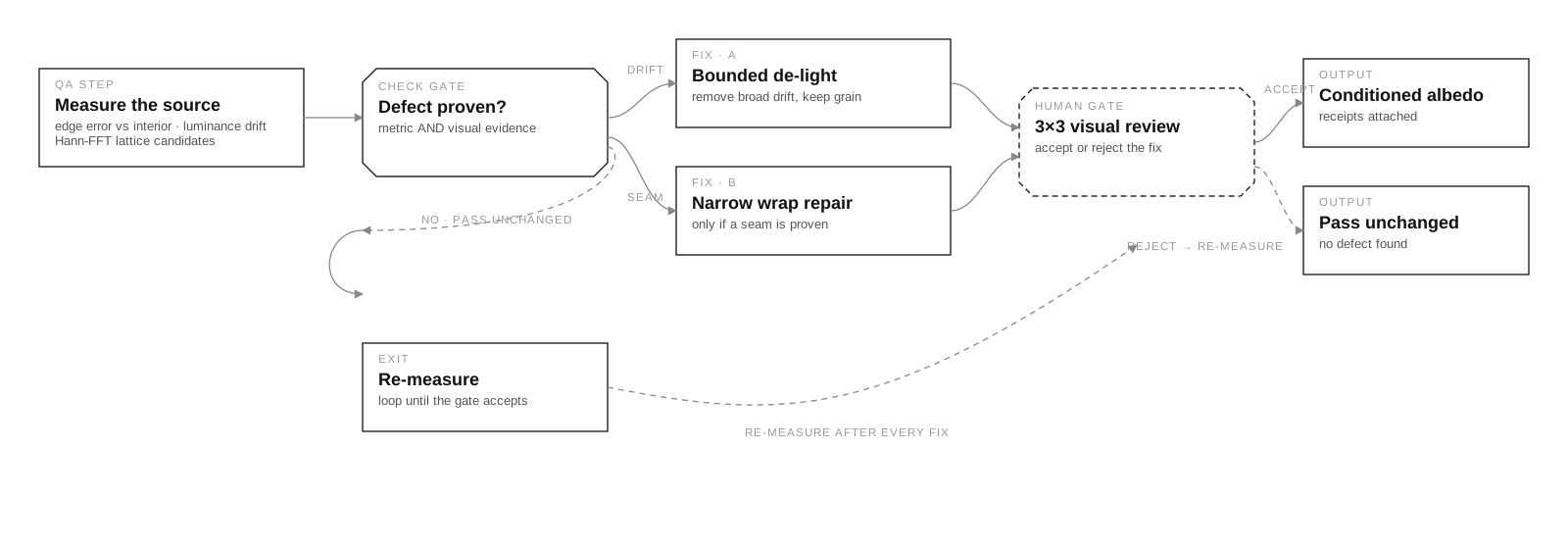
The conditioning algorithm — measure, correct bounded, re-measure Conditioning algorithm with defect gate, bounded de-light or narrow wrap, 3x3 visual review, accept/reject and re-measure loops
De-lightB = blur₆₄(L) · G = clamp(L / B)drift removed, grain kept
Seam metricE = mean|I[:,0] − I[:,−1]|judged against interior D
Narrow wrapI'[:,0] = I'[:,−1] = ½(I[:,0] + I[:,−1])two rows, no cross-fade
01De-lighting — remove the baked light, keep the grain
B = blur(L) · G = clamp(L / max(B, ε), bounds)

The blur is a scale hypothesis, not a physical recovery. Reject any correction that flattens the grain — measured modulation .42–1.60 must survive.

1 · Source swatch
Raw navy leather source
grain hidden inside baked illumination
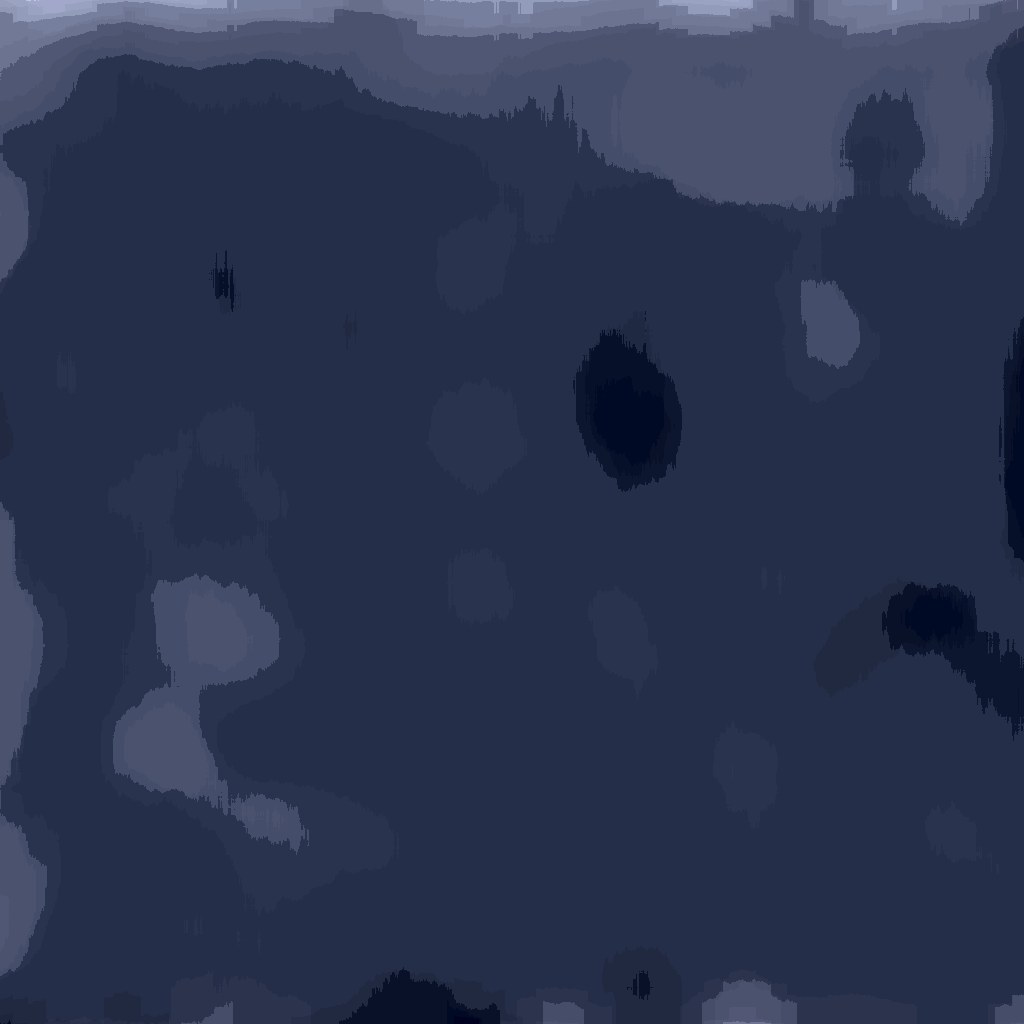
2 · Estimated drift B
Blur estimate of the drift
the defect, made visible
3 · Conditioned
Conditioned navy albedo
source minus drift, mean retained
III
Derive the maps

Normals and roughness are computed, never imagined

Leather albedo
albedo · sRGB — the source the derivation reads
Height proxy diagnostic with sample-row markups
height · diagnostic — scanline samples marked on the grain
Derived normal
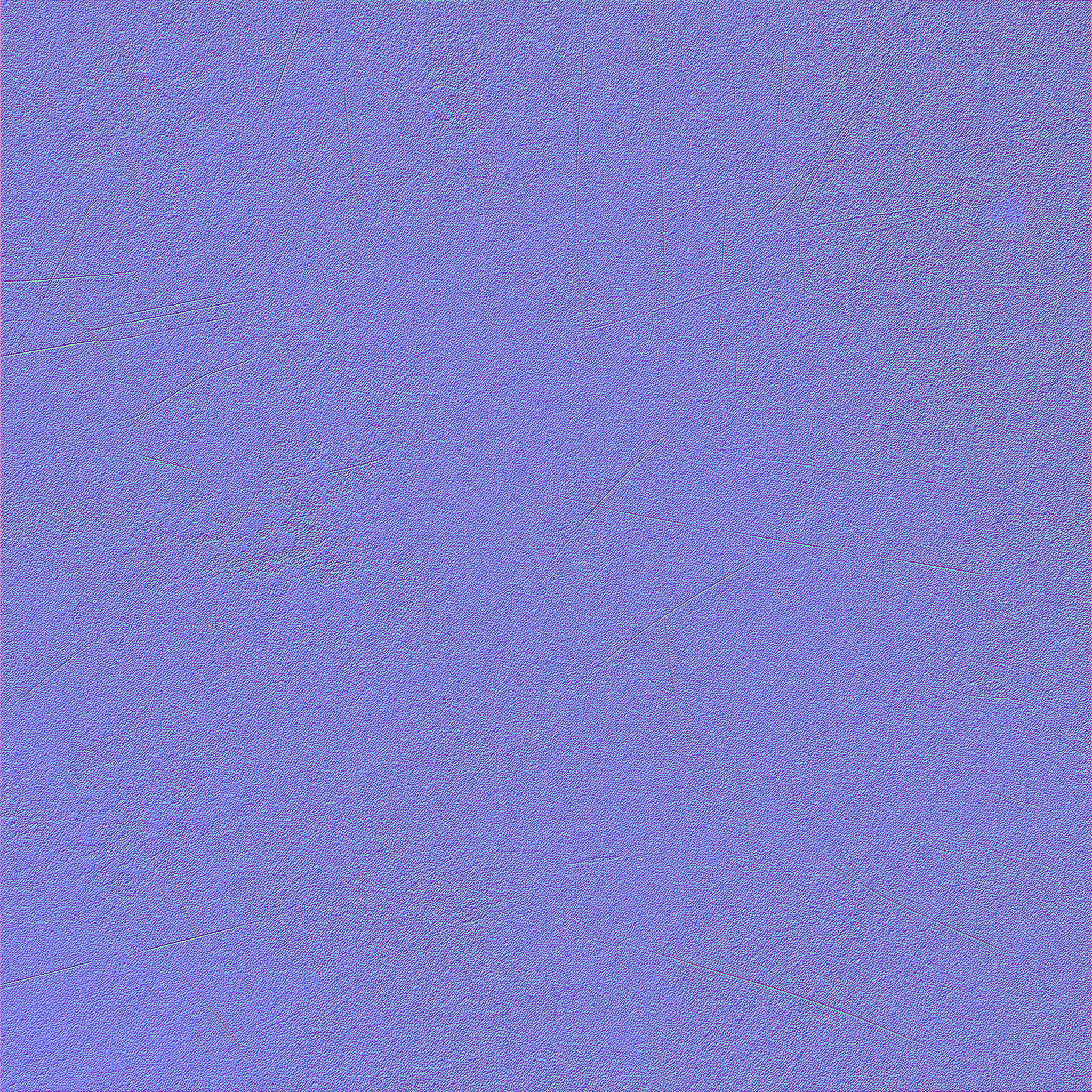
normal · OpenGL Y+ — computed from the height slope
Derived roughness
roughness · scalar — a calibrated material response
★How the height map is derived — one scanline, four steps
H(x) = L − blur(L)

From the albedo scanline to the normal: the green samples on the height tile above are the ones used in step 3. H is a diagnostic height proxy, never claimed as displacement.

02Height → normal — read the grain, take its slope
N = normalise(−dx, +dy, 1) · RGB = N × 0.5 + 0.5 · OpenGL/Y+ for Unity

Left: the luminance profile becomes a height proxy. Right: its slope becomes the vector — steep tilts, flat stays (0,0,1).

03Roughness → the G channel of ORM
R = clamp(0.57 + 0.045 · (g − mean g), 0.52, 0.62)

The curves are reflection lobes under one light — their width is what roughness controls. The derived scalar packs into the green channel, narrow on purpose.

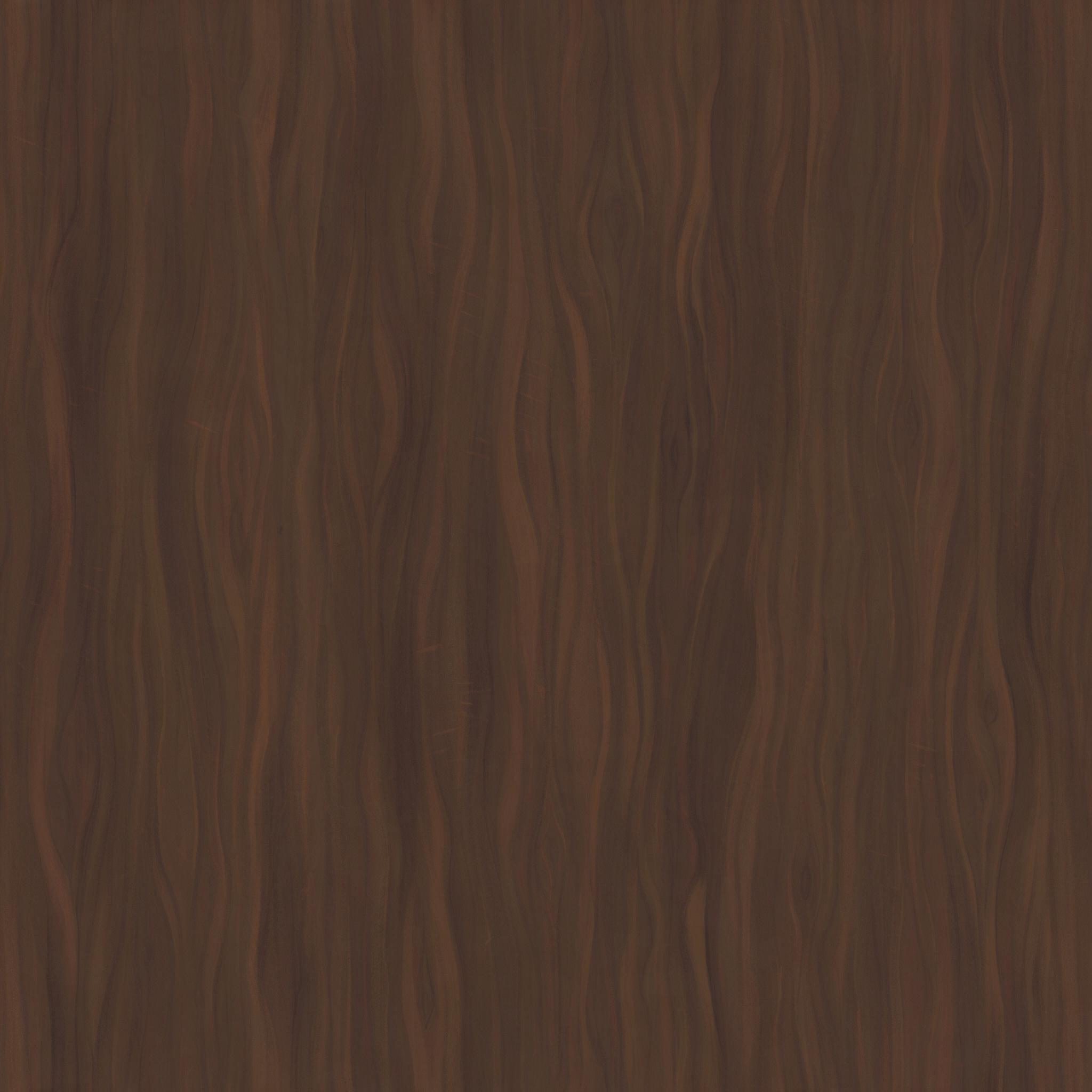
Wood
Wood base colour
base colour
Wood normal
normal
Wood ORM
ORM
hand-illustrated walnut · R AO / G rough / B metal=0
Leather
Navy leather albedo
albedo
Navy leather normal
normal
Navy leather roughness
roughness
navy grain · readable at 1.5 repeats/m
Stone
Stone base colour
base colour
Stone normal
normal
Stone ORM
ORM
ashlar · world-metric scale, 28 renderers
Metal
Metal albedo
albedo
Metal normal
normal
Metal roughness
roughness
scratched frame · metallic .80 · UV0 direction kept

Three maps per family, arranged 2×2. Data maps stay non-colour; every map's colour space and derived range is recorded with its receipt.

IV
The swap

One chair, two scoped material changes

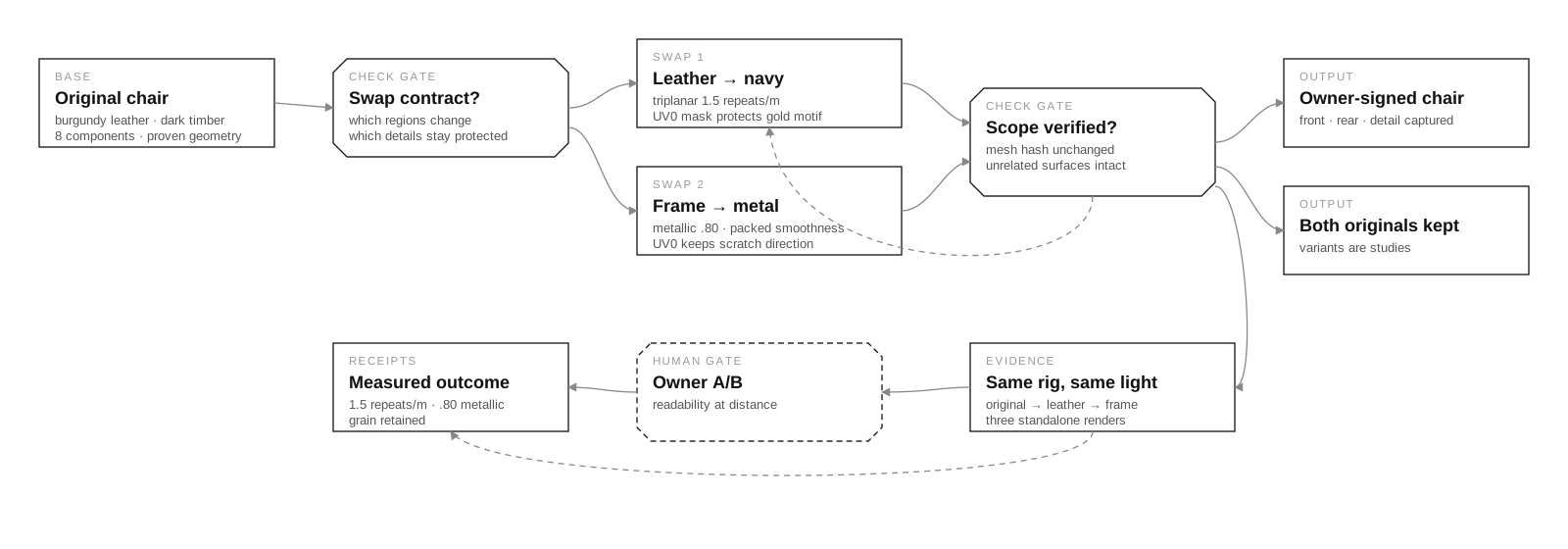
MAT is not a texture gallery — it is a controlled swap on unchanged geometry. The contract names the regions; the mask protects the gold motif; the owner judges the result under the same camera and light.

The MAT swap flow — contract, two scoped swaps, scope gate, owner verdict Swap flowchart: original chair, swap contract gate, leather to navy, frame to metal, scope gate, owner A/B, output and receipts, with reject and revise loops
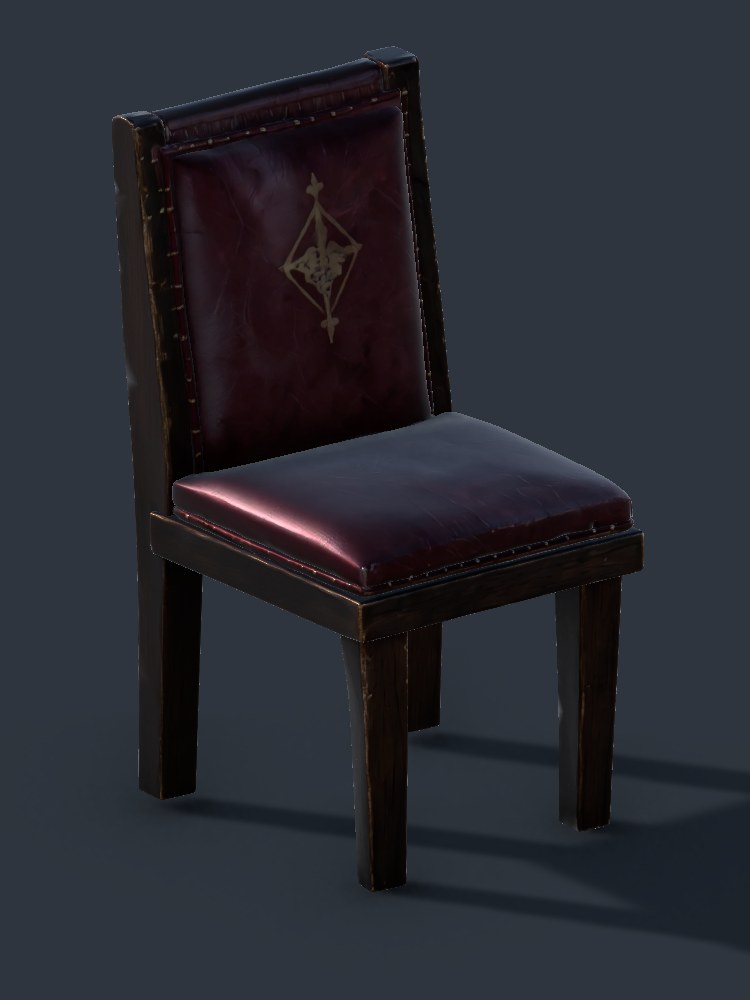
1 · Original chair
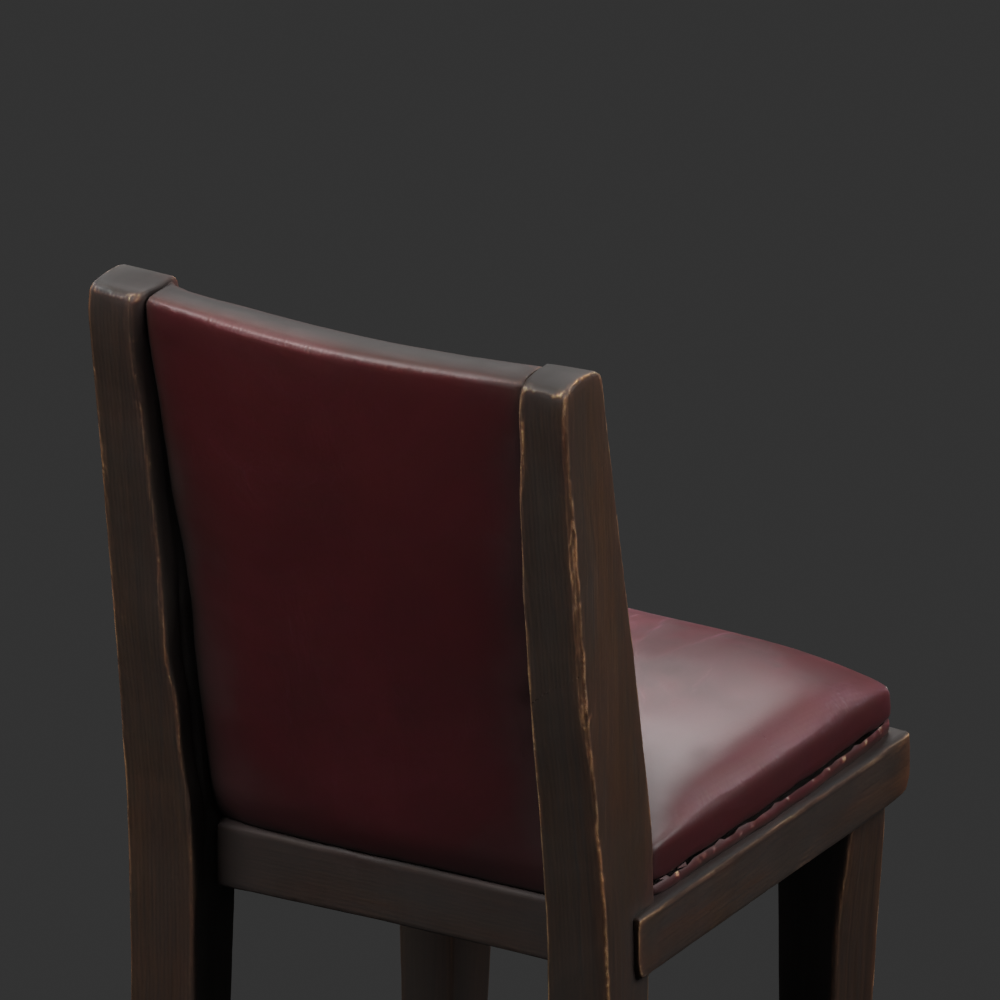
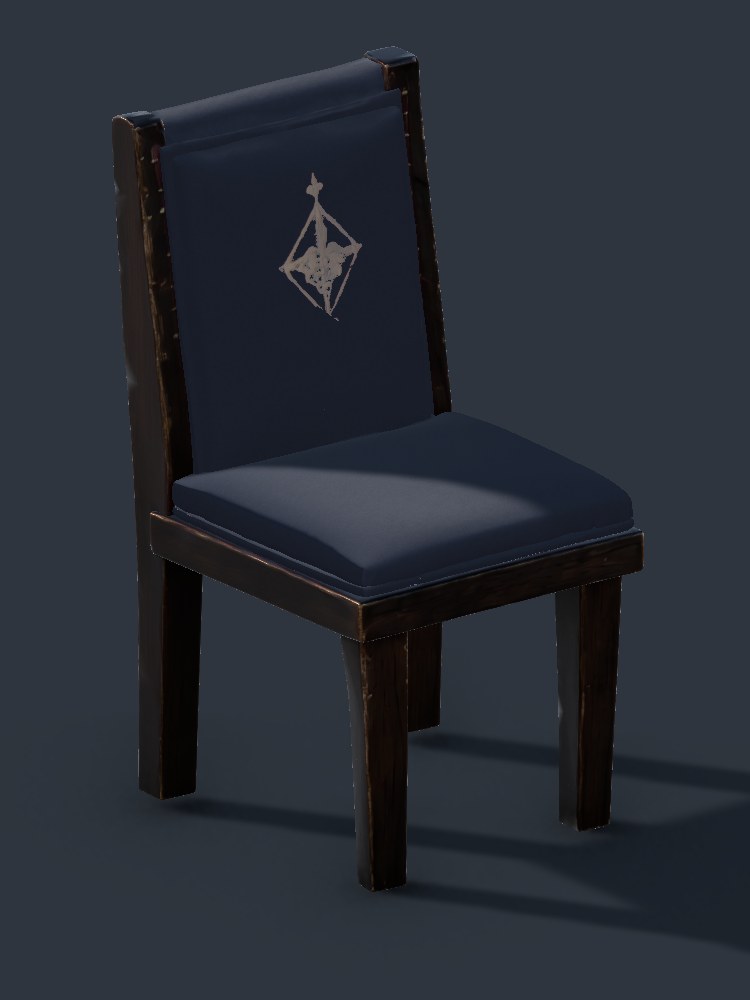
Original burgundy leather chair with dark timber frame
Baseline · nothing changed yet. Burgundy leather on a dark timber frame, rendered from the proven 11,990-tri mesh. Every region and the gold motif are still at their original values.
2 · Navy leather swap
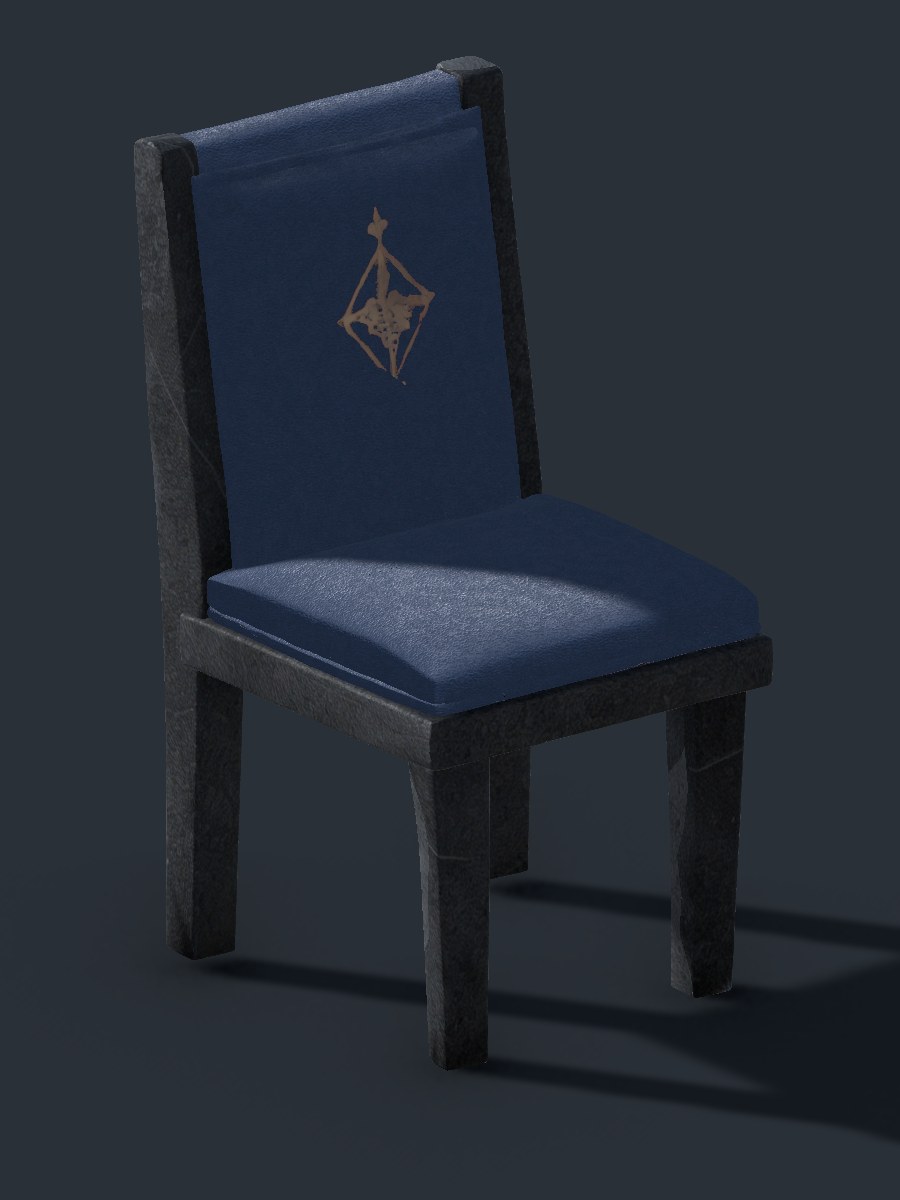
Chair with navy leather, gold motif preserved
Stage 1 · leather only. Triplanar navy grain at 1.5 repeats/m replaces the seat and backrest. The UV0 mask keeps the gold motif and the timber frame exactly as they were.
3 · Metal frame swap
Final chair with navy leather and scratched metal frame
Stage 2 · frame only. Scratched metal takes the timber with metallic .80 and packed URP smoothness. Same geometry, same camera, same light — only scoped materials moved.
04Prove the defect, protect the detail
E = mean|I[:,0] − I[:,−1]| · M(p) = inside(UV0) AND gold(atlas(UV0))

A detector hit is a candidate, never permission. The emblem stays original because the mask is an intersection of a measured UV0 region and a gold classifier — not a global threshold.

Applied in the scene — Mat-Studio proofs

Wide stages, then close proofs

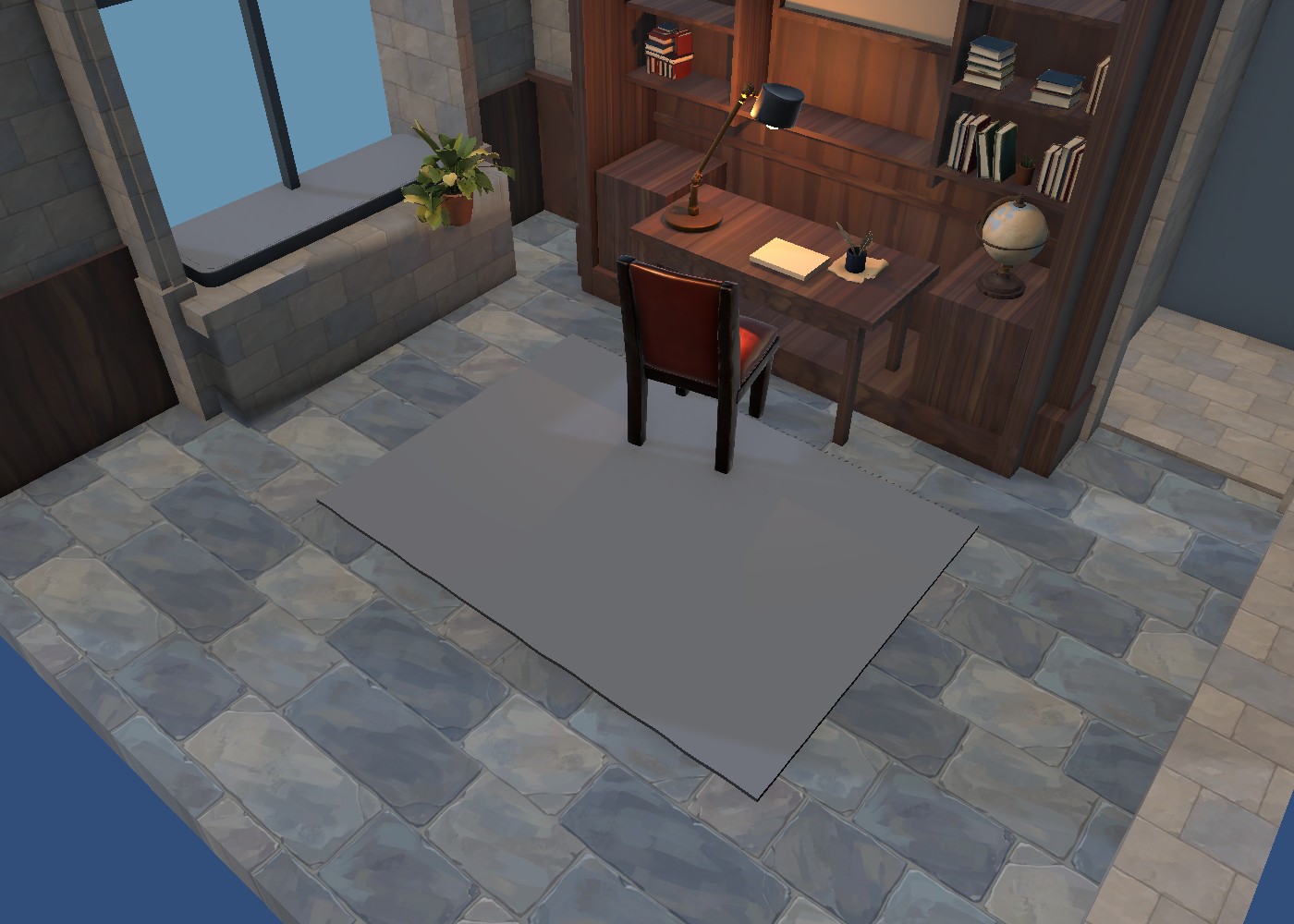
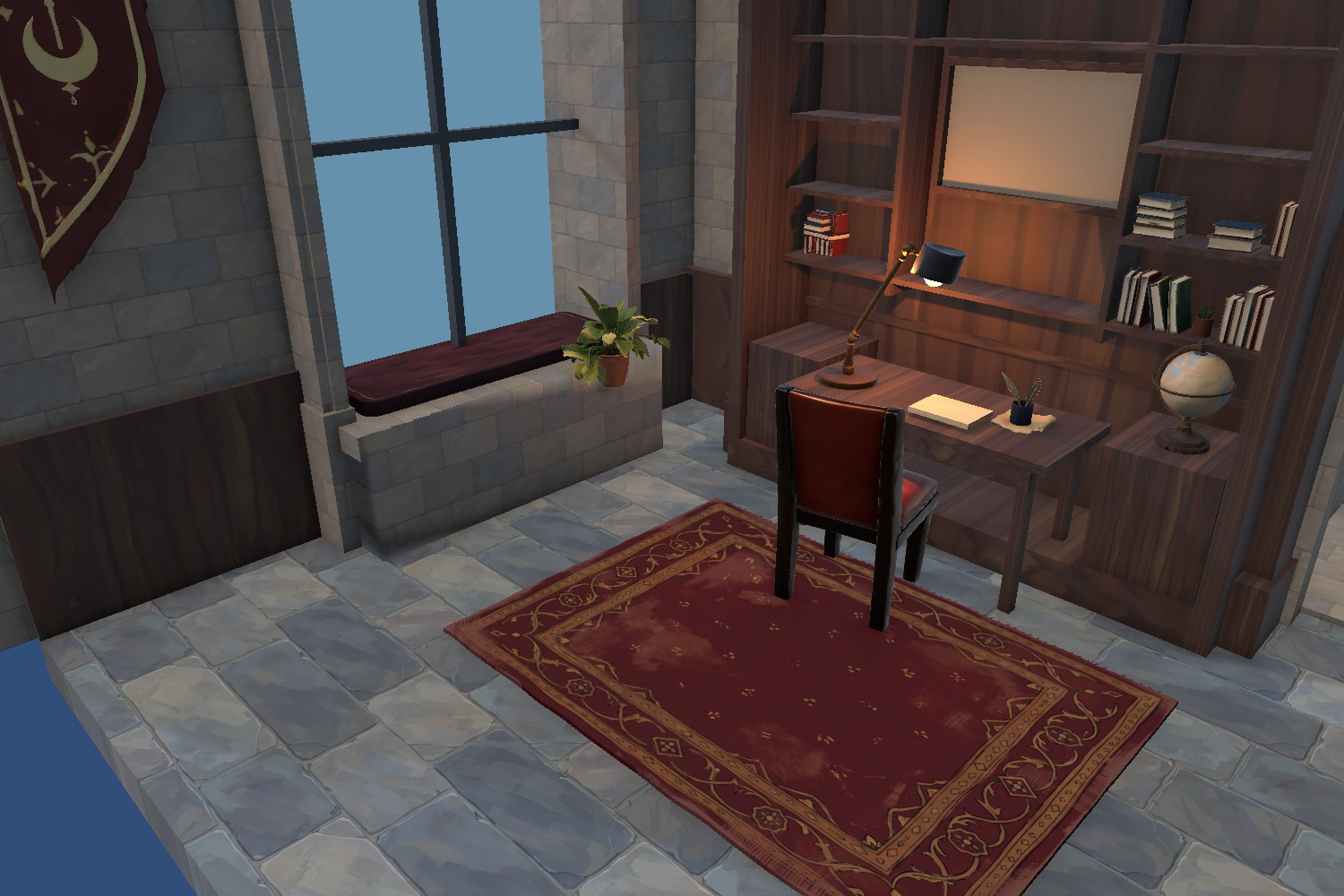
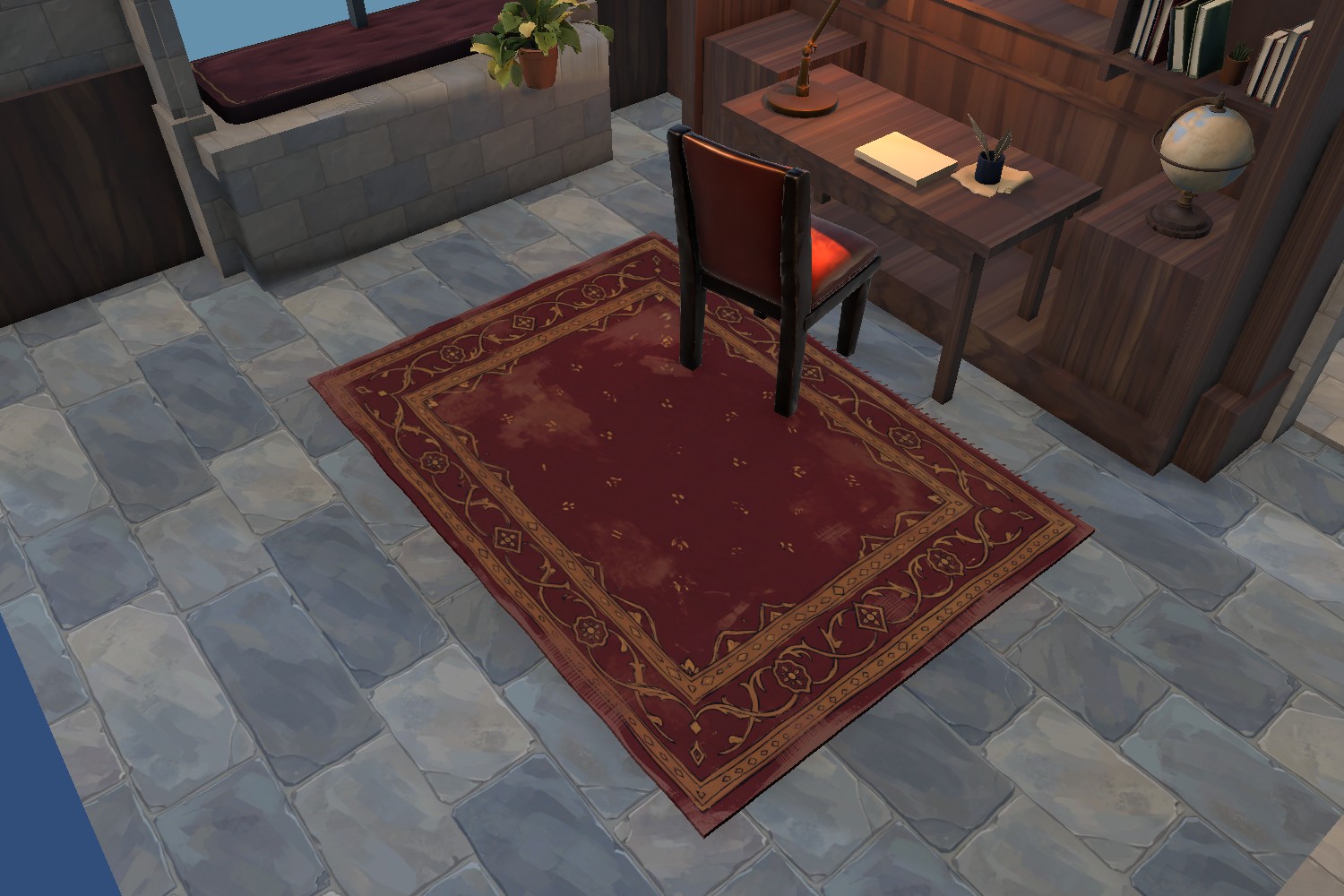
Two wide renders at one camera (geometry, then stone and walnut), followed by the floor family's close proof: the wide floor render was captured before the floor mesh existed, so it is deliberately not shown.

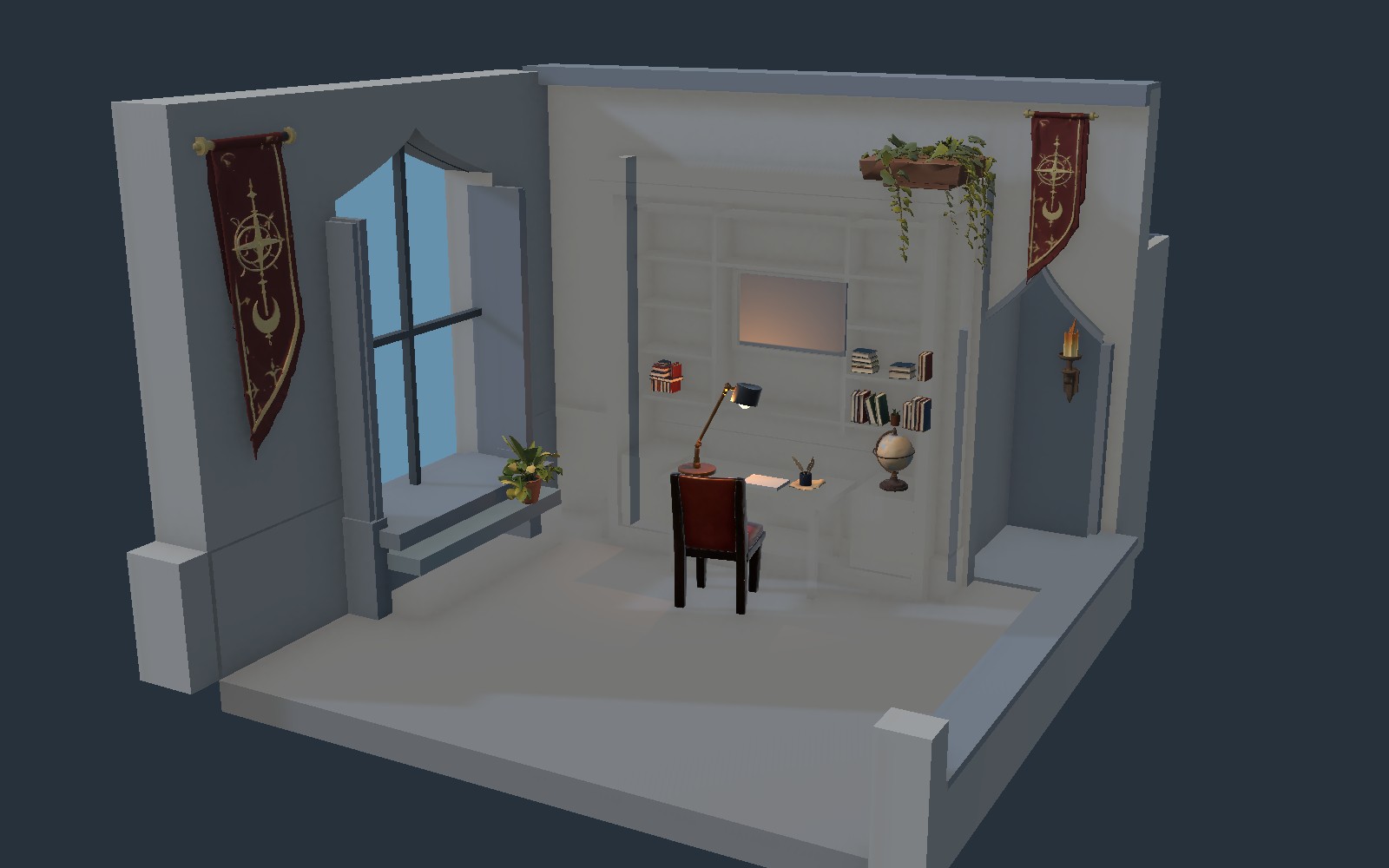
1 · Geometry only
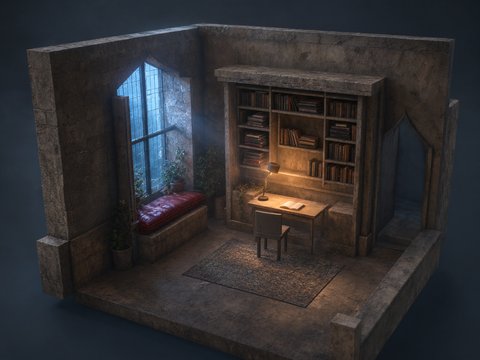
Mat-Studio wood proof: neutral room shell, geometry only
Blockout shell — no materials yet.
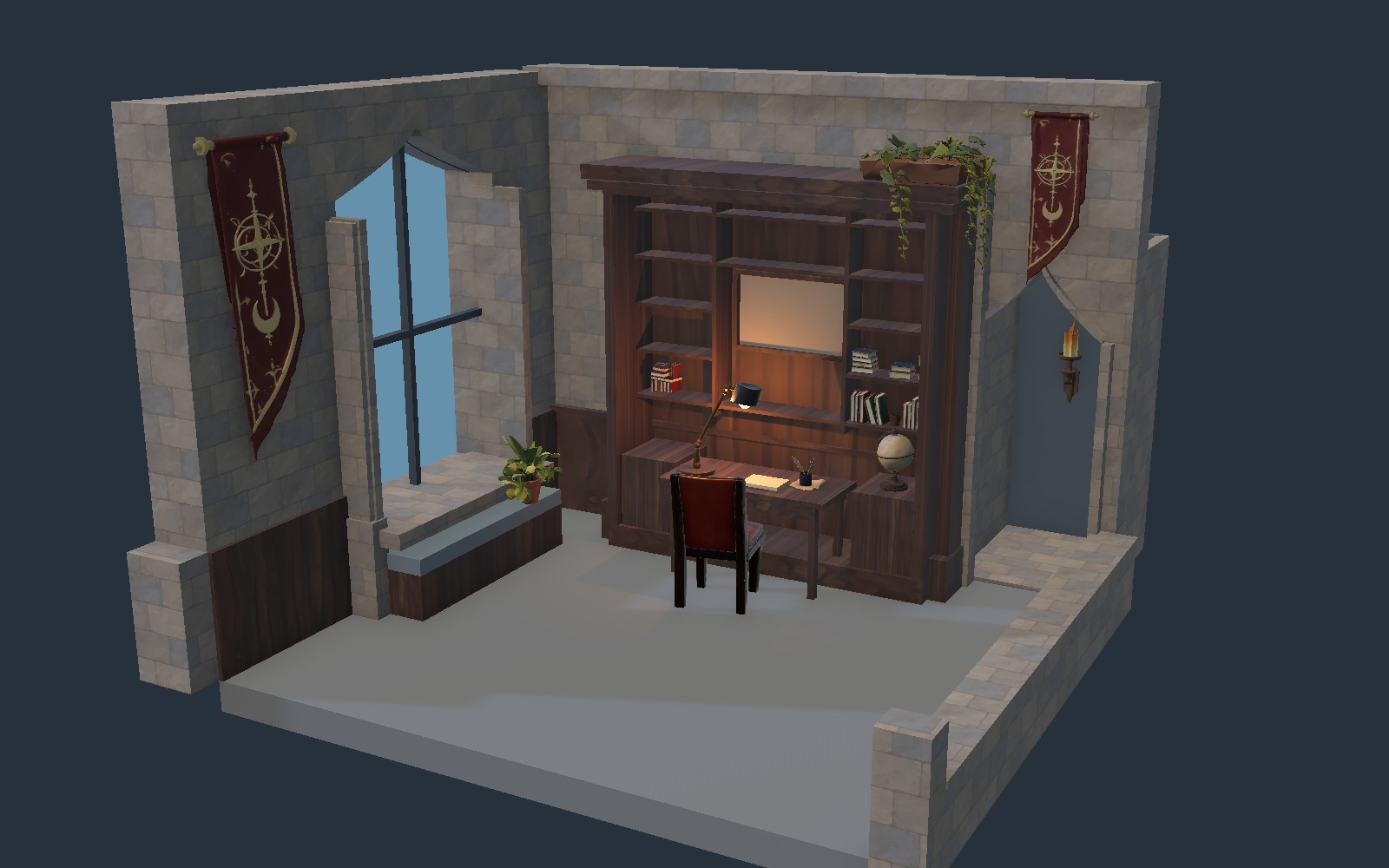
2 · Stone + walnut
Mat-Studio stone proof: ashlar walls and walnut joinery, same wide camera
Ashlar world-metric · walnut local axes.
3 · Floor close proof
Mat-Studio floor proof: complete limestone flag floor and desk close-up
Complete limestone floor — the only finished floor proof.
Close look · walnut grain
Mat-Studio wood proof: close look at walnut desk and shelf grain
Grain axis checked at the desk.
Close look · ashlar reveal
Mat-Studio stone proof: close look at the window reveal masonry
One block scale through the reveal.
Close look · window-seat textile
Mat-Studio textile proof: close look at the burgundy window-seat cushion
Cushion is its own protected material.
Textile · 1 placement
Mat-Studio geometry proof: grey rug plane placed in the room before material assignment
Rug plane placed & sized before colour.
Textile · 2 in the room
Mat-Studio textile proof: red-gold rug in the finished room
Rug reads at room scale; flags distinct.
Textile · 3 close look
Mat-Studio textile proof: close look at the rug ornament on the floor
Ornament & wear legible up close.

The room is the acceptance authority. Every family is judged at the scale where it reads: wide for the architecture, close for the grain and ornament. All images here are Mat-Studio proof renders, with real HTML captions.

06 — Unity Integration

Five layers, one room.

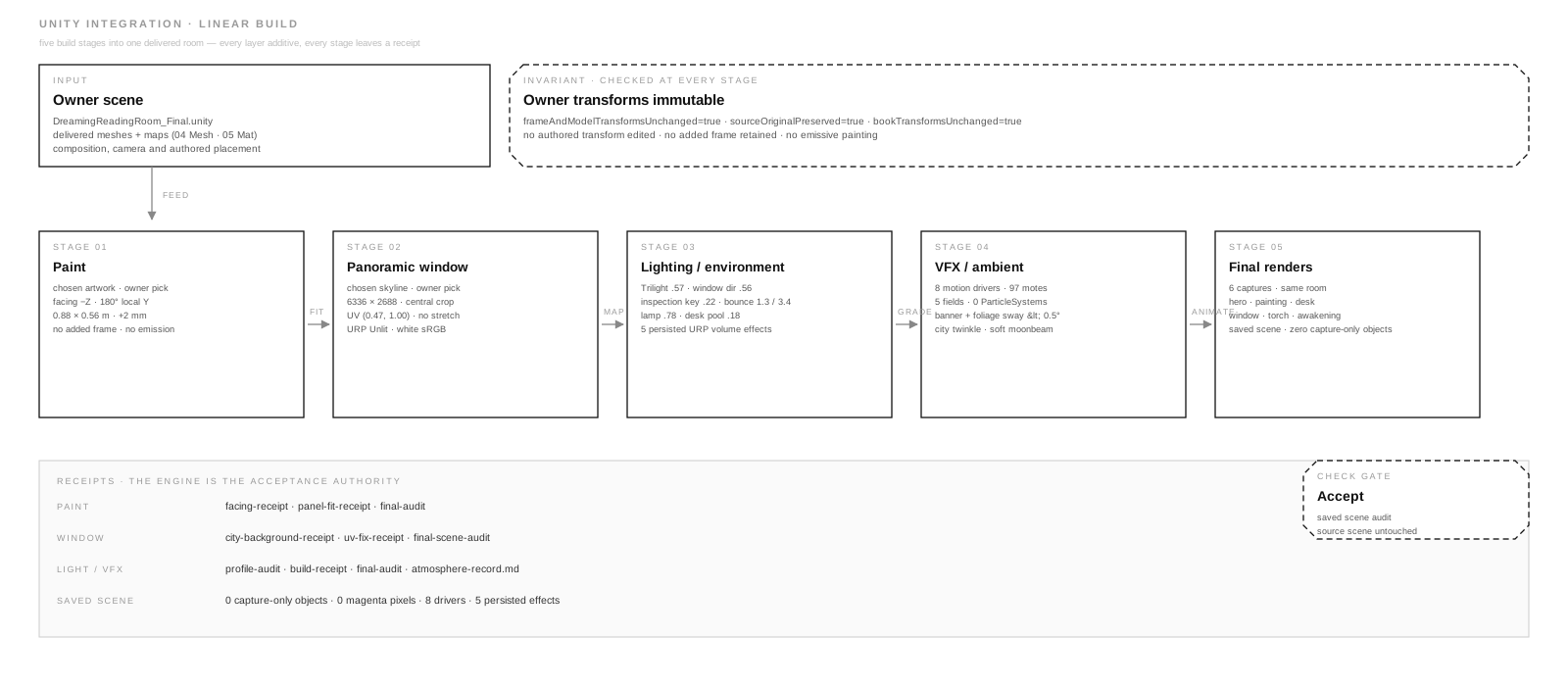
Paint, the world outside the window, light, motion — and then the delivered room. Each layer is additive: the owner's transforms are never edited and every stage leaves a receipt. The engine is the acceptance authority.

I
The route · one spine

Five stages, no forks, no guesses

The overall Unity build — highest level, linear Linear flowchart: the owner scene and delivered assets feed five sequential stages — Paint, Panoramic window, Lighting and environment, VFX and ambient, Final renders — under a checked invariant that owner transforms are immutable, ending at a saved-scene acceptance gate
InputStage Checked invariant / gate Receipts · saved-scene audit · 0 capture-only objects
01
Stage one · Paint

One picture, two tries, one frame too many

The rabbit astronomer is the room's only character. The chosen artwork keeps the handwritten BigBunnyBall signature, warmer candlelight and a stronger read at shelf scale. It is fitted into the existing central wooden panel — no added frame, no emission, no regenerated art.

0.88 × 0.56 mmatte canvas · 4:3 source preserved
180°local Y · corrected to face −Z into the room
+2 mmoffset from the existing panel face
0added frame geometry · 0 emission
First Rabbit Astronomer painting concept
Concept A — rabbit at the eyepiece, seated.
Chosen Rabbit Astronomer artwork
Chosen — stronger narrative, warm/cool contrast. PICK
Close-up of the painting fitted into the existing central wooden panel
Fitted — existing wooden panel, no added frame.
The painting seen at room scale
Room scale — the picture reads at shelf distance.

Owner correction. An earlier walnut-and-brass frame was added, then removed entirely. Receipts: facing-receipt.txt, panel-fit-receipt.txt, final-audit.txt — bookTransformsUnchanged=true.

02
Stage two · Panoramic outside window

A world beyond the mullions

The window needed a horizon. The long dusk panorama is mapped as a central horizontal crop with no stretch onto a dedicated UV0 mesh; the original 6336 × 2688 source is preserved. Two images: the panorama itself, and the same skyline once it is in the room.
0.47 × 1.00UV scale · central crop, no stretch
URP Unlitwhite sRGB · tint stays neutral
6336 × 2688source preserved · UV0 on a mesh copy
0frame or model transforms changed
The long panoramic dusk skyline, the chosen backdrop
The panorama — the full 6336 × 2688 dusk skyline, before cropping.
The central crop of the skyline seen through the window in the room
In the room — the central crop landing behind the window and shelves.

Mechanism. A UV0 was added to a copy of the backdrop mesh; the source mesh is unchanged. Receipts: city-background-receipt.txt, uv-fix-receipt.txt, final-scene-audit.txt.

03
Stage three · Lighting / environment design

Cool window, warm desk, one grade

The room is lit from two directions: lavender dusk through the window, amber practical light at the desk. A neutral inspection key stays low so the art direction — not a debug light — defines the image. Five URP volume effects are persisted as real sub-assets, not just added in memory.

Trilight .57cool sky / equator, dark blue ground
.56 / .22window directional / neutral inspection key
1.3 / 3.4lavender bounce intensity / range
5persisted effects · bloom .24 · vignette .13
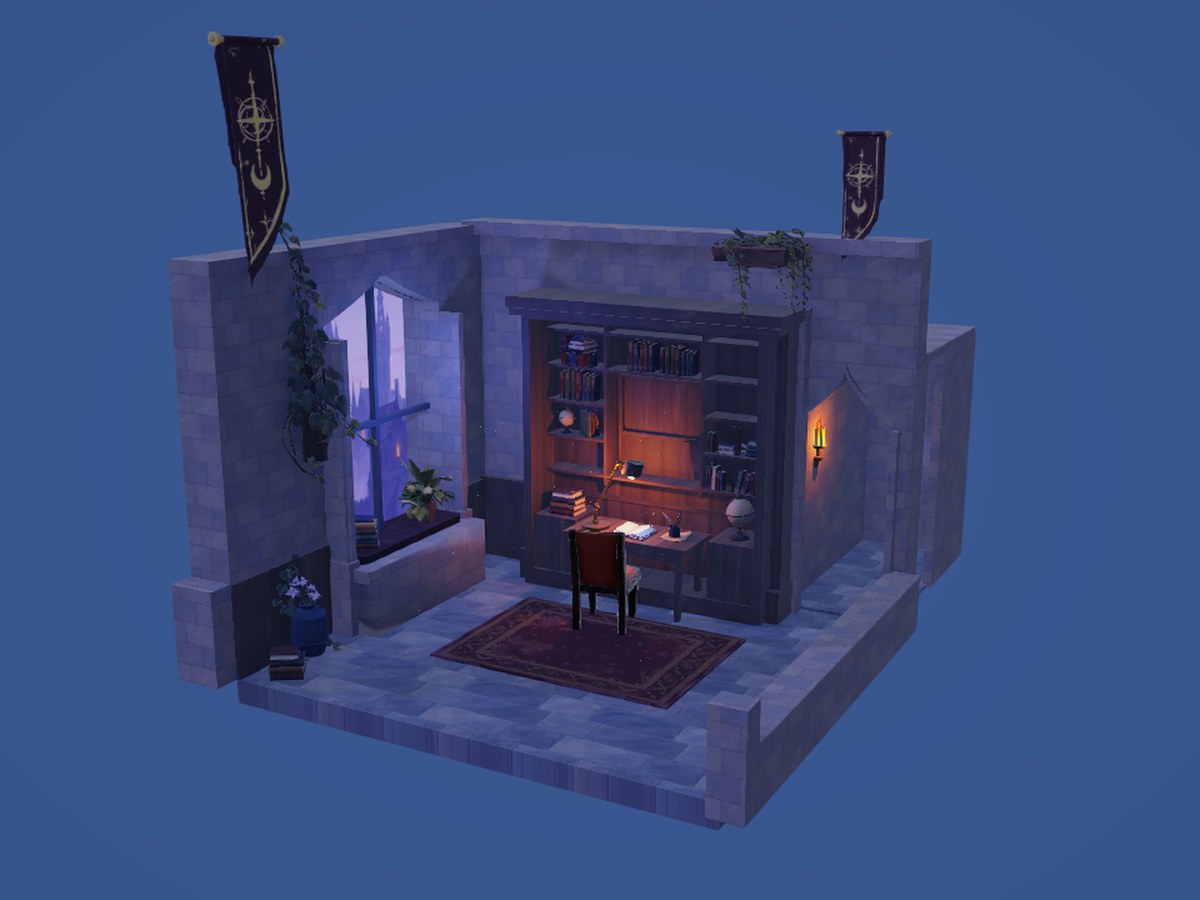
Full diorama under the twilight lighting design
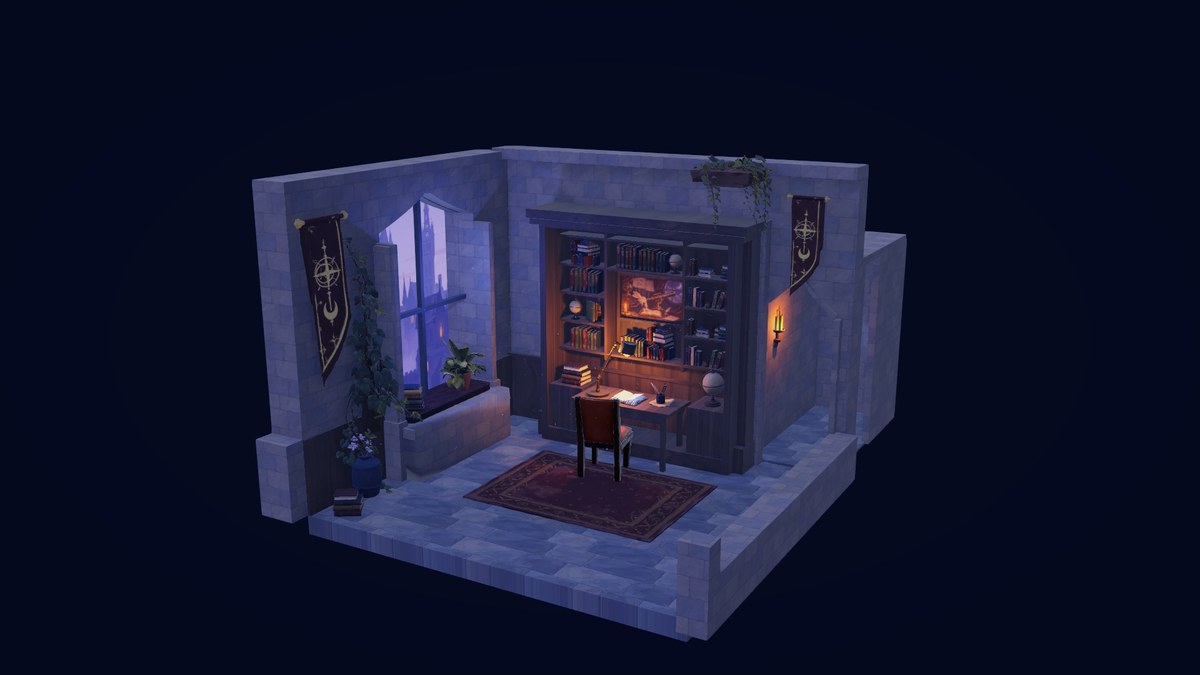
Hero — cool shell, warm desk pool, both banners.
Window light and foliage under the twilight grade
Window — lavender bounce meets the skyline.
Desk close-up under warm practical light
Desk — amber practical, quills, open book.
Desk lighting version 1
Desk light · v1 — flat, unmodelled pool.
Desk lighting version 2
Desk light · v2 — warm pool, readable pages.
Window lighting version 1
Window light · v1 — weak cool separation.
Window lighting version 2
Window light · v2 — ivy, seat, city all read.

The persistence trap. profile.Add() alone left components: [] in the saved YAML. Fixed with AddObjectToAsset, SetDirty, SaveAssets, a force reimport and a serialised-count check. Sources: profile-audit.txt, atmosphere-record.md.

04
Stage four · VFX / ambient effects

Motion without touching a single authored transform

A failing particle-shader route was abandoned rather than shipped. What survives is deterministic: eight small motion drivers, five procedural mote fields, sway on named pivots only, city twinkle animated in the shader. Amplitudes stay deliberately small so the room remains peaceful.

8motion drivers · banner / foliage / light / emission / rotate
97motes across 5 bounded fields
0ParticleSystems · 0 capture-only objects
< 0.5°sway · no model origin repositioning
Ambient field at t = 0.00
Ambient field · t = 0.00
Ambient field at t = 0.25
Ambient field · t = 0.25
Ambient field at t = 0.50
Ambient field · t = 0.50
Ambient field at t = 1.00
Ambient field · t = 1.00

Proof, not claim. final-audit.txt records the saved scene; check-frames.py found zero magenta pixels across 48 probe, 240 final and 144 detail frames; changed-pixel counts between real frames prove motion. A 12-point memory filament above the open book replaced the earlier opaque orb.

05
Stage five · Final renders

The room, delivered

Six captures from the same saved scene, under the same camera and light. This is the delivered image of the room — the painting in its panel, the skyline through the window, the cool/warm balance, and the small ambient motion all resolved together.

1scene · owner source never overwritten
0capture-only objects · 0 magenta pixels
8 + 5motion drivers · persisted volume effects
0owner transforms edited
Final render, full diorama
Hero — the complete room.
Final render, the Rabbit Astronomer painting
Painting — the only character.
Final render, writing desk
Desk — open book, quills, filament.
Final render, window seat
Window — city beyond the seat.
Final render, passage torch
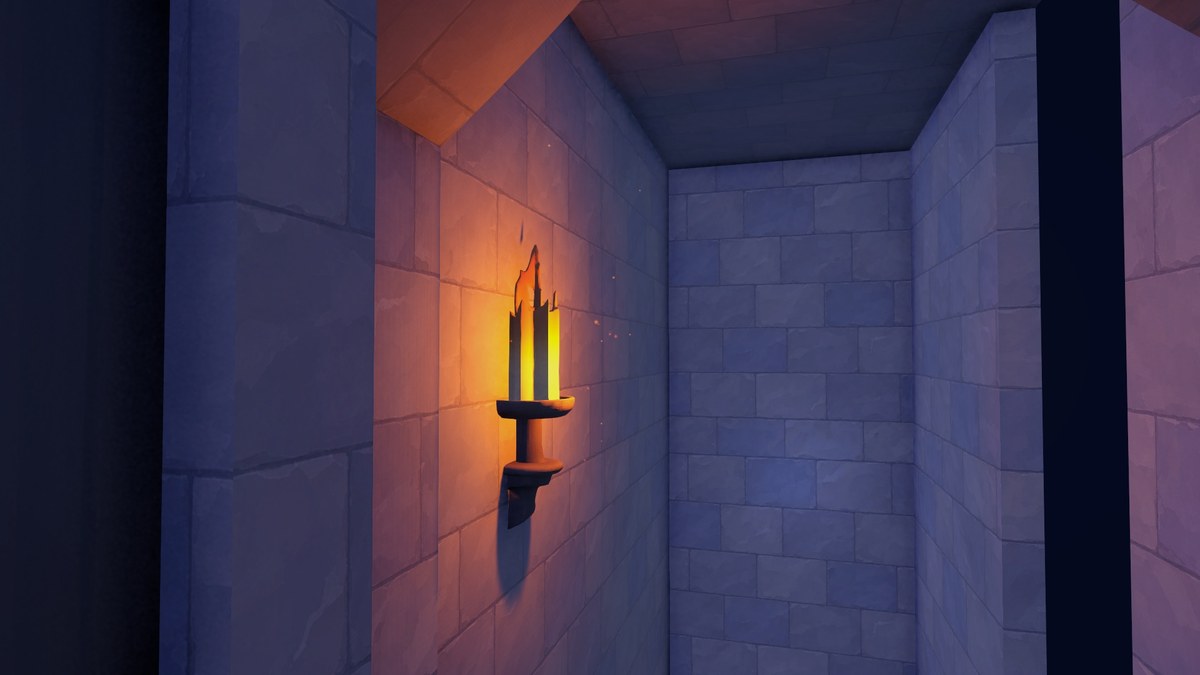
Torch — practical light, warm falloff.
Final render, the room warmed
Awakening — the room warms back up.

Five layers, one room. The engine accepts; the owner decides. Sources: scene-audit.txt, final-audit.txt, final-scene-audit.txt.


Who did what

Tianyu — art direction, the design language, the brief and its thresholds, candidate selection, bounded corrections, region design, lighting and composition, every rejection reason, review verdicts, the recording.
AI agents — geometry construction, pipeline tooling, shader and C# code, batch runs, reports, the film capture pipeline.
Models — candidate meshes and images: inputs, never decisions.

Request for living production demo

Write to me and I will walk you through the living production atlas — the interactive, bilingual graph of this whole production, where every decision leaves a trace.

What this page does not claim

  • Upholstery junction intersections on the chair remain; no repair was promoted.
  • No universal automatic pipeline: every asset was guided and reviewed.
  • The ateliers are local demo tools, not a shipped public product.
  • No phone or browser build was tested; the film and stills are the delivery.

See other projects Back to lobby